


About 95 years ago, a two-year-old was obsessed with automobiles. He loved cars so much that he could name all the parts of the car. Over time, he understood how gears work, and then became so deeply involved with gears that they became one of his favourite toys. He liked rotating circular objects such as bottle caps against each other. It was fascinating to see how turning one of the gears in one direction rotated the other gear in a different direction. That was his first interaction with, and understanding of, chains of cause and effect.

That man, that legend – that history fondly remembers was a very special person. He was Seymour Papert. He believed that if he described his play with most educationalists, they’d recommend that he create a gear set which children could use to learn about gears. But the essence of his story, was that he loved gears. That is why he could play endlessly with them. He liked rotating gears – and saw the manual that came with such a gear set as an interference.
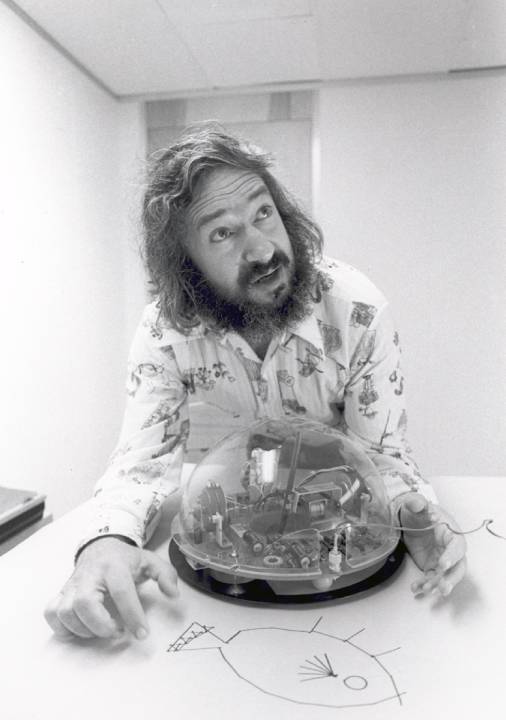
After consistently working on his ideas on pedagogy, he reached a point where he concluded that while a gear set without a rigid set of instructions might not be able to promote exploration and discovery, perhaps computers could play this role. He developed the game LOGO (see [2]) and developed it to fill what he felt was the need of the hour.
I had never heard of Papert until I came across his book Mindstorms [1], a while ago. In Mindstorms, he mentions his interaction with gears in the preface. From there, he argues that computers and programming can serve a similar role for children, creating environments where mathematical ideas feel natural rather than imposed. His central belief is that learning is not about consuming knowledge but about living within an environment that supports it. Just as a child growing up in England learns fluent English simply by being immersed in an English-speaking environment, while the same child might struggle with conversing in English in India. Papert suggests that schools can use computers to build mathematical “environments” where young kids construct knowledge naturally, through exploration and visual programming, rather than treating mathematics as an alien and difficult subject.
Democracy within the Classroom
Now, shedding some light on my recent endeavours of volunteering to teach English at a local Odia Medium Primary School. All of the class environment restructuring that I will speak of in this segment, might not have any direct connection with mathematics learning, but then, neither did Papert’s gears. The idea, for me, is to establish the kind of environment I wanted the classroom to shape into. A classroom where knowledge and learning were constructed by them and they felt a sense of ownership over their learning. We would only provide prompts where necessary, to scaffold their learning. This keeps the students excited and engaged. Their brains are consistently made to think unconventionally rather than memorize information and write answers. Many students develop a fear of mathematics even before engaging with it, as their environment repeatedly reinforces the belief that the subject is inherently difficult and intimidating and that there is only one correct process which would lead to one correct answer. So, it felt more natural to first get them to think and talk rather than throwing problems in mathematics at them.
Inspired by Robin Williams’ Mr. Keatings from the movie Dead Poets Society, I was determined to build a classroom that learnt to think and feel deeply and seize every day. In Class 5, I decided to build a class reflecting democracy. First, we formed a cabinet of ministers. Pragyan was Chief Minister, Ipsita the Reading Minister. When students hesitated to read aloud, they divided the class into two groups and led their peers. The room turned noisy but joyful, full of reading and peer support. Later, we expanded into a Legislative Body: Class 5 as Lok Sabha, Class 4 as Rajya Sabha, with teachers as presiding officers. A debate on whether cinema was good or bad ended with a unanimous vote in favour of films as a source of knowledge and exposure. A detailed account of the results we observed during these proceedings is a little beyond the scope of this article which shall primarily focus on the mathematical experiences.
The Problem of the Day
Two young students named Sai Nigam and Swagat, who loved mathematics a lot were appointed as the Problem of the Day Ministers. Their job was to write one interesting problem a day on an unused blackboard of the school. Other students could read and solve these during the school hours. It was decided that the solution of the problem would be discussed at the end of school hours every day.
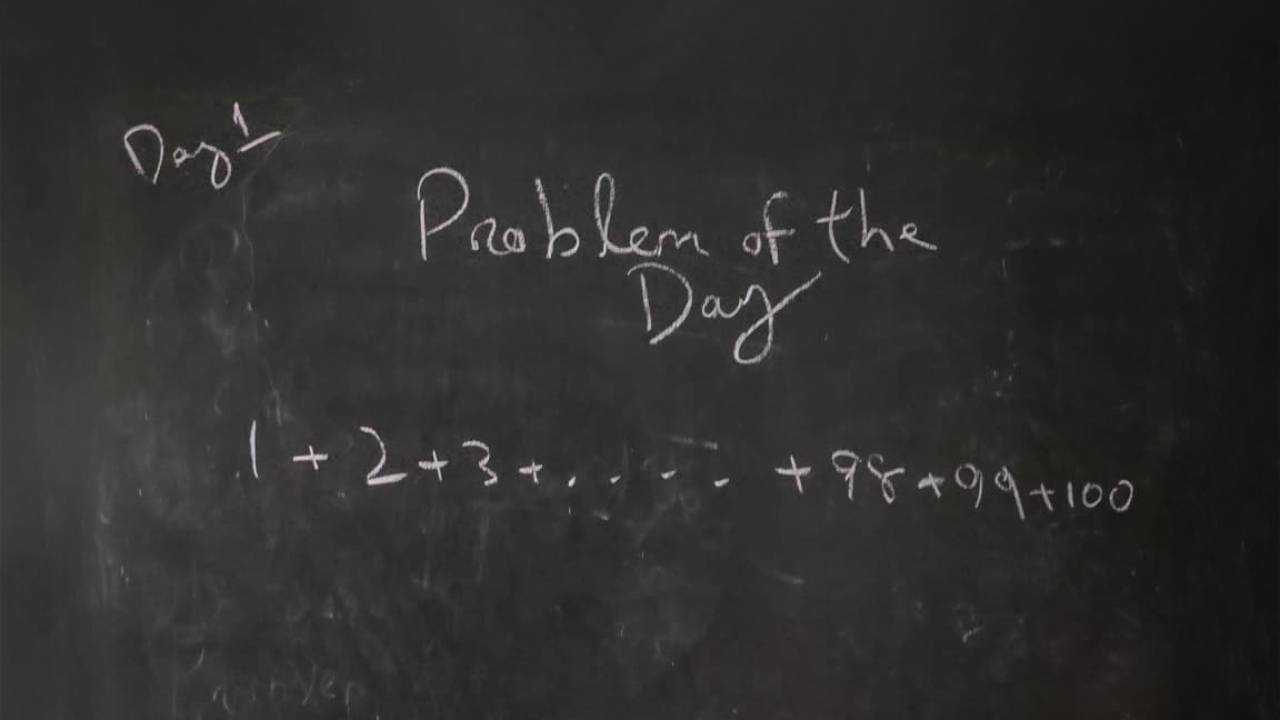
The two ‘ministers’ were provided with an Odia book named “Dinaku Khandie Anka (One Problem a Day)” authored by Prof. Chandra Kishore Mahapatra who in his prime was an active Olympiad Trainer in Odisha. The book had a very interesting structure. There were 12 chapters each representing a month, and each chapter consisted of 30 or 31 or 28 questions depending on the month after which the chapter was named. The solutions to all the questions, which were comprehensible with self-study, were placed after the problems chapters. But I had made it clear that we should try a question for at least 30 minutes to 1 hour before we decide to look into the solutions. An important consideration by me for selecting the specific students for the Problem of the Day Minister role was based on their honesty and sincerity. The first problem that was written on the board on July 23, 2025 was the famous 1 + 2 + 3 + 4 …… + 97 + 98 + 99 + 100 = ? which was taken from the cover of another book by Prof C.K. Mahapatra.
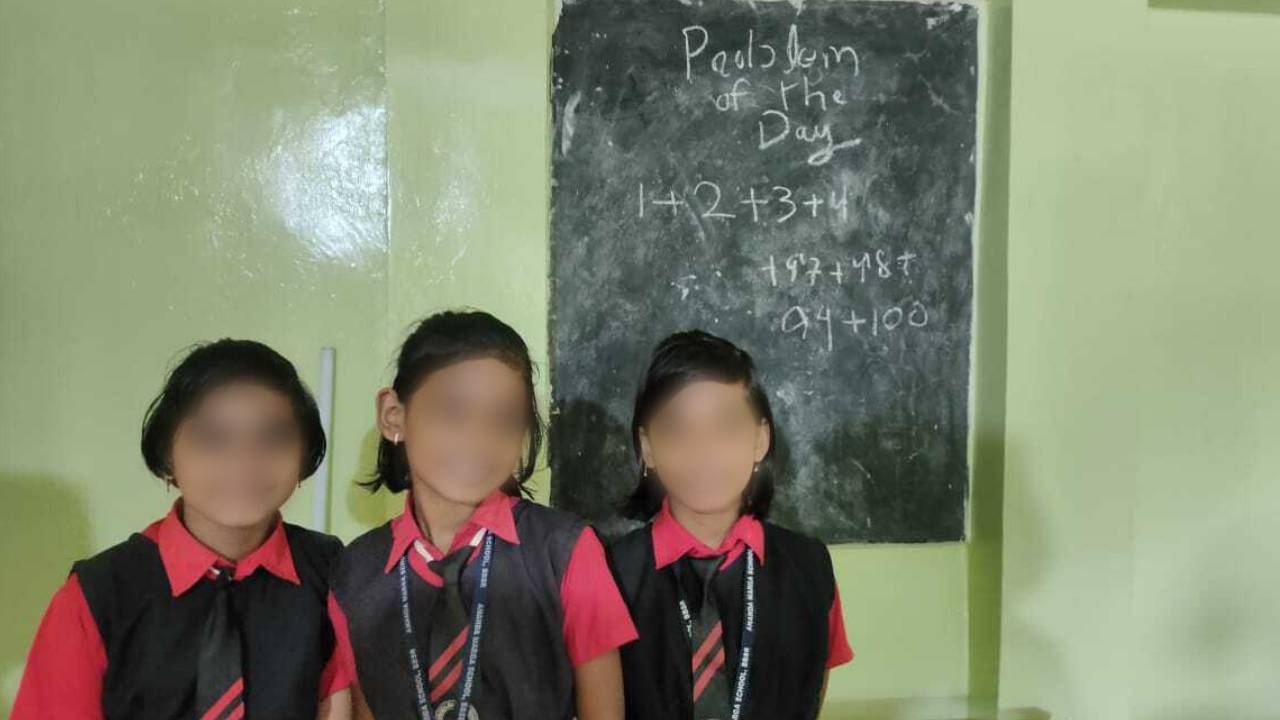
Now a majority of the students ruled out the possibility of this question being solved. But three students named Sai Sampurna, Pragyan and Ipsita were actively working on the question. More importantly they were working on it together. Exactly the kind of collaboration that I had been hoping would be a consequence of the Democratic classroom design. Even during the recess, I could see them solving it.
1 + 2 = 3
3 + 3 = 6
6 + 4 = 10
10 + 5 = 15
And so on until they just got confused and ended up adding a number twice or just getting the wrong sum and feeling the need to start over again. Even the other teachers of the school saw them attempt this question repeatedly. About an hour later, when I was teaching in Class 4, these three students came up with the answer 5050 and more importantly the solution written on a page which has been replicated in Figure 5 for the benefit of the reader.
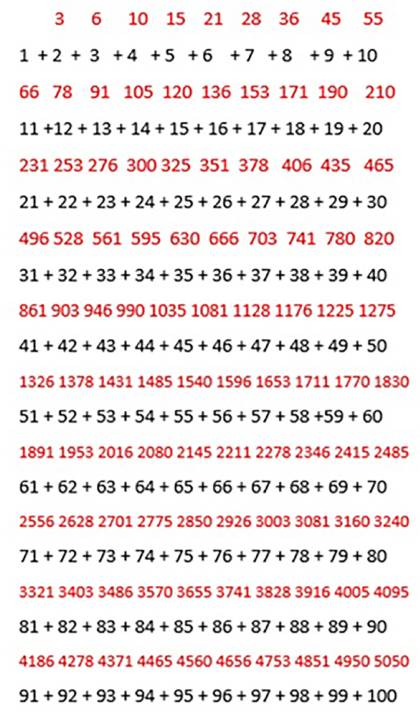
One can clearly see the effort and the structure in approaching this problem that these three students took to reach the solution. Are they as good as Carl Friedrich Gauss who devised a very popular solution to this question during his school years? Well, no, at least not yet. But are they better than students who waited to be taught a method or were taught the Gauss Method without even taking a chance to solve this question by themselves? I believe yes.
Of course, I told them and the others in the classroom the story of Gauss and his teacher after that and one can imagine how exciting it must’ve been for some students, who for the last hour were only interested in solving the question. When I showed them the picture of Gauss, I’m sure that was the first time they saw a foreign mathematician/ scientist who wasn’t Einstein; I’m sure it was the first time they heard a story around mathematics, that too a real one. After this, I also showed them a YouTube video of the Art of Problem Solving where Richard Rusczyk was solving this very question in a 2:49 minutes timed video. We all proceeded to discover a playlist of 151 Prealgebra videos [6] in the same YouTube channel by going through the recommendations.
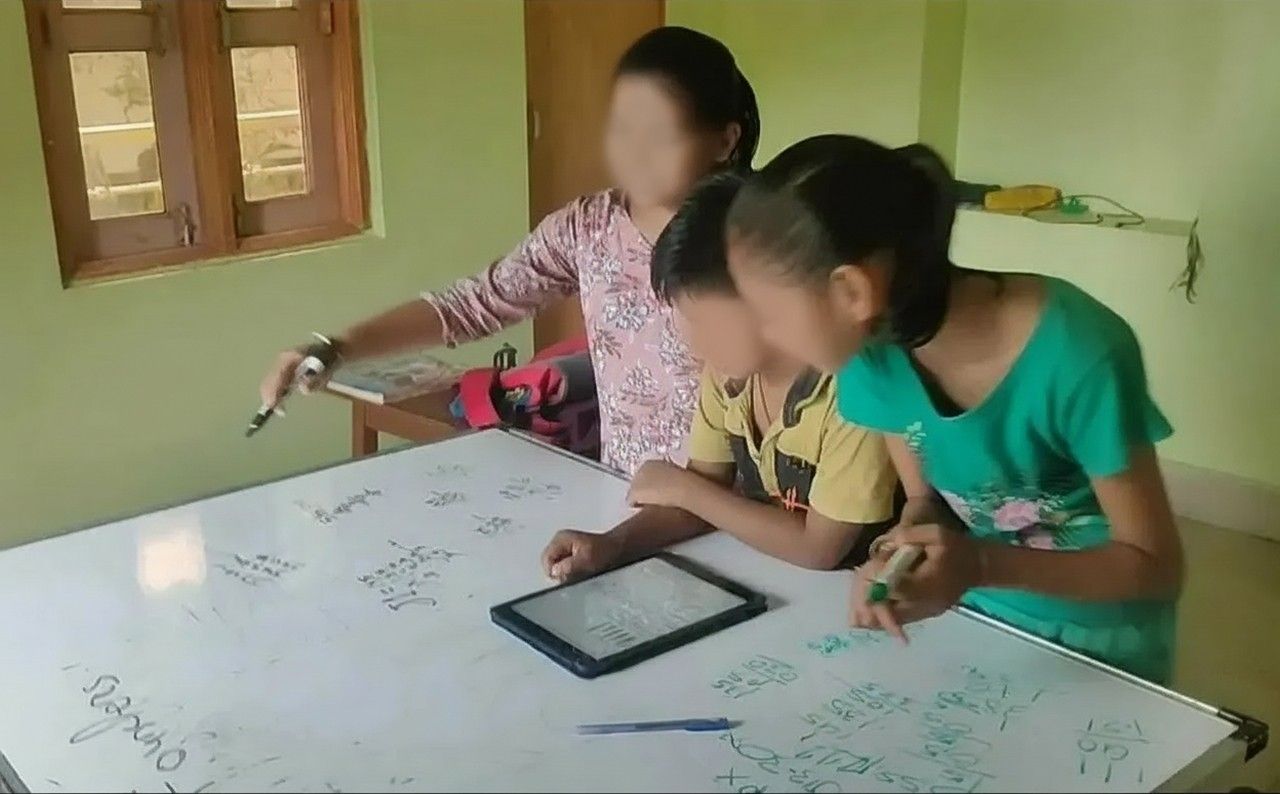
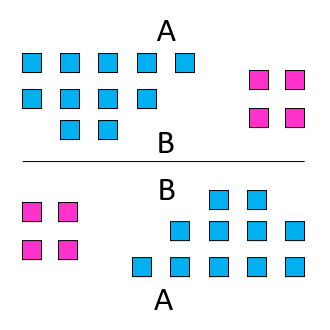
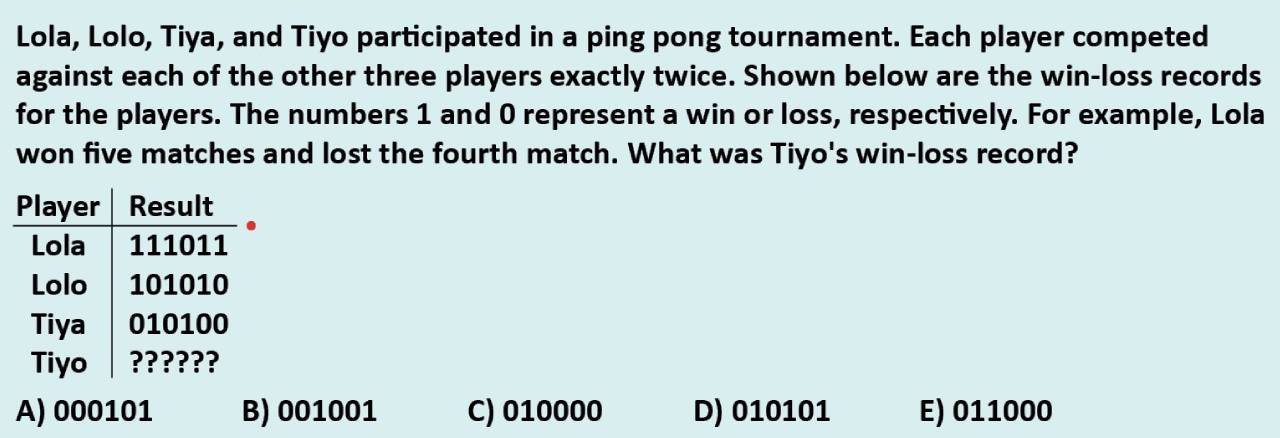
A Problem of the Day ritual followed in a classroom can set a lovely atmosphere of mathematical thinking. These problems can be of a wide variety and can be taken from age-appropriate mathematics contests from around the world. (I’ve put the link to some such contests in the references.) It helps to give problems where they can take their time and figure out various ways of solving it. For example, in a problem like the one shown in Figure 7, one could simply solve this question if they notice that the number of 1s and 0s in each column is the same and is equal to 2. But on the other hand, a group of students might simply sit down and make an entire diagram of the fixtures, which can be a really creative outcome. It also helps you follow up the momentum by designing questions made on fixtures and tournaments. The kind of problems that we need to avoid are problems which are too difficult, because that will have them lose both interest and confidence. If they continue solving these non-routine easy problems, it’s only a matter of time before they learn to figure out difficult problems, which generally are a culmination of two or more simple problem-solving thoughts.
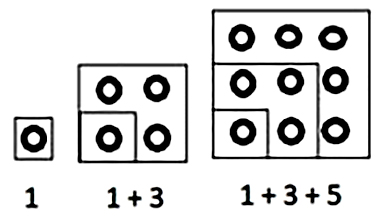
Having said that, it is preferable to take problems that can expand into some kind of pattern, or a problem that has more than one answer. For instance, ask them to add the first \(n\) consecutive odd numbers, giving them the question for very small values of \(n\). Encourage them to look for patterns in the answer. When they realise that all the sums are square numbers, slowly guide them, by using Chess Board with pieces or Four in a Row Board or any such game which you find available. It will take them time, but with some hints, they’d remember the experience of figuring out the geometric representation lifelong. These kinds of problems are available in plenty. For starters, one can find such problems in the Pull-Out section of At Right Angles, March 2025 issue, a highly enriching article named Patterns and Pre-Algebra by Padmapriya Shirali.
Final Advice
Discovery-based learning proceeds slowly initially but can accelerate exponentially. Even the anecdote I’ve shared about the problem came after over a month of classes in April vacation and a few days after school reopened post the summer break where we were focusing entirely on Language and Social Studies to build their thought process before diving into mathematics.
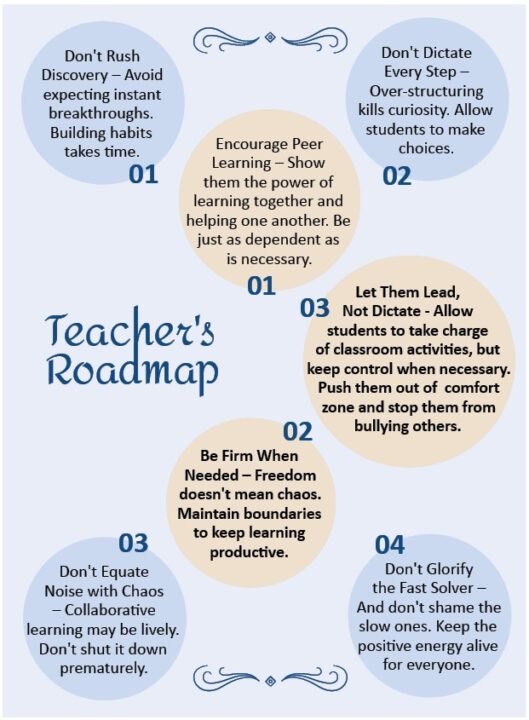
The goal is to help students learn how to learn: how to navigate the internet, follow meaningful YouTube playlists, and take notes from videos. By the time they’re in Class 8, who knows, they might bring you a write-up they want to submit to a mathematics magazine like At Right Angles. After all, in the very words of Seymour Papert:
“The role of the teacher is to create the conditions for invention rather than provide ready-made knowledge.”
That happened to me. My father, a physicist himself, encouraged me to explore the internet thoughtfully, told me stories from Sherlock Holmes and watched cinema of the likes of Bicycle Thieves with me. With time, I found myself writing short detective stories around cryptography and codes and submitting them to magazines like Stone Soup. I never got published, but looking back it’s among the very innocent and enriching memories I have. The real task is to take children seriously, not as passive learners but as active builders of their own knowledge. The greater task is not just to teach but to slowly teach them how to teach themselves.
- Papert, S. (1980). Mindstorms: Children, Computers, and Powerful Ideas. Basic Books.
- LOGO Programming Language Wikipedia Page https://bit.ly/3J72v3f
- Weir, P. (Director). (1989). Dead Poets Society [Film]. Touchstone Pictures.
- Mahapatra, C. K. ଦିିନକୁୁ ଖଣ୍ଡିିଏ ଅଙ୍କ [One Problem A Day]. The Book Point.
- Art of Problem Solving: Sum the Numbers from 1 to 100. https://bit.ly/3Jgp2L1
- Pre-Algebra Playlist. Art of Problem Solving. https://bit.ly/4hjkyQa
- https://bit.ly/4hmPaAg
- Lenchner, George. Mathematical Olympiad contest problems for children. https://bit.ly/4nj8D6v
- Shirali, P. (2025, March). Patterns and Pre-Algebra. At Right Angles https://bit.ly/48BkEAy