
“How Do I Know That They Got It?”
Questions that assess mathematical understanding


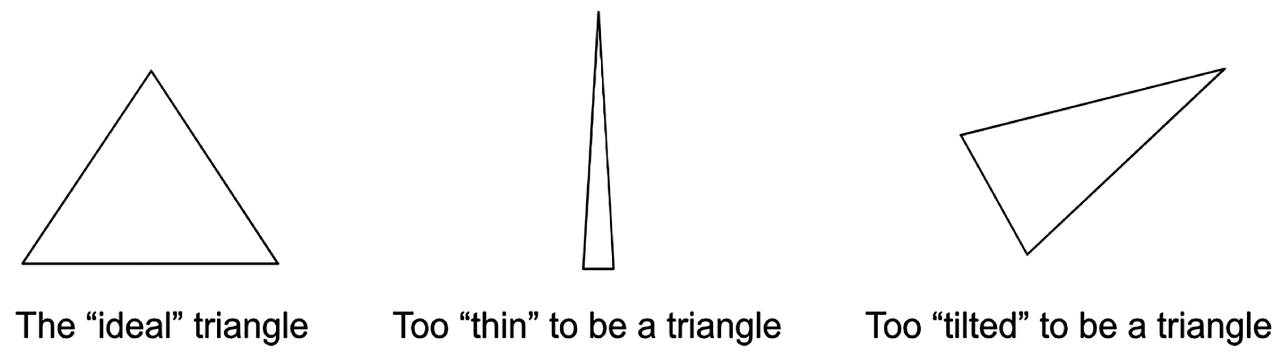
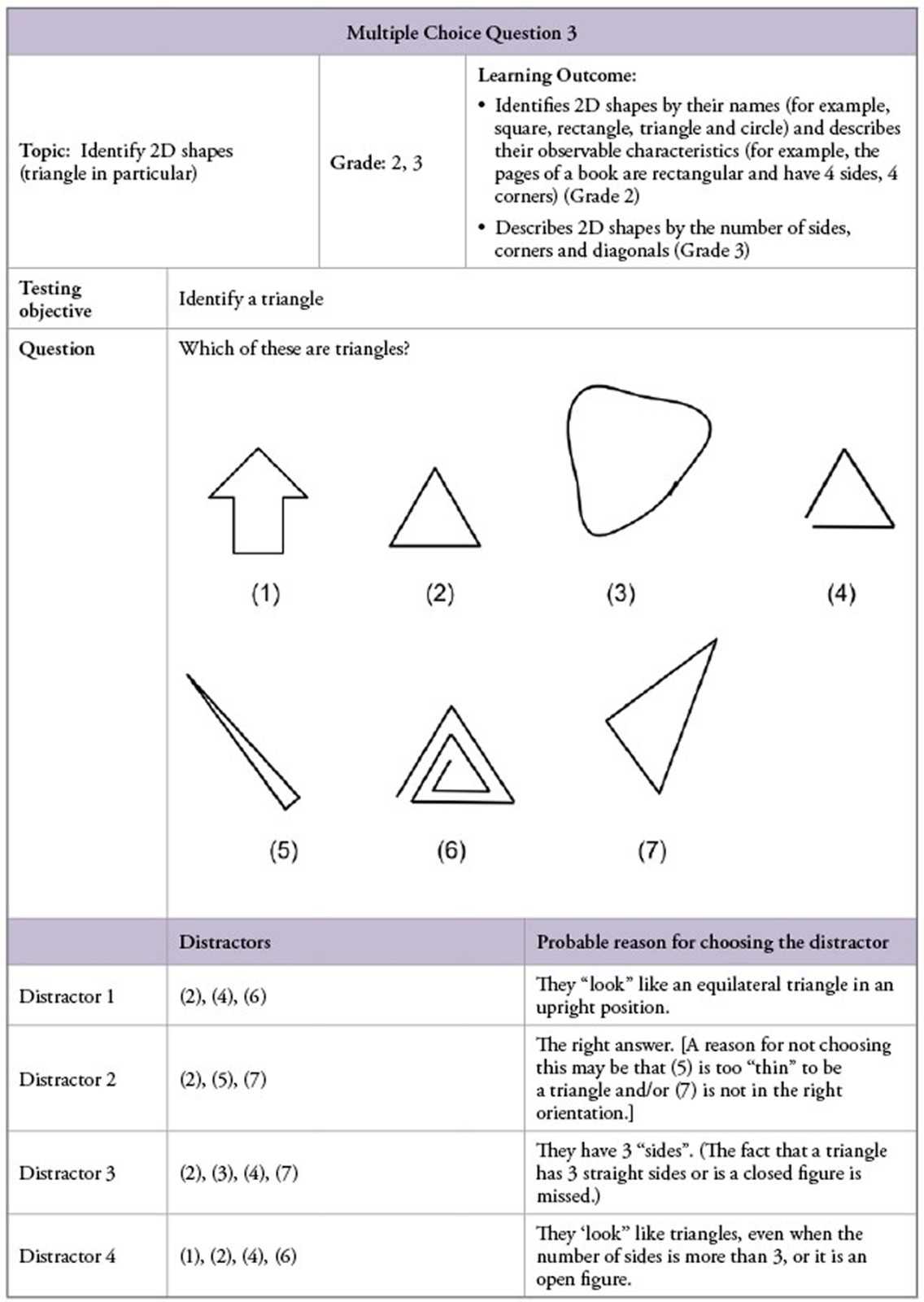
When we introduce a concept, the examples (and non-examples) that we use play a crucial role in the understanding of the concept for a student. For example, showing a triangle always as an equilateral triangle with an upright orientation may lead to the over-generalisation among students that a triangle needs to look that way and that any other orientation or size does not qualify it to be a triangle (Figure 1). Using different examples for triangles, and providing some non- examples too (curved lines, open figures) will help build a proper understanding of triangles.
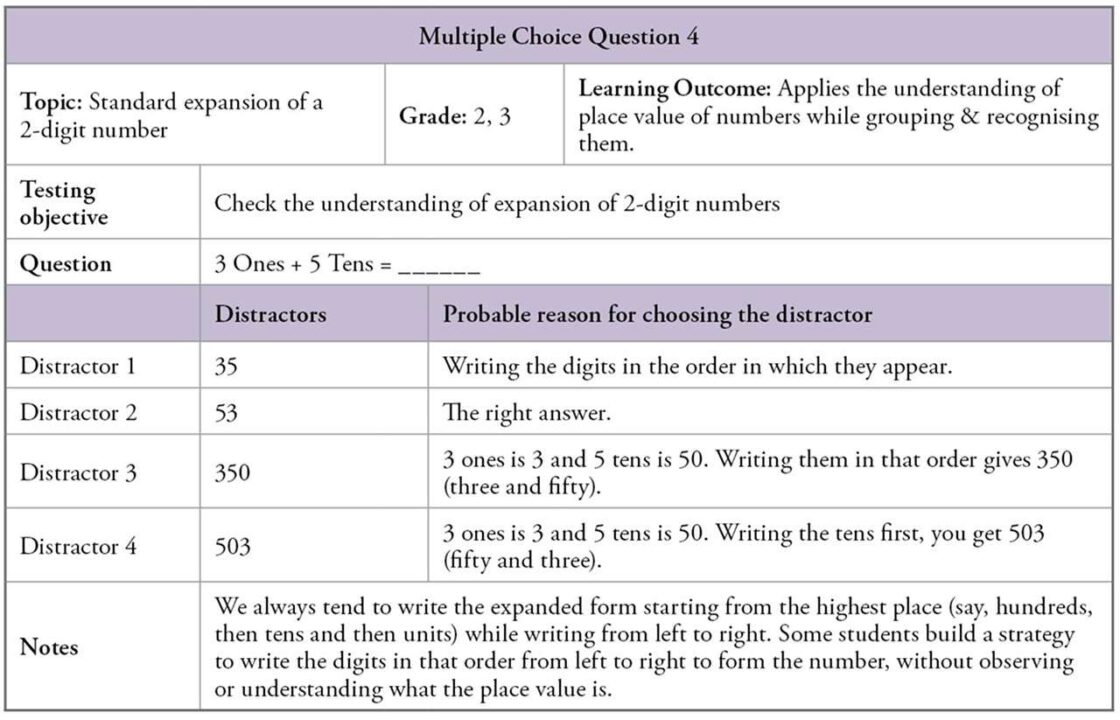
Similarly, while writing the expanded form of a number, we always tend to split it from left to right the way the digits appear, i.e., 3409 is 3 thousands + 4 hundreds + 0 tens + 9 units. A lot of students don’t pay attention to the place name or place value but only notice the order of the digits- 3, 4, 0 and 9. And when you change the order in which the places are called out, they make an error. For instance, 3 tens + 2 units + 8 hundreds will most likely be written as 328, instead of as 832 by these students. Changing the order for the expanded form of a number while dealing with the topic can help in such cases. Of course, the teacher should use his/ her discretion to decide at what stage in the learning they’d like to bring in these additional points.
Consider a few more examples
When we deal with subtraction of whole numbers, we say that we cannot subtract a bigger number from a smaller number, and yet when we move to integers, we teach them how to do exactly that! Also, we say that a zero has no value and yet 10 and 100 are different numbers and so are 1.02 and 1.2. (A lot of students when comparing decimals will say 1.02 and 1.2 are the same or equal because “zero has no value”.)
While in the examples of the triangle and expanded form, misconceptions arise because we have not covered all cases, in the rest of the examples, what we say and want them to believe no longer holds true when they move to other topics or advanced lessons. This creates a cognitive conflict in their mind which, for some, takes a while to go away. Being aware of this and knowing how a student is likely to think can help us intervene when required, or prevent the alternative conceptions from forming in the first place.
Once we have incorporated the relevant points in our teaching, a good way to assess if our students have understood a concept in its entirety is to frame the right questions that test their understanding. Well-crafted multiple-choice questions (MCQs) with plausible distractors help identify student misconceptions by presenting incorrect options that reflect common misunderstandings. When a student selects one of these distractors, it provides insight into the specific area or concept they are struggling with (rather than a random guess), enabling targeted feedback and instruction. This is useful because it allows teachers to:
- Diagnose misconceptions instead of just checking recall.
- Differentiate between partial understanding and complete misunderstanding.
- Target instruction more effectively, since the wrong answers reveal patterns in student thinking.
Given below is an example of an MCQ, with the item stem, and the options, also known as distractors, labelled.

Here are a few sample questions that you can try in class and see if any of the expected misconceptions emerge. Questions like these have been designed to test the understanding of students across the world, irrespective of their socio-economic background, gender, teacher’s experience or expertise. The likely logic for choosing each option is provided, so that it helps you as a teacher plan your remediation to address it. They have been mapped to learning outcomes mentioned in the NCERT documents (Learning Outcomes at the Elementary Stage, NCERT, 2017 for Grade 3 LOs and Learning Outcomes at the Foundational Stage, NCERT, 2025 for Grade 2 LOs), and give an indication of what outcome can be checked for (either directly or eventually leading to) through the questions asked.


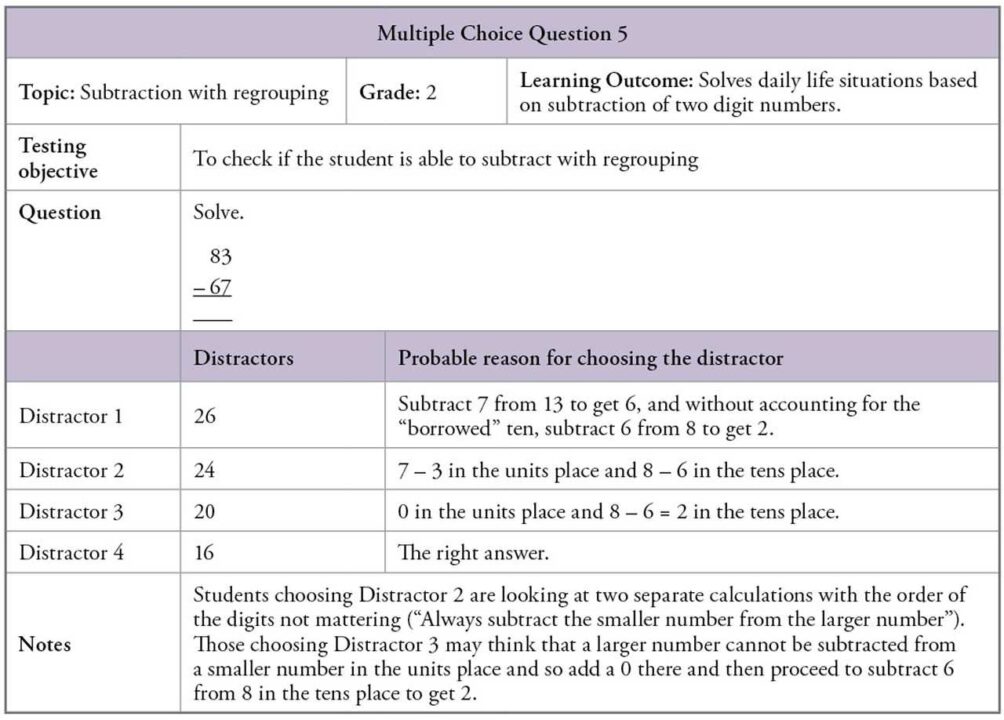
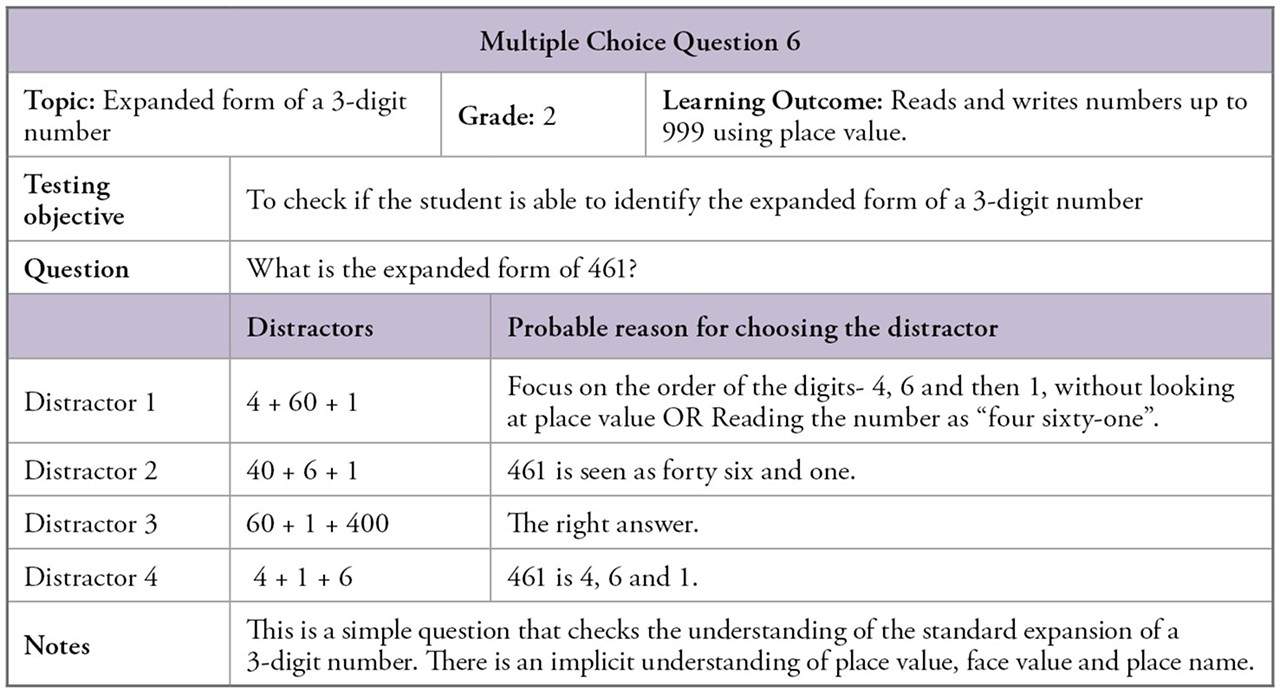
By asking the right questions, teachers can move beyond mere rote memorization and instead foster a deeper understanding of mathematical concepts. By incorporating a combination of both non- MCQs (open-ended, probing questions), as well as MCQs with careful thought out distractors, we can gain valuable insights into our students’ thought processes, identify areas of misconception, and adjust our instruction to meet the diverse needs of our students. Here we have explored the MCQs specifically. Ultimately, these approaches enable teachers to create a more supportive and effective learning environment, where students can develop a strong foundation in mathematics and build confidence in their problem-solving abilities.
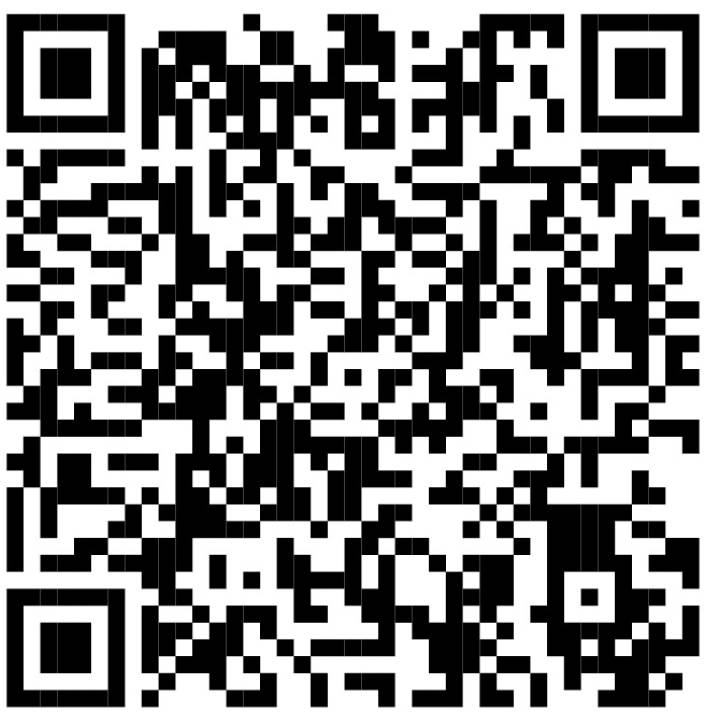
Teachers interested in trying any of these questions in their class can fill this short form by clicking or scanning the given QR code so that we can brief you on the next steps on how you can incorporate this in class. Tips for possible remediations will also be provided.