

Seat Number 22


It was a Tuesday morning, and the 12 students of Class 7 at the local government school, were surprised to see me stepping in for their teacher. After a few friendly exchanges, I casually asked how many of them had travelled by bus, where they went, and why. What did the inside of a bus look like? How many types of buses had they seen?
The class lit up, sharing stories of bus journeys- visiting their Nani’s (grandmother’s) or Mausi’s (aunt’s) place in nearby towns. It was clear that everyone had travelled by bus before. I mentioned that I’d been talking to students from another school about their seat numbers on bus journeys, and that’s when Surabhi chimed in with a question:

Once, I was travelling to my Nani’s place in Haridwar by bus. I noticed that the seat in front of me had the number 22. What was my seat number?
“Class, can you help me figure this out?”

A quick guess is a pedagogical opportunity

23, because the seat after 22 would naturally be 23.
If there’s only one column of seats in the bus, yes. But the buses I have seen, have more than one seat in each row. So, I think we might have to consider other possibilities besides just 23.


Yes, sir. I think we need to draw a diagram showing the bus seats to really know how they’re arranged. That way, we can be sure about Surabhi’s seat number.
Sketching Solutions
It seems like you all enjoy drawing and visualising things, and that makes math even more interesting. So, let’s put that into practice. I’d like everyone to draw the layout of a bus and number the seats as you think they are arranged. You can use the buses you’ve seen to guide you.


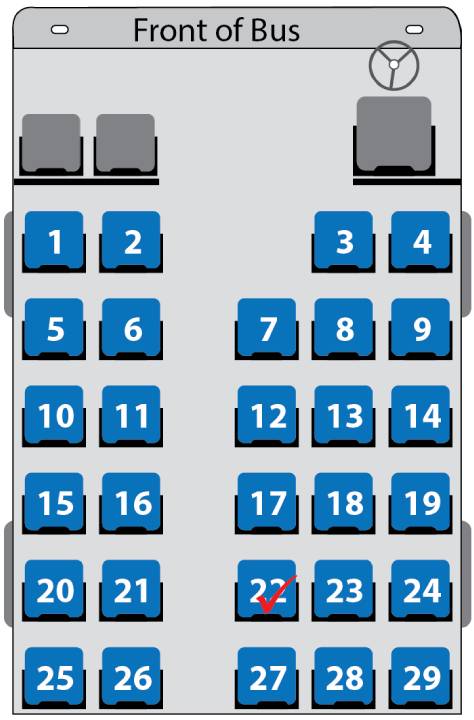
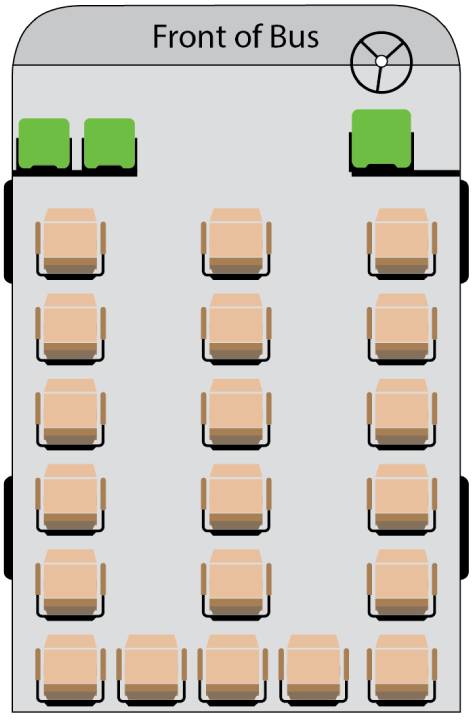
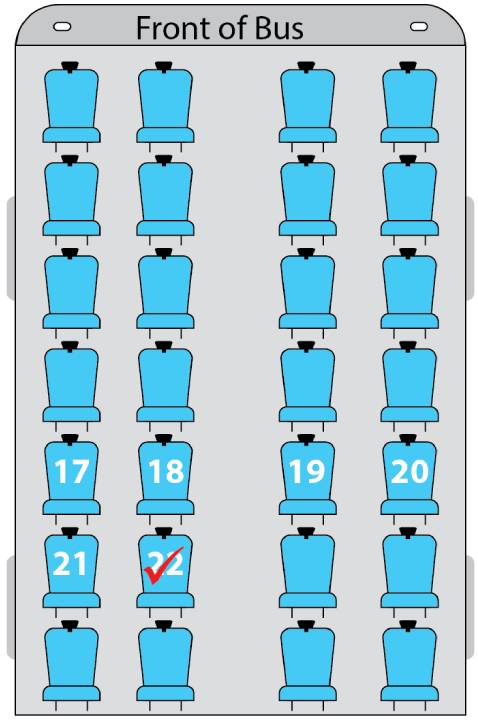
Many of you arrived at the same conclusion, even though you visualized the bus layout in slightly different ways. Class, what are your thoughts on this?

Many Answers, Many Paths

Sir, depending on how you set up the drawing, Surabhi’s seat could be 26, 27, …. there can be many correct answers. When I drew the bus layout, I started the numbering differently, and I saw that the seat numbers could be different each time.
Neha, could you show us how you got multiple answers?

If we start numbering from the very first seat on the left as 1, then Surabhi’s seat could be 31.
If I number the seats from the very last seat on the left, Surabhi’s seat number will be 18.
If Madhu also numbers the seats from the very first seat on the left but the seat numbers go in a different order, then Surabhi’s seat number will be 27.
That’s why I believe there isn’t just one correct answer. It was the drawing, sir. At first, I was making a detailed drawing of each seat, but then I realised I didn’t have to be exact. I just wrote the numbers in different ways, and that made me see that the arrangement could change Surabhi’s seat number.
Excellent explanation, Neha! You showed how the starting point and the arrangement really affect the outcome.

Sir. I took a different approach—I didn’t even write the numbers on my drawing. I just drew simple rectangles to represent the seats. This way, I could choose any starting point for numbering, which shows that Surabhi’s seat number need not be the same every time; it can change based on how you label the seats.
I love how you all are using symbols and drawings to explore the problem. It really shows that by playing with how we represent things—whether with detailed sketches or simple rectangles—we open up new ways of thinking about the problem. Mathematics isn’t just about getting one “right” answer; it’s about the process of exploring different ideas and understanding that the way we set up a problem can lead to multiple valid conclusions.
Playing with abstraction
I’ve noticed that Manisha and Arpit have taken a very different approach. Instead of drawing the bus layout like most of you, they have created a rectangular wave pattern. Manisha, can you tell me— according to your drawing, what is Surabhi’s seat number?

Well, sir, based on my drawing, I’d say Neha and Madhu are right— the seat number could be anything. If S22 represents the seat in front of Surabhi in Figure 6, then her seat number is 25.
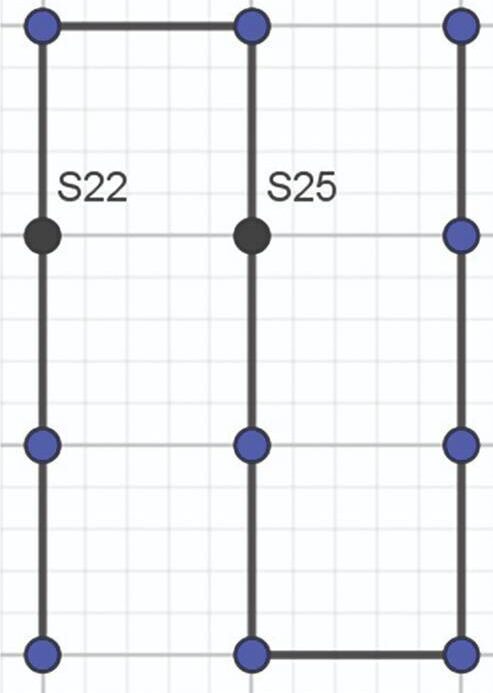
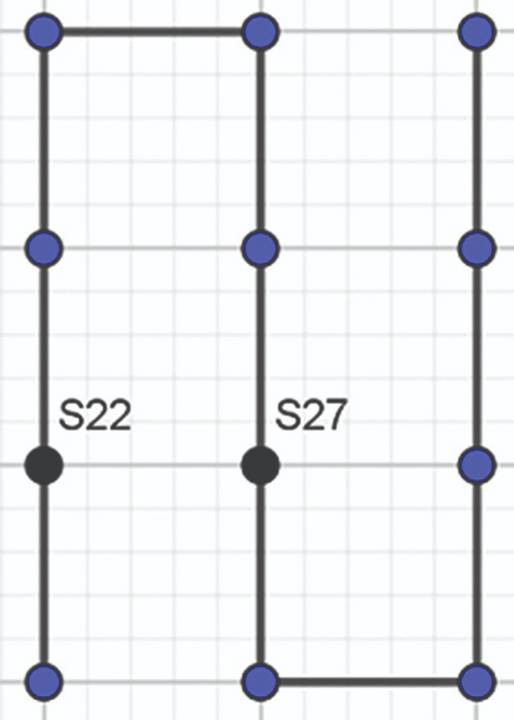
Figure 6

That’s intriguing. And why did you choose to draw just this small pattern instead of the whole bus layout?

Sir, I believe it’s not necessary to draw the entire bus. To answer the question, I thought we only needed to understand
- How many seats there are in a row
- If the numbering starts from the front or from the back
- If the numbering always starts from the left or continues in a wave.
The little pattern we drew contains all that information
I see. So, in your view, the pattern itself is enough to decide the seat number. Manisha, you also mentioned there are rules to determine the seat number. Could you explain those rules?
Sure, sir. In the wave pattern, the position of seat 22 also matters. I got Surabhi’s seat as 22 + 3, Arpit got it as 22 + 5 and Amaira as 22 + 7. These rules can change based on how we set up the seating. I can even see a position where it is 22 + 1! But of course, this also means that the position of the first seat will be at a random position and not always at the top left, which affects where seat 22 is.
Wow, Manisha, that’s a great connection! It’s fascinating how these rules can be applied to different arrangements. This shows how flexible our thinking can be when we use different representations. It’s been wonderful to see how you all use your creativity and reasoning to tackle the problem
Seat 22’s Secret: What Students Taught Me
This classroom experience highlights the power of open-ended questions in fostering deep thinking and collaborative learning. When students were asked about Surabhi’s seat number, their initial responses were intuitive and surface-level, such as assuming the seat number would simply be the next sequential number (22 → 23). However, as the discussion progressed, students began to question their assumptions and explore alternative perspectives. This shift was facilitated by encouraging them to visualize the bus layout through drawings, which allowed them to engage with the problem more deeply. For instance, Deepak, Priyanshu, and Ritik drew detailed layouts of the bus, which helped them realize that Surabhi’s seat number could be one of several answers. This shows how visual thinking can unlock new ways of approaching problems, especially when students are given the freedom to represent their ideas in their own way.
The use of symbols and abstract representations, as seen in Neha’s and Madhu’s work, further demonstrates how flexibility in thinking can lead to multiple valid solutions. Neha, for example, realised that the seat numbering could vary depending on how the numbers were arranged, leading her to conclude that Surabhi’s seat number could be 26 or 27. This kind of reasoning is only possible when students are encouraged to explore problems without the constraint of a single “correct” answer. Similarly, Manisha, Arpit and Amaira took this a step further by using a rectangular wave pattern to represent the seat arrangement, showing how abstraction can simplify complex problems and reveal underlying patterns. Their approach underscores the importance of allowing students to move beyond concrete representations and engage with mathematical concepts at a more abstract level.
Asking follow-up questions such as, “Why do you think that?” or “Can you explain your reasoning?” encouraged students to articulate their thought processes and consider alternative viewpoints. This not only deepened their understanding but also fostered a sense of collaboration, as students began to listen to and learn from each other. For example, when Priyanshu challenged the initial assumption that Surabhi’s seat number was 23, it prompted the class to rethink their approach and consider the layout of the bus more carefully. This kind of dialogue is essential for developing critical thinking skills and helping students see that problems can have multiple solutions.
The class discussion exemplifies how an open-ended question—one that does not lead to a single fixed answer—enables students to explore, debate, and construct meaning. Instead of being passive recipients of knowledge, students became active participants in forming their understanding.
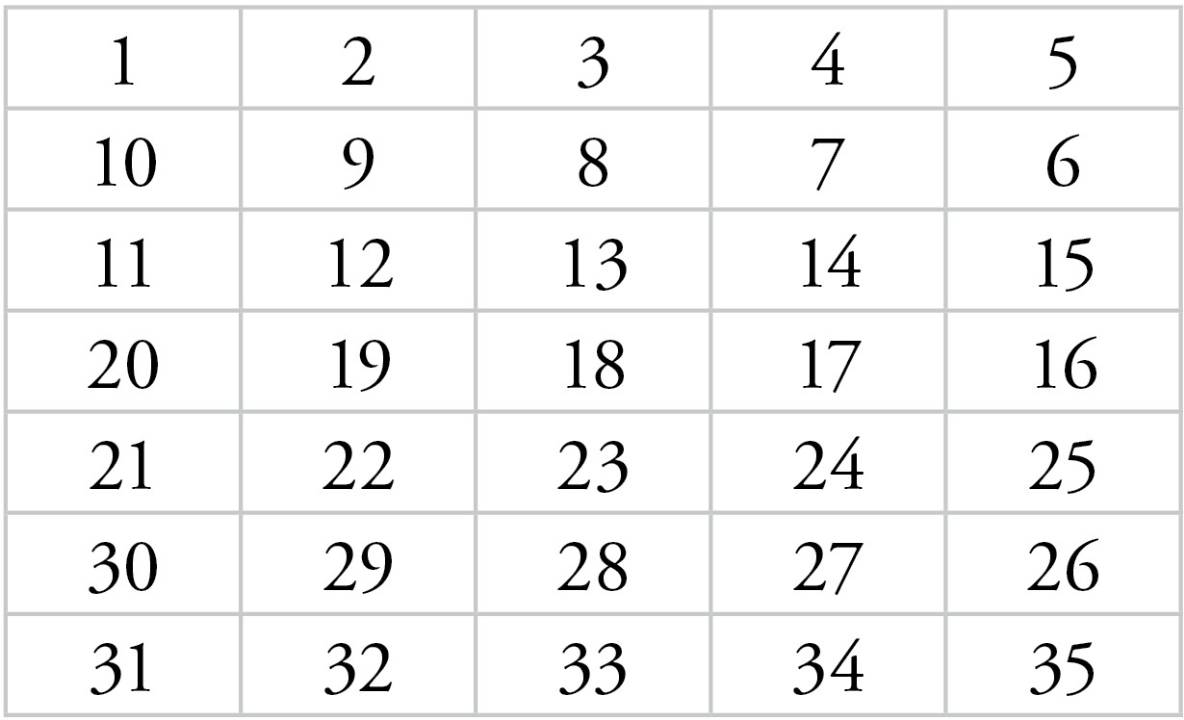
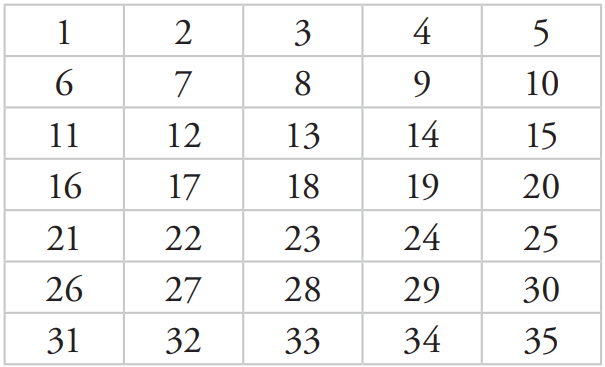
Finally, the article illustrates the importance of giving students time to reflect and revise their thinking. When students like Neha and Madhu were given the opportunity to revisit their initial ideas, they were able to refine their reasoning and arrive at more nuanced conclusions. This process of reflection is essential for developing a deeper understanding of mathematical concepts and for building confidence in one’s ability to solve problems. By creating a classroom culture where mistakes are seen as opportunities for learning, mathematics can help students develop resilience and a growth mindset.
There was learning for me too. Looking back, I think connecting bus layouts to a number grid would have been great. This simple idea would have let students easily find patterns in rows and columns in various table sizes, making number exploration more engaging.

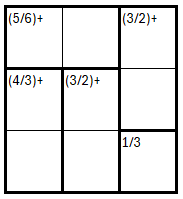
Sure, sir.