
Mathematics Day Once More…
Compiled by the Editors, At Right Angles











These were the questions we posed:
- Is it a good idea to celebrate a National Day of Mathematics?
- Do you think this celebration impacts on the routine teaching of mathematics over the year?
- Do you have any personal recollections and/or anecdotes connected to such celebrations?
- Do you have any suggestions for a more meaningful, impactful celebration?
We received responses from several teachers, teacher educators and practitioners in the field of mathematics pedagogy, whose profiles are given at the beginning of the article. The majority felt that a special day focused on Mathematics was definitely a good idea and one that had the potential to light sparks of interest in the most reluctant of students.
Often school / college mathematics is directed towards the exam and mired in routines. So, any reason to break the routine and to create an opportunity to introduce students to a different facet of Maths, that is distant from the exam mode is always welcome, if not essential, says Jayasree Subramanian.
Sowmyashree N J shared I believe it is a good idea to have a National Day of Mathematics. It is also an opportunity to remove the fear of mathematics, which is so common among students, and instead allow them to experience joy, discovery, and purpose in the subject.
But Ashish Gupta has a word of caution. Merely celebrating a day, like we celebrate festivals, does not by itself bring lasting change. For example, celebrating Diwali on one day does not mean that good has triumphed over evil forever. Similarly, observing National Mathematics Day alone will not transform the reality of mathematics classrooms in our schools. What truly matters is understanding the purpose behind such observances.
Ashish goes on to explain when such a celebration can have a meaningful and long-lasting impact. The larger purpose of celebrating National Mathematics Day is to inspire children to explore the world of mathematics and to motivate teachers to make their teaching more engaging and enjoyable, so that no child grows up fearing the subject. The celebration also serves as an opportunity to promote mathematical thinking and problem-solving skills among students and the wider community. By dedicating a day to mathematics and to a mathematician like Ramanujan, we acknowledge the subject’s importance in national progress as well as in the everyday lives of individuals. The day also reaffirms India’s rich mathematical heritage—from ancient contributions such as the concept of zero and the decimal system to modern-day advancements. It reminds us that mathematics is both a cultural treasure and a vital tool for shaping the future. Equally, it encourages teachers to take initiatives that nurture analytical skills, logical reasoning, and creativity in young learners by influencing their regular classroom practices. However, this transformation cannot be achieved in a single day. It must become an integral part of everyday teaching and learning in all mathematics classrooms.
Nujahat Anjum shares, A lot of questions arise in the minds of our teachers when we hear these words
- Will children who do not learn even if they study for a whole year learn from one day?
- We don’t have time to teach, where do we get time to do these kinds of rituals?
- We don’t have learning, how should we go about this?
- I am not a subject teacher, why should I?
- Our children have no knowledge of numbers, no basic functions, what should we do?
- If there are no other teachers in our school who think about it, why should I think alone?
The answer I found to these questions was that I am a teacher, so:
- I try different ways to improve the learning of children, one of which is Mathematics Day.
- I make time for children to play and learn with and from different teaching-learning materials.
- My job is to teach children numeracy knowledge, basic functions, and I try to do this by routine and non-routine methods that inculcate this knowledge in children.
- I teach by example, and I learn when I try new things.
As Kanchan says, This celebration, when done with purpose, helps in teaching mathematics by giving many teachers a chance to reflect on how their students learn and where they face challenges. Often, after such events, classrooms become richer in their collection of math materials. In many schools, the real hero in this process is the mathematics kit. In both situations, whether teachers and students are already curious or the celebration is held just for the sake of it, I have seen this kit give both students and teachers something new to explore and reflect upon, bringing concepts to life in the process.
Observation: We need to have a clear understanding of the objectives of celebrating the National Day of Mathematics.
Snapshots of celebrations across India
Jayasree: One very vivid recollection I have is the celebration of Ramanujan’s birth centenary in my college in small town Palakkad where I grew up – I was in Class 11 then. My college organised a quiz competition and some talks on the life and work of Ramanujan. I was not very aware of Ramanujan’s work at that time, I am not sure if I had even heard the name. At that time, I didn’t think that there could be a “Maths Quiz”. How could one be “quizzed” in Maths? I remember participating in the quiz and getting a feel for Maths outside the textbook. The word “mathematician” acquired a different meaning for me. Till then “mathematicians” were names I encountered in textbooks – Pythagoras, Euclid- Kumbakonam and Chennai on the other hand were real places for me – places which I had been to. That a “mathematician” could be from these places, and that the schools and colleges he attended still existed was something for me. “Mathematician” was not such a distant notion after all!
Later in life, in another small town in Gujarat where my children grew up and when many of the people I connected with were 2D beings on the computer screen, I remember the craze with which my children solved problems online during “Pi Day”. There was some online contest which the school had shared with all students and the feverish energy with which a whole bunch of kids worked on routine exercises (arithmetic calculations) to have their school name in the “leaderboard” for having solved the most number of problems was amazing! This happened for 2- 3 years. I am not advocating the “competitive spirit” or the meaningless calculations here – but want to draw attention to the “sense of mission” with which the kids went about it. If a “celebration mode” could channelise that energy into more engaging activities that would generate interest in mathematics, that would be great.
I think the “impact” lies in being able to reach small towns and villages. I also appreciate the IMU (International Mathematics Union) “Pi Day” Celebrations, where there is a theme for the activities, where you can share your little celebration with others, get to see how others celebrated and enrich yourself.
A practical suggestion from G. Jagadeesha: If it’s celebrated at the cluster level, with all schools in taluk places participating, it will be very effective.
Here is an account from Karan Singh: Last year, from 17–20 December 2024, we organised a four day Mathematics TLM-making workshop with 35 upper primary school teachers in Rudraprayag. Teachers prepared individual TLMs on different mathematical concepts and later showcased them at a Teachers’ Mela in DIET Rudraprayag. Nearby UPS, GIC students visited the mela, interacted with the teachers, and asked about the use of each TLM. Teachers explained the concepts in detail, making it a rich learning experience for the children. Finally, we encouraged teachers to celebrate the National Day of Mathematics on 22 December in their respective schools and share photos and videos of the event. This initiative was very well received and implemented meaningfully in the field. The Government of Uttarakhand even issued an advisory to all schools to celebrate the National Day of Mathematics. Along with this, we shared ideas, suggested activities, and possible materials for the celebration. It turned into a day where mathematics learning happened with joy, creativity, and freedom, setting a positive tone for teaching throughout the year.
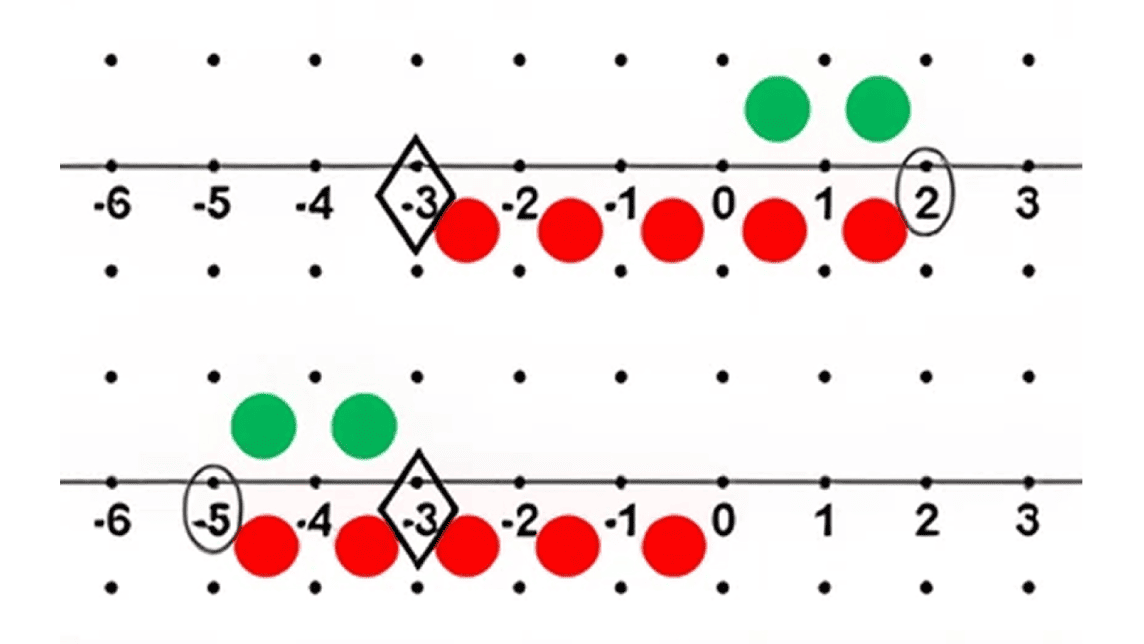
Pooja Dumaga says I recall a Maths DRG workshop conducted in Pauri with selected DRG members, which focused entirely on the use of Teaching-Learning Materials (TLMs) in elementary grades in the context of the National Day of Mathematics. As a follow-up, meetings were organised where 3-4 teachers brought the TLMs they had developed and shared their experiences with other teachers. A teacher explained how she used a number line scale to teach addition and subtraction of integers effectively. Another demonstrated how he introduced the concepts of \(\sqrt{2}\) and \(\sqrt{3}\) using a practical tool. After the workshop, 7-8 teachers shared photos and videos of the Maths Corners they had created in their schools. Some also began exploring mathematical identities using cut-outs.
Observation: A National Mathematics Day celebration is particularly relevant in remote areas. Schools in such areas can do joint celebrations which pool resources and serve as a platform for exchanging learning.
Suggestions for a meaningful celebration:
Pooja: From the above experiences, I learned that instead of talking about many different TLMs, it is better to focus on just a few and explain them clearly using proper mathematical language. This helps teachers think in a more complete way, rather than just making TLMs without understanding.
Pooja reiterates that students should be told about the lives and work of famous mathematicians – this would help students appreciate mathematics and see that it is connected to real people and their stories.
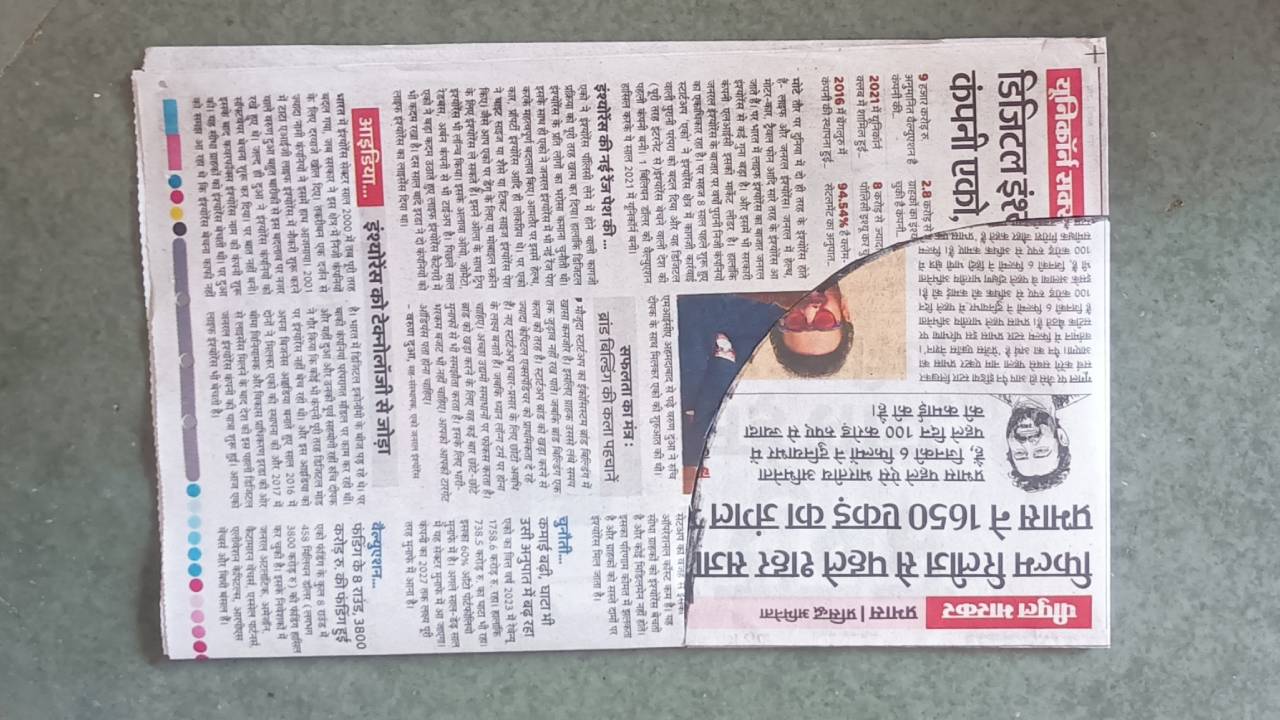

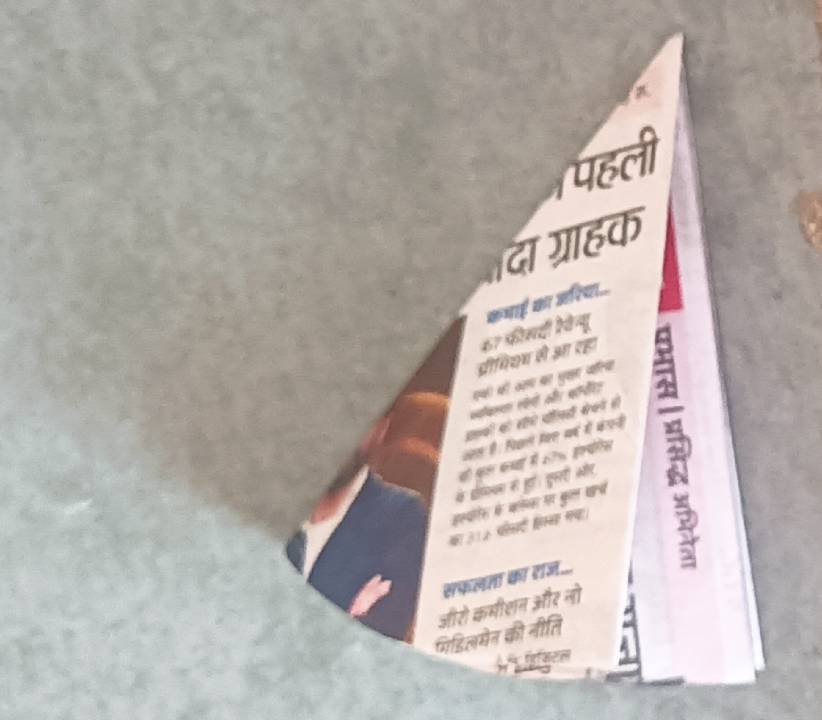
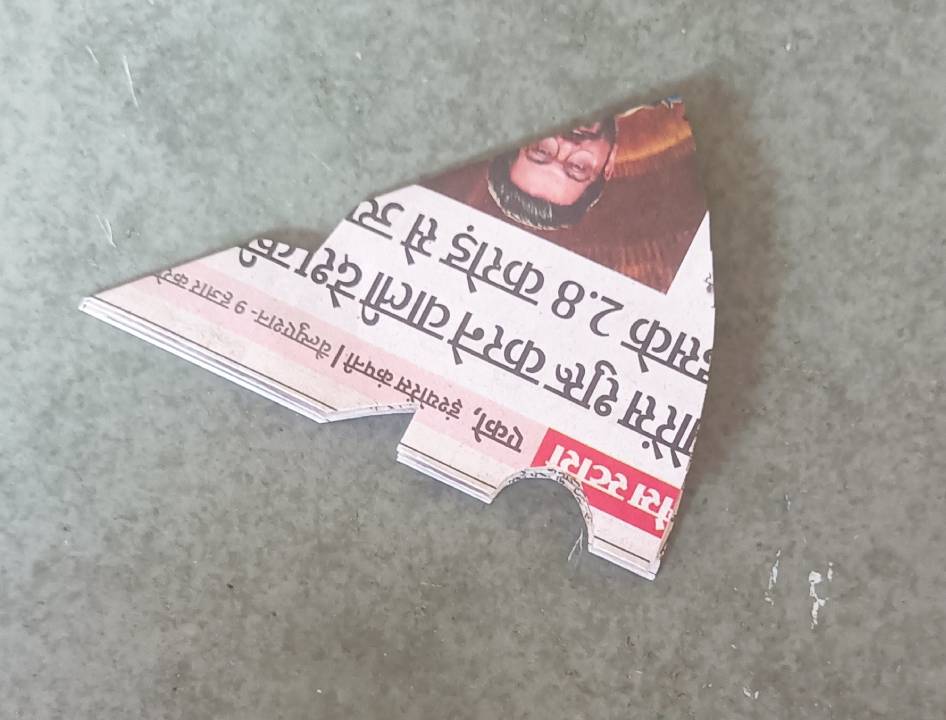

Hands-on activities seem to be the key. Saddam Husain says Last time, paper craft activities were planned to work with children of class 4-5 and upper primary level. The main purpose of these activities was to promote visualization. It has been seen in the field that when interesting activities with children are demonstrated on Mathematics Day, its effect has also been seen in the teaching process of teachers for some time after.
Mokhtar Zaman: In our school’s Baal Shodh Mela, we had a mathematics corner. Children enjoyed solving puzzles, playing number games, and exploring activities. I saw that the same students later showed more interest in the classroom when we taught them similar topics such as weight in the chapter on measurement, and angles in geometry.
When a mathematics laboratory was set up in our school, we were told that we could even try out small research activities. At that time, we students were still confused and kept wondering, “How can we research in Maths?” But soon, our curiosity turned into excitement when we were given tasks to create small projects. I still remember choosing the algebraic formula \((a+b)^{2}\) = \(a^2\) + \(b^2\) + \(2ab\). Since some construction work was going on at my home, I used a marble piece and carved out two squares and two rectangles on it to demonstrate the formula. It was a simple idea, but I felt very proud of it. Later, when all the students brought their own models, we organized an exhibition on 22 nd December, celebrated as National Mathematics Day. That was the very first time our school celebrated Maths Day, and it started with our own projects and creativity.
Sowmyashree says there are many ways of celebrating this day, and I remember one particularly meaningful celebration when I was a teacher. I was given the chance to plan activities with high school students. Together with teachers and parents, we designed an event that gave responsibility to the students themselves.
Students take the lead – Students of Grades 8 to 10 took the lead in training and guiding younger children. One group conducted a simple survey on our school road to find out how many students carried plastic bottles to school. They compiled and presented their findings to the whole school assembly. The process of collecting, organising, and sharing data gave them a new sense of mathematical purpose. More importantly, their work had a direct impact: the head teacher decided to observe a “no plastic usage” week in the school. This showed students how mathematics could influence real decisions and bring about positive change in their community.
Learning together – Another group worked with younger children who often struggled with mathematics. The high school students taught them concepts like area and perimeter in concrete ways— taking them to the playground with measuring tapes, using graph paper to calculate area, and making the ideas come alive. Parents and teachers supported these sessions, and the younger students not only understood better but also felt more confident. Watching older students patiently teach and explain was heartwarming—it made mathematics collaborative, supportive, and joyful.
We hear from Narender Kothiyal of the learning from organizing such celebrations: Mathematics needs to relate to the day-to-day life experiences, thus assignments need to relate with the application of mathematics.
Model making is an interest of most of the students. It just needs to be connected meaningfully to the theory that is taught in order to enhance learning. For example, what happens when the radius of one cylinder is increased by a certain value, and the height of a second cylinder is increased by the same value? Then what happens to their volumes? So, such types of things when included gives the students depth to their learning and calculations. Here are a few key ways to ensure this:
- Students must be prepared for questions related to the topic they are doing so that they can also deal with the questions more confidently.
- More opportunities need to be given for independent exploration and understanding.
- Students need to practise and rehearse for the event.
- Proper time needs to be given for preparation.
Kanchan sums up the discussion: Celebrating the National Day of Mathematics is good but it will be meaningful only when it goes beyond being just a formality. Its real goal is to create an environment where students feel encouraged to explore, ask questions, make mistakes and enjoy learning math. I have witnessed both types of celebrations. In one primary classroom, children thought, played games, faced challenges, and even made mistakes while solving puzzles and recognizing patterns. In another classroom, the event felt more like a formality, lacking the connection to its purpose. However, in both situations, the positive outcome is that these events made teachers and students step out of their usual routines and provide something new to think upon. Designing problems, puzzles and games based on Learning Outcomes connected to the content already taught serves as a fun, low-pressure assessment tool for teachers to see how well students have understood concepts while letting students enjoy things.
Observation: Activities must connect to the curriculum and help students to view content in textbooks not just through pen and paper exercises.
The day can serve as an opportunity for informal assessment, not just for the students but also for the efficacy of the teaching.
When students are given the responsibility, they learn much more than mathematics, this is an opportunity to develop life-skills. This celebration is an opportunity to inspire children: with stories about mathematicians and their relentless efforts, with examples of applications of mathematics, with the sheer joy of doing mathematics.
Keeping in mind the learning outcomes for each class, while organising such days, the vision for teaching school mathematics does not remain a distant dream but an actual possibility.
Conclusion
It was heart-warming to see the level of thought and preparation that goes into the celebration of Mathematics Day across the country. It is an opportunity to bring the curriculum alive and make learning exciting, provided that there is a clear understanding of the objectives of such a celebration. It provides opportunities for students with different abilities to excel and can build individual and personal capabilities and confidence.