
Children of Plato: A Mathematical Roleplay
Five awesome friends for Chinnu!
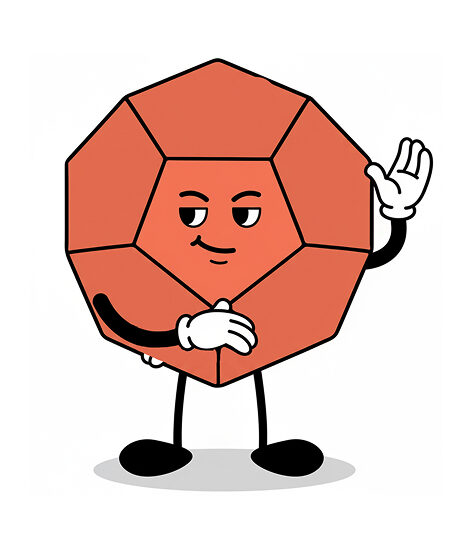
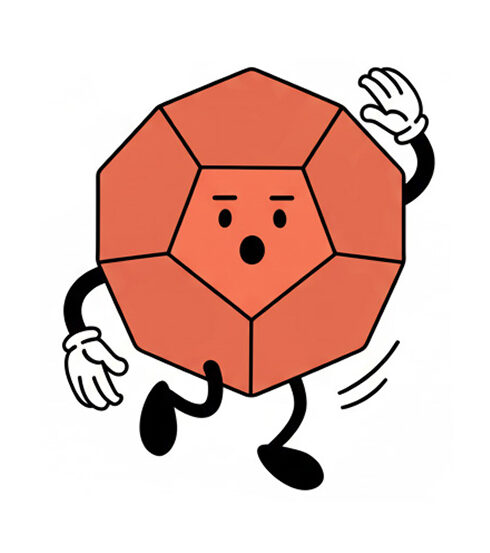
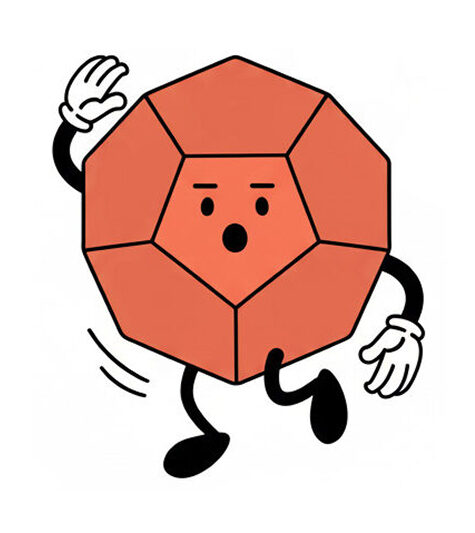
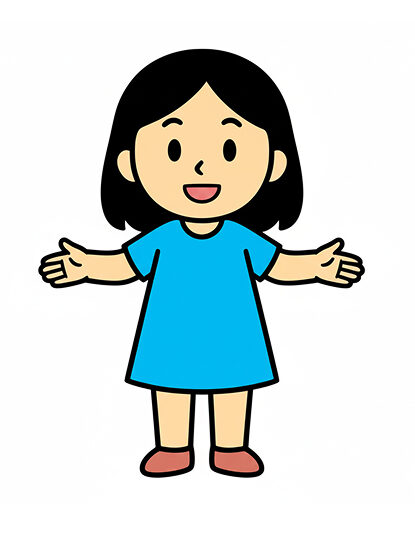
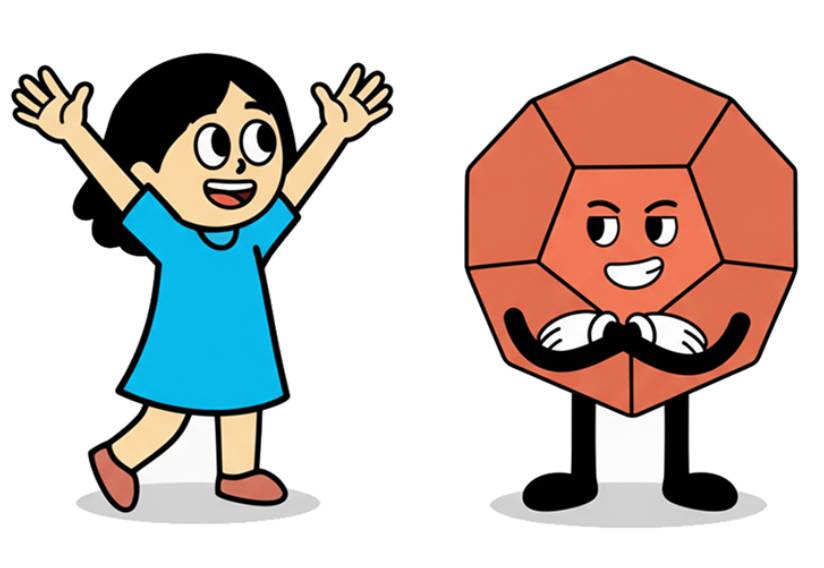
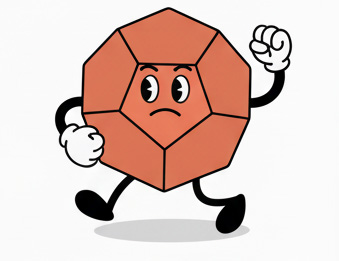
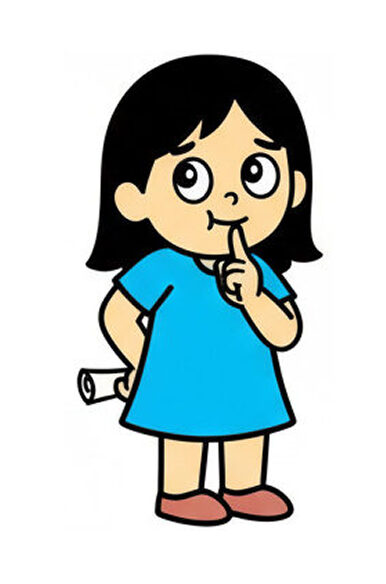
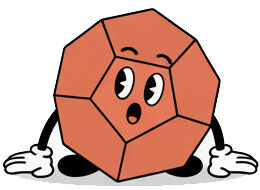
Chinnu is walking around in the land of shapes and meets a dodecahedron. This weird shape has many faces and a different expression on each face.
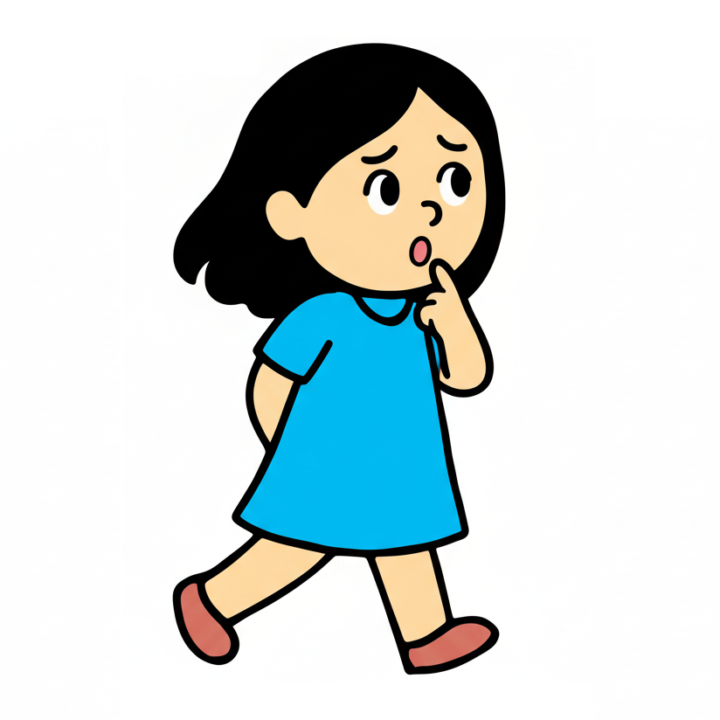
Wow! You have so many faces. Who are you?
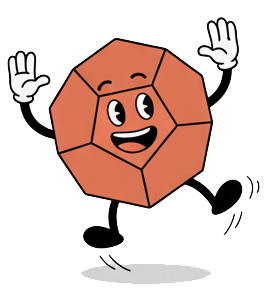
(Turning round and round) I’m a dodecahedron—a shape with twelve faces (begins to turn around again)
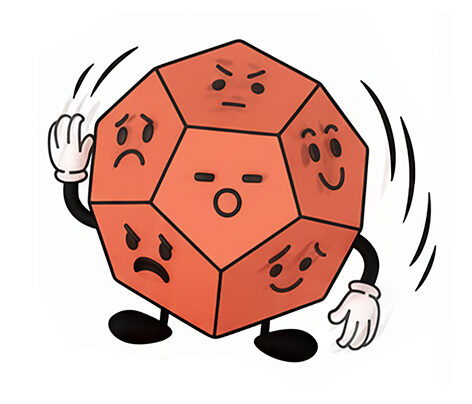
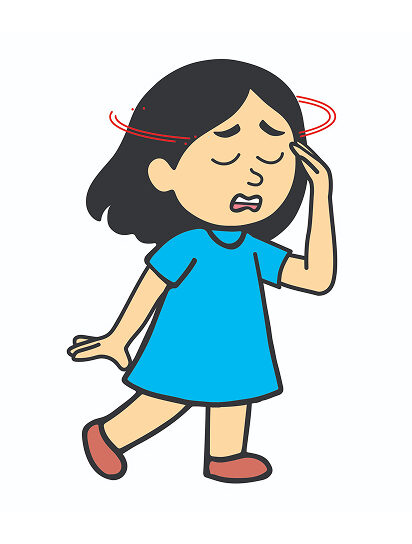
Hey! I am getting dizzy seeing you spin round and round. Stop, please!
(To the audience) That’s a lot of faces! Why do you need twelve faces?!
You mean where you come from, fellas like you have only one face?
Chchch… (pitying Chinnu) You will wear out your face using it for different expressions.
Look at me, I have one for smiling, one for grinning, one for crying, one for frowning …….
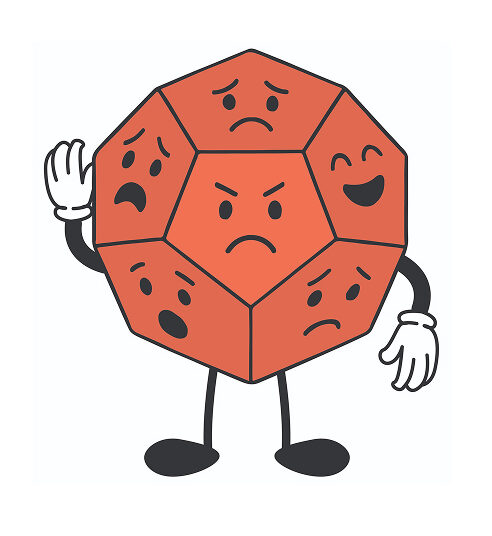
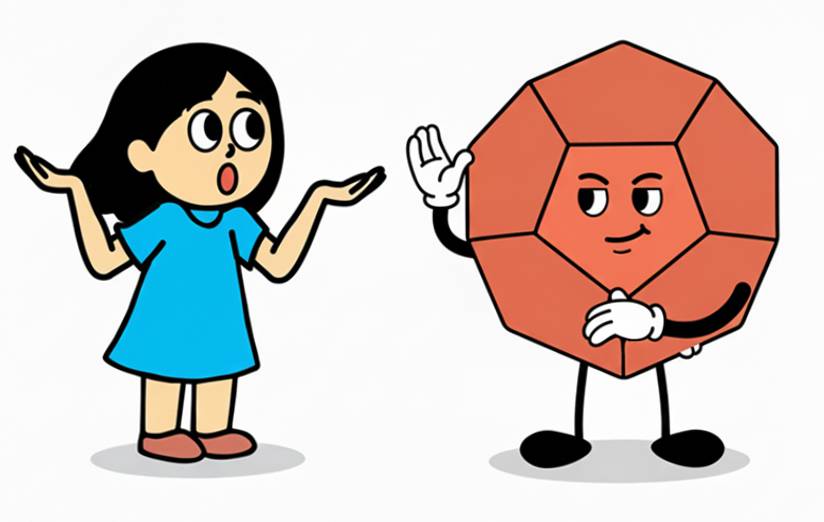
And each of your faces has 5 edges! (feeling him around the face)
(haughtily) Each one is shaped like a perfect pentagon.
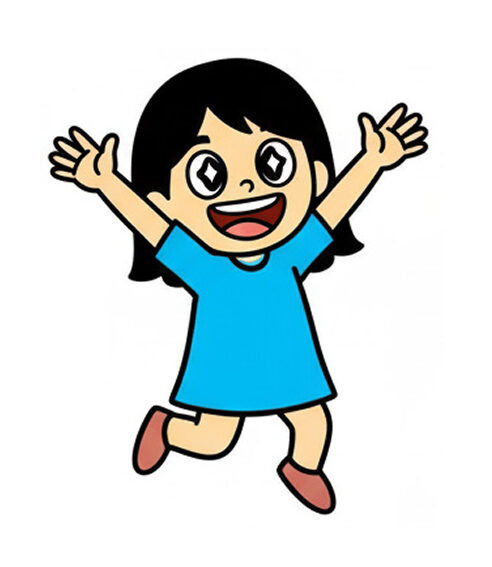
Oh. This is a pentagon. I always wondered what it was..
(correcting Chinnu) It is a regular pentagon; all my sides and corners are equal.


Hmm. (Observing the equality) Can you roll? (Nudges the dodecahedron)
Only if someone rolls me too fast! But mostly, I like to sit still and show off all my faces. (turns grinning face to audience)
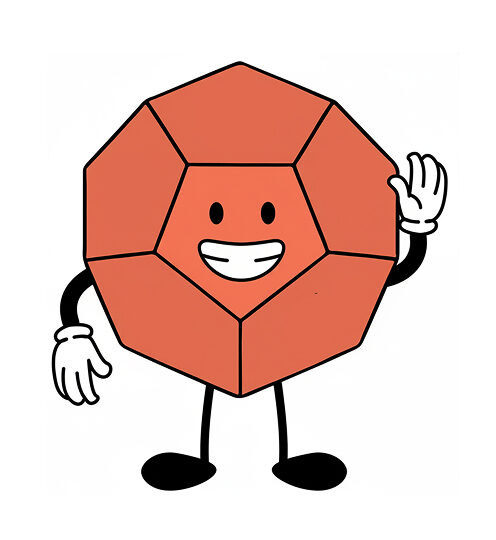
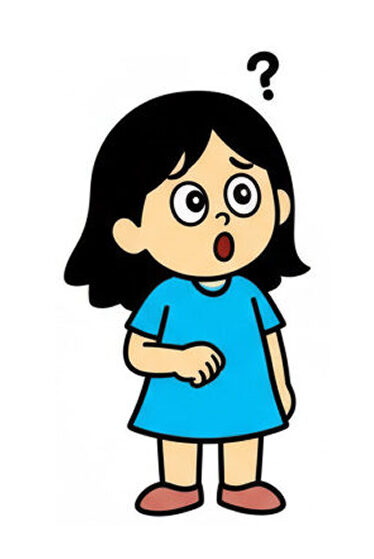
Is the rest of your family also like you?
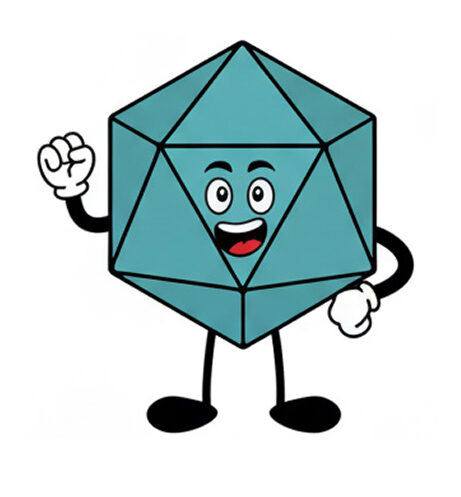
In some ways, yes and in some ways, no. Here comes my younger brother, the Icosahedron (icosahedron walks in)
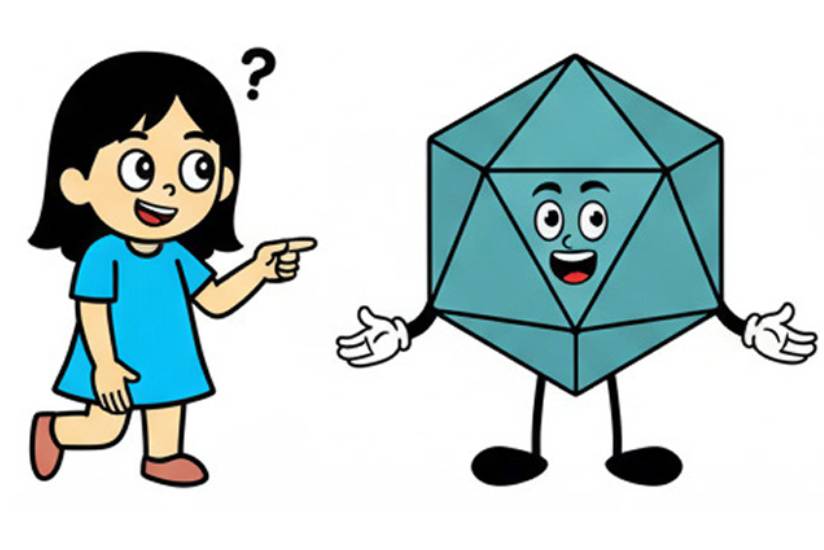
Oh My! You are equally interesting and you have even more faces (trying to count)
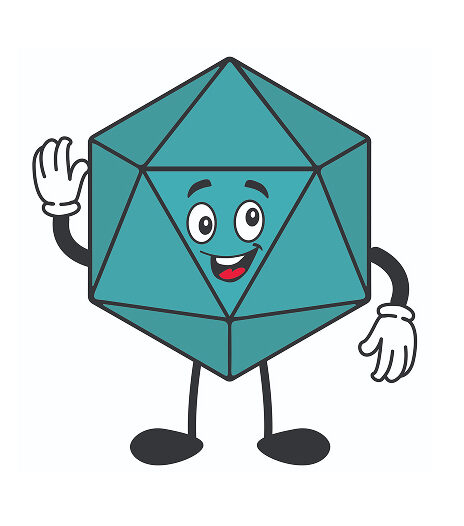
Yes. I’m the most “faceted” of us all, with 20 triangle faces.
I wonder which of you two can roll best!
That would be me! With my 20 faces, I roll like a super-fancy dice.
I roll too, but not as far or as wild as Icosahedron!
Enter Octahedron
Hey, fellas! What’s happening here?
Who is this weird one-faced fellow?

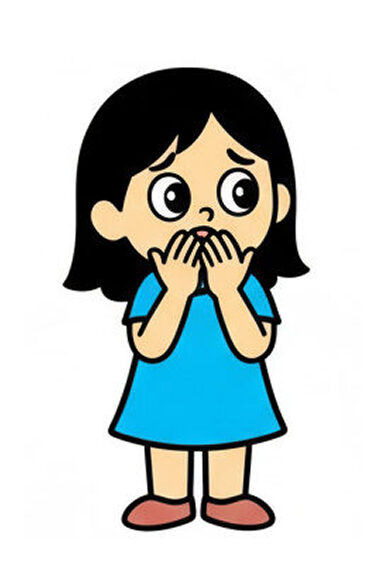
Tetrahedron and Cube also enter, and they all stare curiously (turning their sympathetic faces to Chinnu). Chinnu shrinks a little and begins to feel conscious of her single face.
This is my other brother, an octahedron and here are my two sisters.
(to the audience) What difficult names!
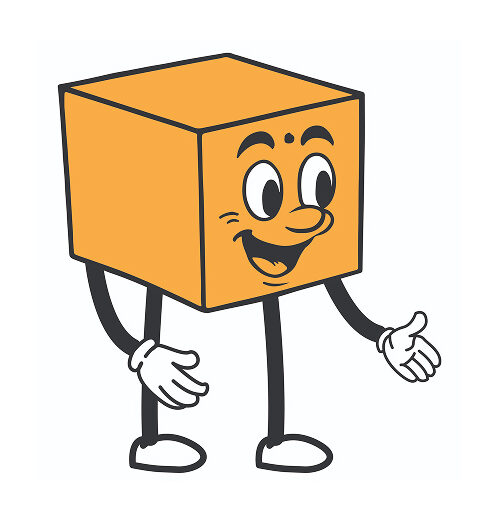
(Shaking hands) Hi! I’m a Cube—the boxy one. I have 6 square faces.
(Talking to herself) Looks like the fancy blocks I played with!
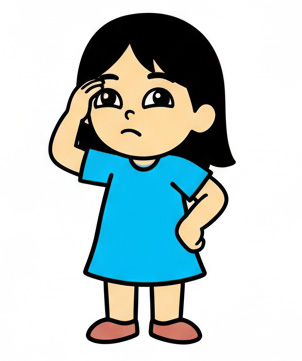

(Does Namaste) I’m a Tetrahedron. I have 4 faces and they’re all triangles. But, I’m pointy and a bit mysterious! (stressing)
Don’t forget me! I’m an Octahedron. I have 8 triangular faces (spinning around)
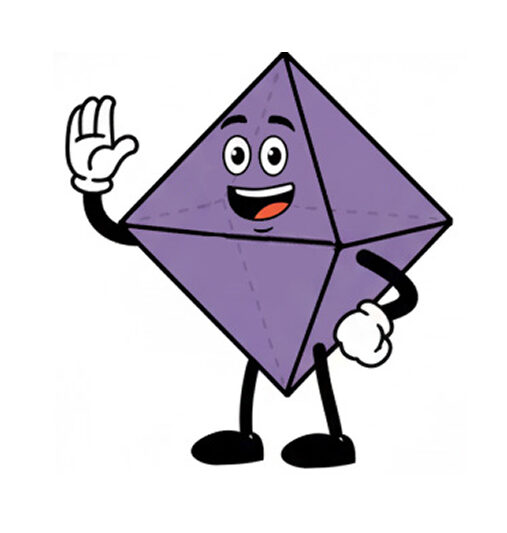
(to the audience) Looks a bit like two pyramids stuck together.
(to dodecahedron) Are there more in your family?
No. We belong to the special Platonic solids family. We do have relatives who are also interesting in their own way.

I am so glad to have met all of you.
We are glad to meet you. It never occurred to us that one face could show so many emotions!

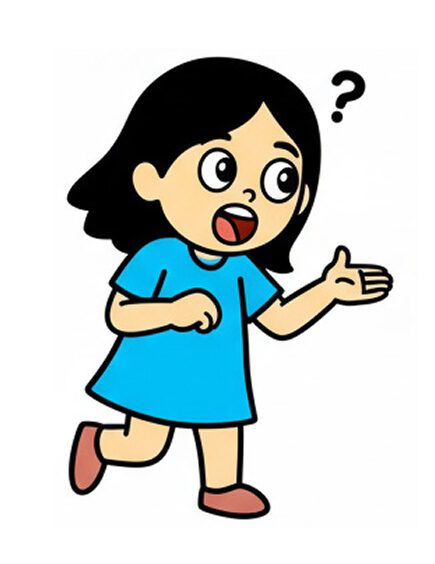
Chinnu: Just one thing I don’t understand. Why are you called “platonic solids”?
Ha! We’re called “platonic” because a smart person named Plato studied us a long time ago. He thought we were special shapes that make up the world.
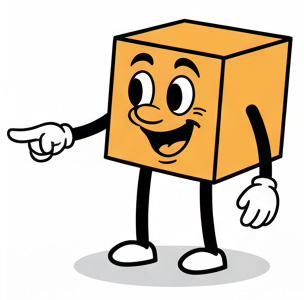
We have a lot in common. All our faces are the same shape and size, and our corners and edges are all equal.
What are you made of?

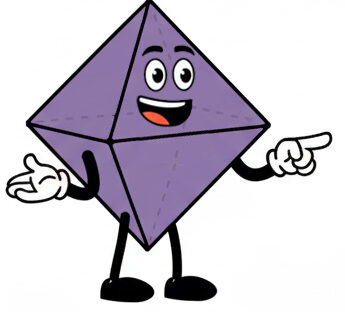
We can be made of anything—wood, plastic, even jelly—if you make our faces all the same!
Just take care not to eat your math homework after making us! (all laugh)
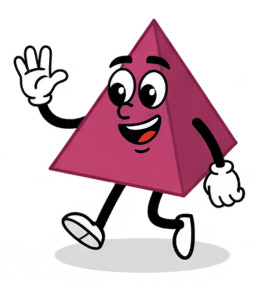
If I built you with paper, would you be strong?
If you fold me carefully, I’ll be surprisingly tough! I love being colourful, too.

Can I colour each face differently?
I’d love that! But you will need more colours than there are in the rainbow for that! Let’s see how creative you are
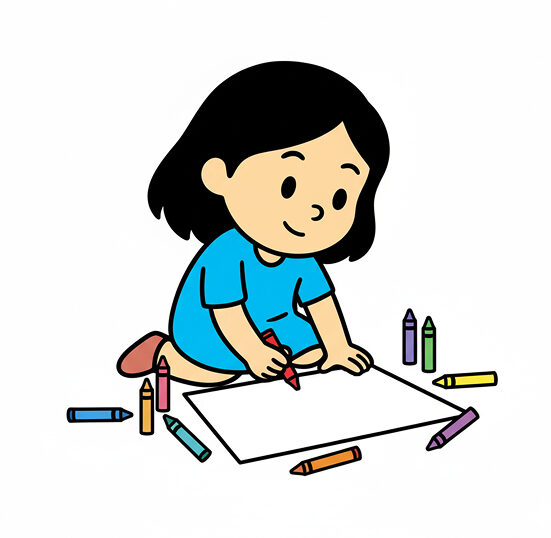
(starts work with some crayons) You’re the coolest shape I’ve ever met!
Thank you! I’m happy to be your geometric friend.
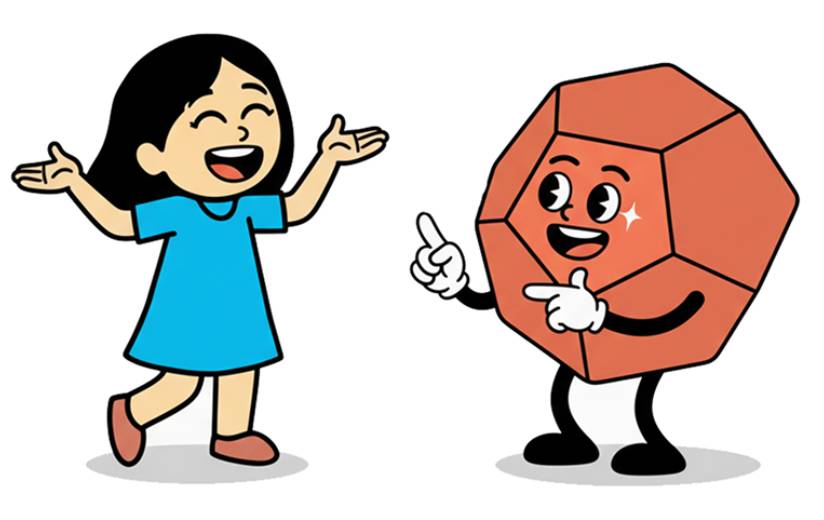
Teachers often draw on varied classroom experiences to help students connect with mathematical ideas. Roleplay is one such approach, although it is not common in mathematics classes. This article offers a ready-to-use scene that the readers may adapt for their learners. Use it to build vocabulary, prompt observation, encourage reasoning, and support participation.
Roleplay invites multiple voices, lowers anxiety, and allows students to “speak” mathematical language in context. We invite the reader to reflect on the following questions.
- Which elements of the scene will you keep or change for your class?
- How will you ensure inclusivity and shared participation?
- What changes could strengthen vocabulary, reasoning, or visualisation?
- How might you extend the storyline for your students?
Roleplay brings mathematics to life: students speak the language of shapes, notice structure and properties, and practise precise vocabulary in a joyful setting. This short scene is a springboard to adapt the lines, redistribute parts for broad participation, add props or movement, and connect to follow-ups such as building nets. Above all, let learners co-author the story. When students enact ideas like faces, edges and vertices, understanding becomes shared and deep.
- Juster, N. (2005). The phantom tollbooth (Illustrated by J. Feiffer). Yearling. (Original work published 1961).