
A Walk Through Math Space

Numeracy: Counting to measurinsg
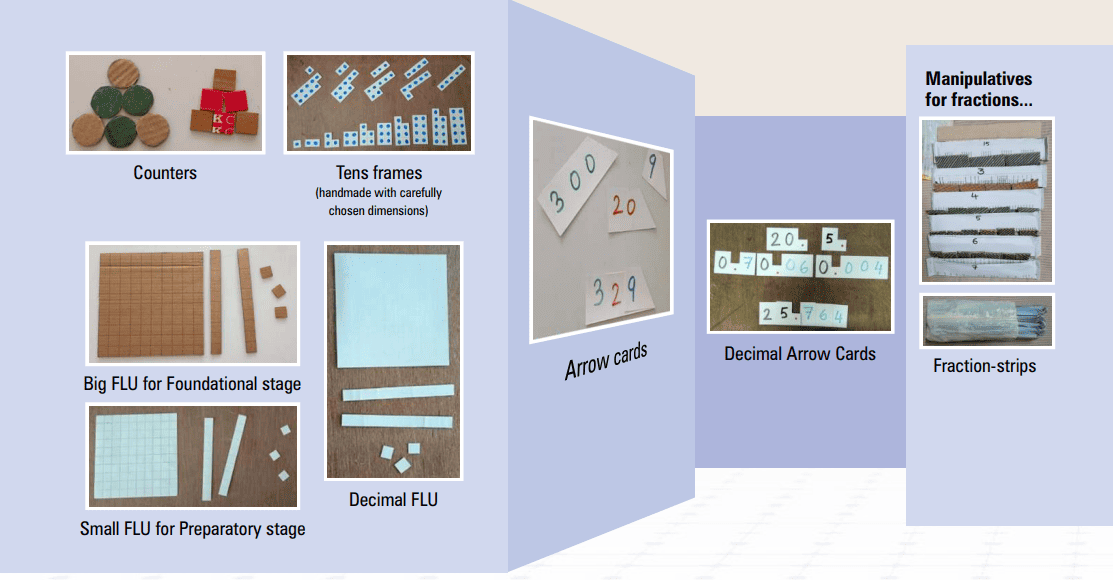
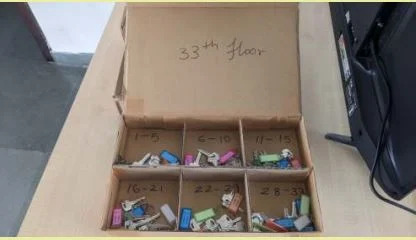
Converting laptop boxes to key organizers – we recently took this order for 40 boxes, explored possibilities, finalized design after one round of feedback and delivered all boxes within 3 days!
We are very proud that the core idea of cutting the laptop box in order to preserve its locking feature came from a BSc-BEd math student, who had just joined Math Space team!
Shapes and Space
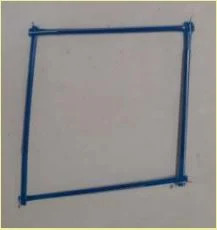
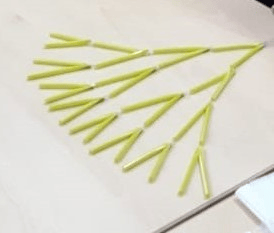
One model, all possible quadrilaterals
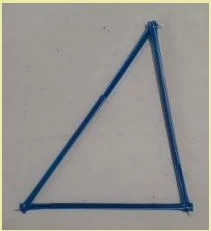
Same for triangles – came few years later!
Workshop Series
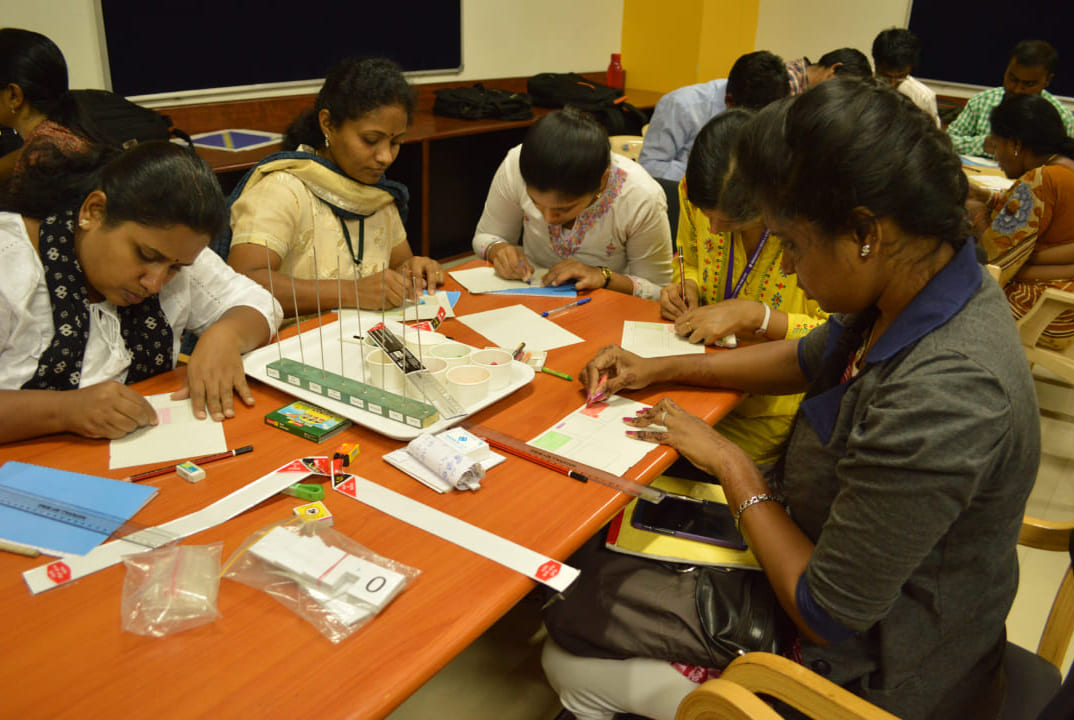
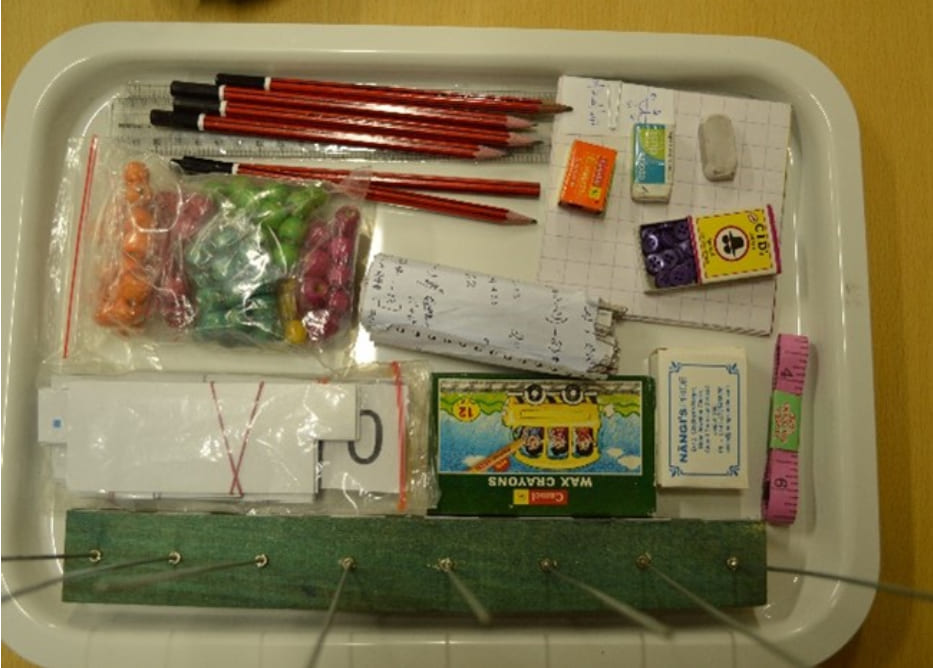
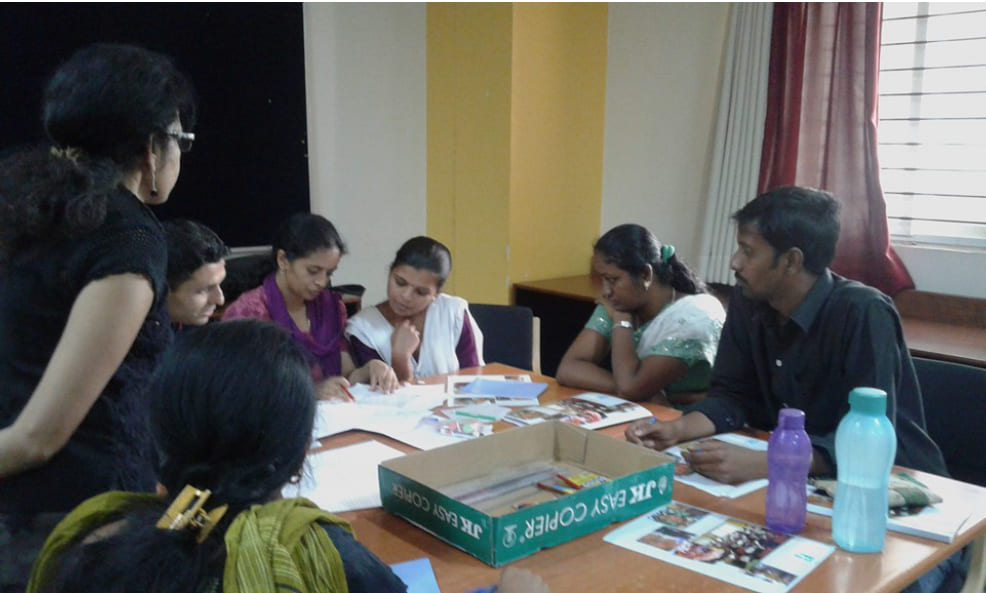
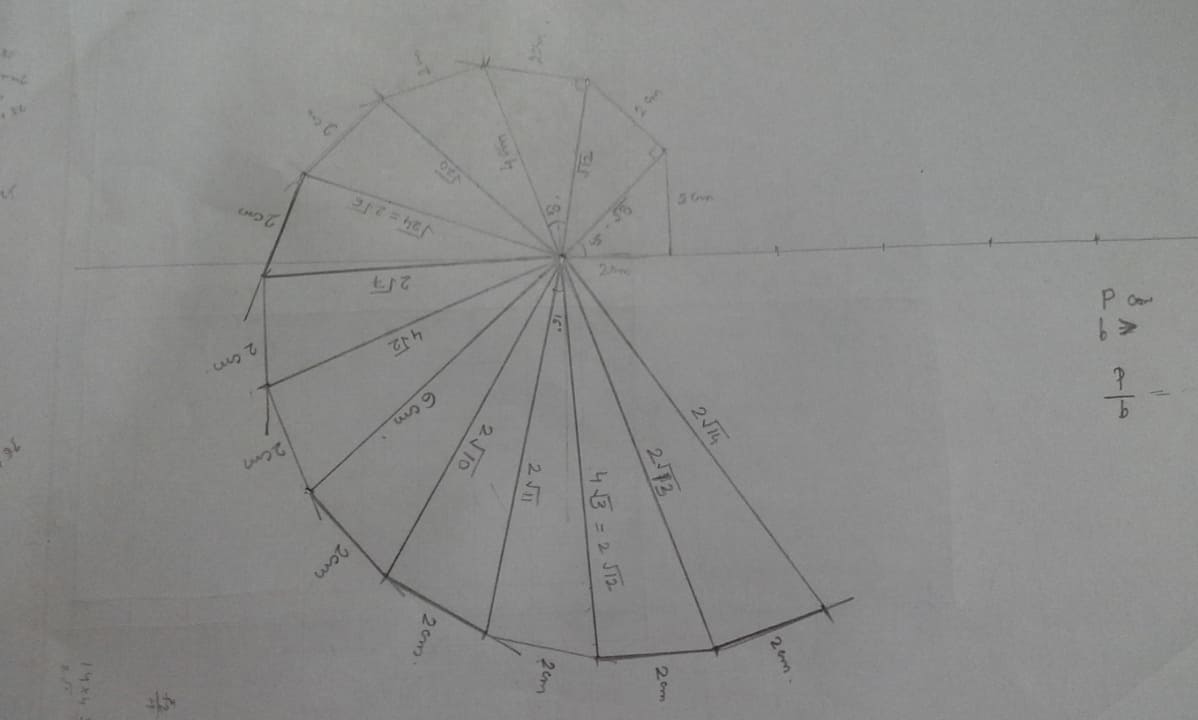
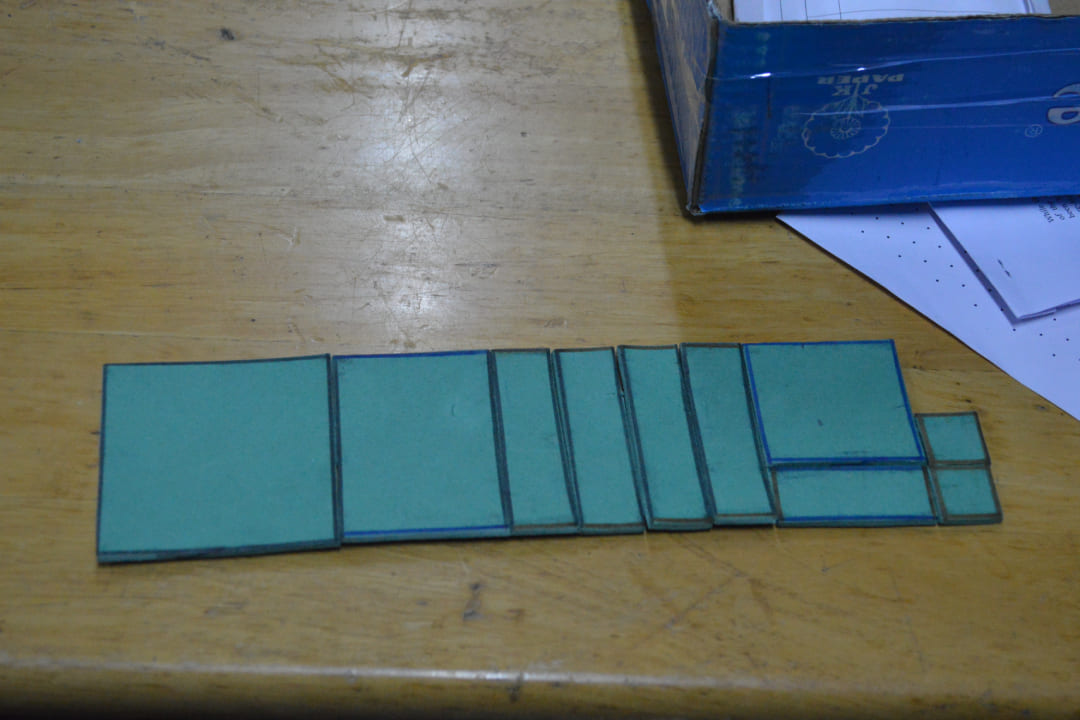
Math Space ran three series of monthly one-day workshops, around 7-9 sessions each – for Primary (Class 1-5), Upper Primary (Class 6-8) and Secondary (9-10) from 2015-2018. Post lunch sessions were usually reserved for mat(h)erial making, one set per school. The Primary and Upper Primary series were followed by 3-day Investigations workshops during summer break.
Math Space was invited to conduct several workshops with government school teachers from several states with a strong emphasis on mat(h)erial making.
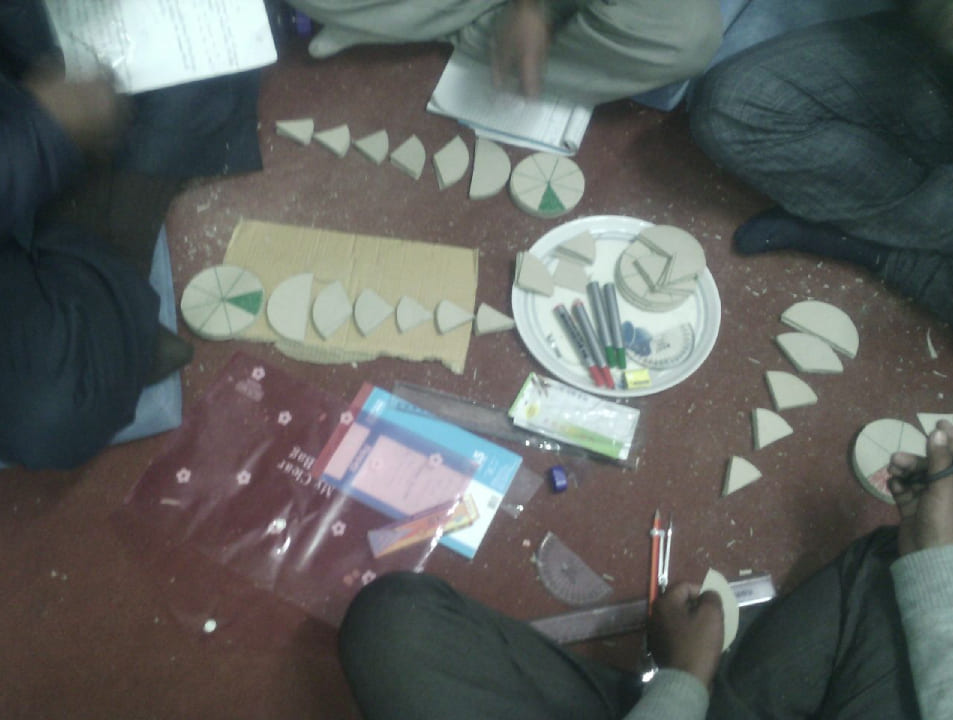
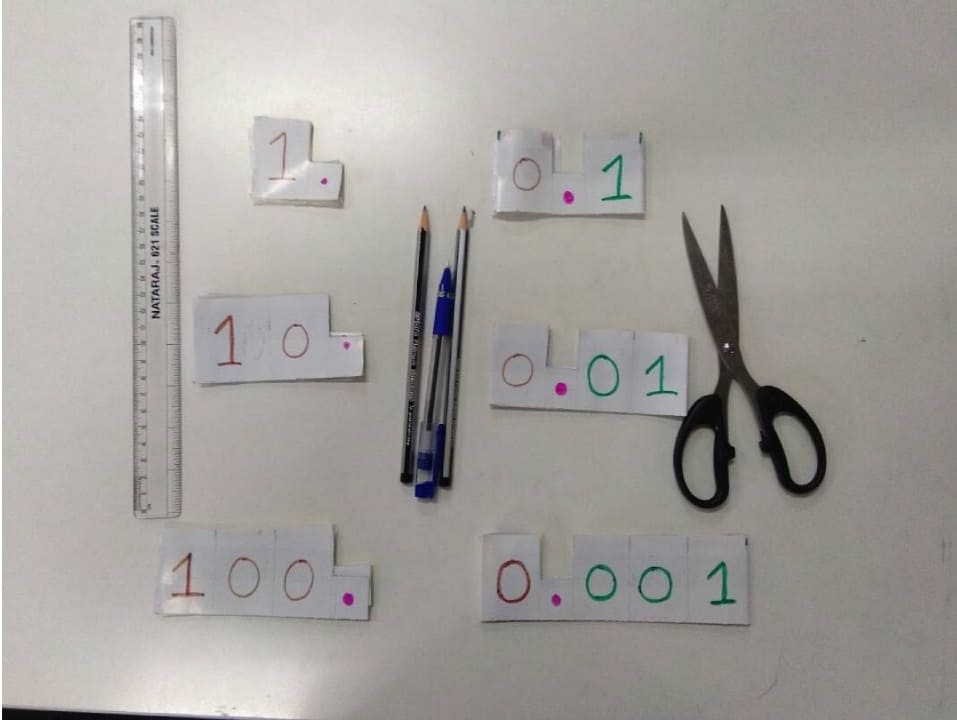
CMD-Mat(h)erials
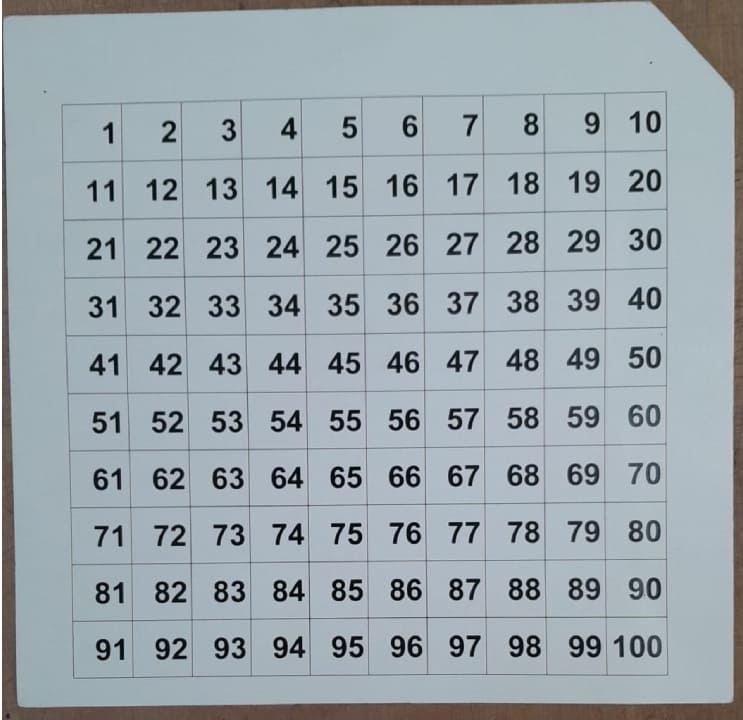
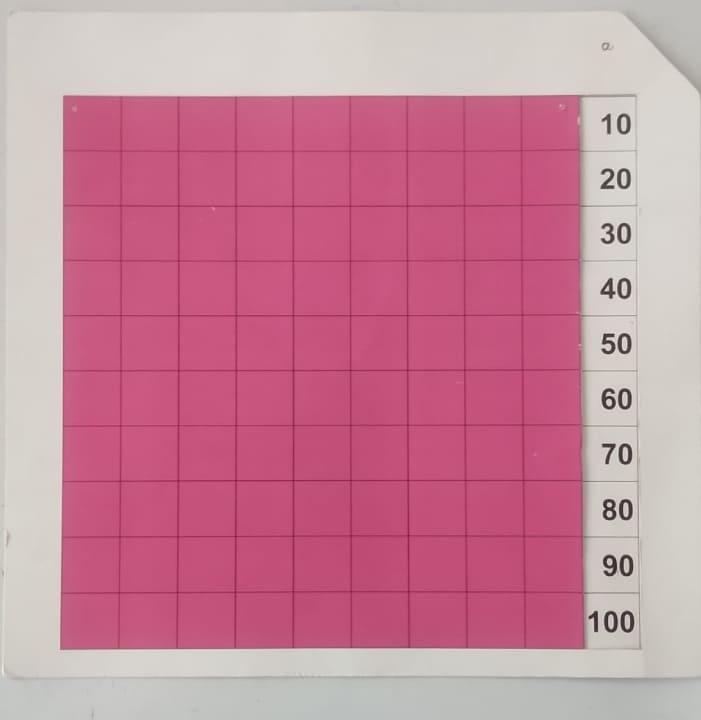
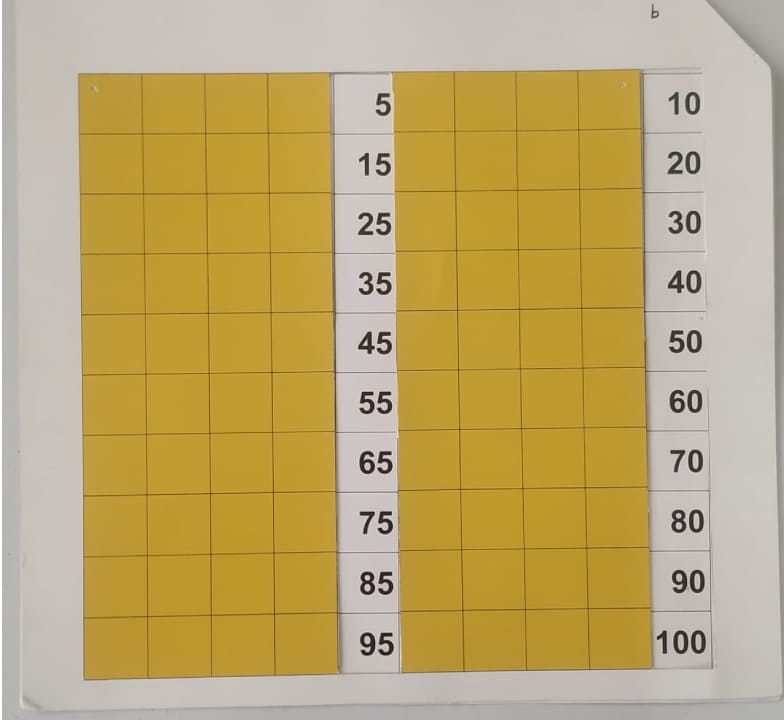
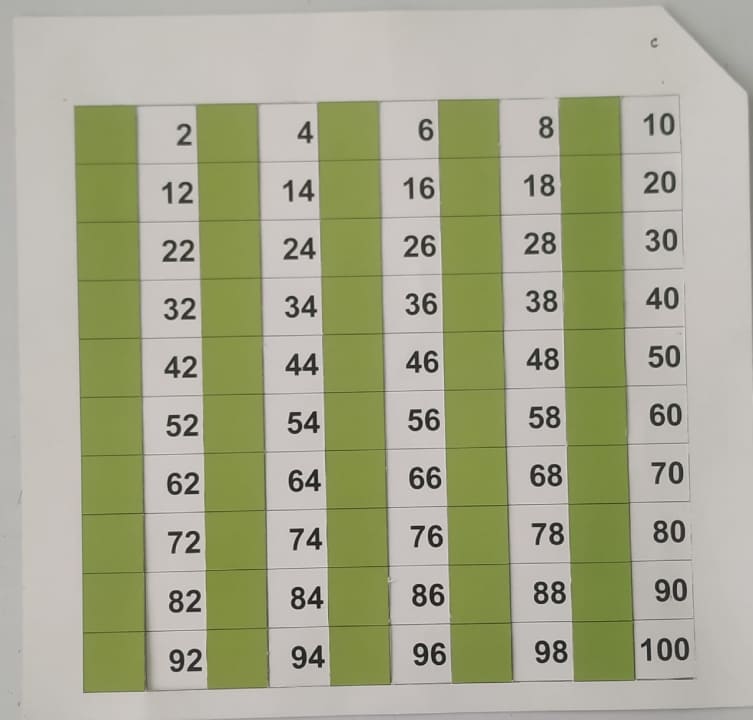
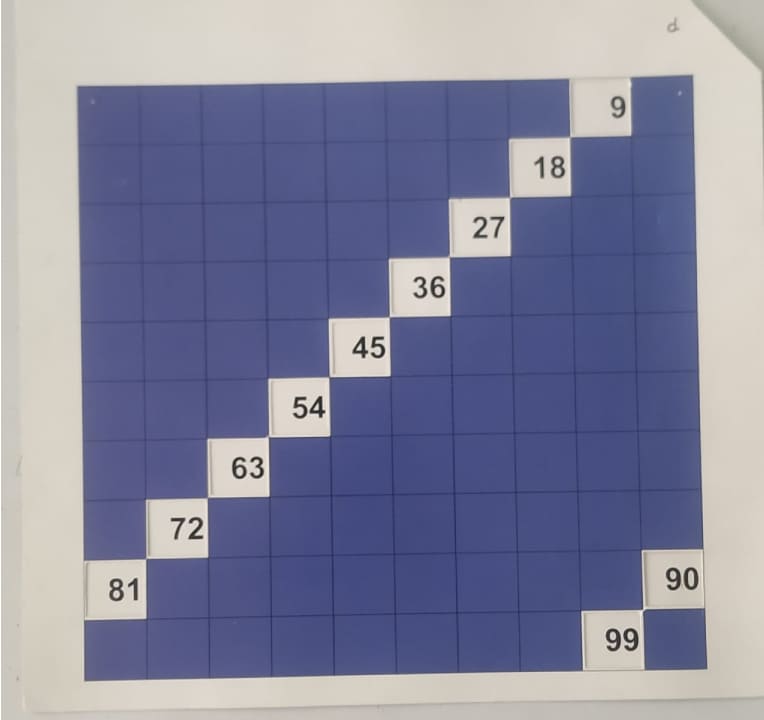
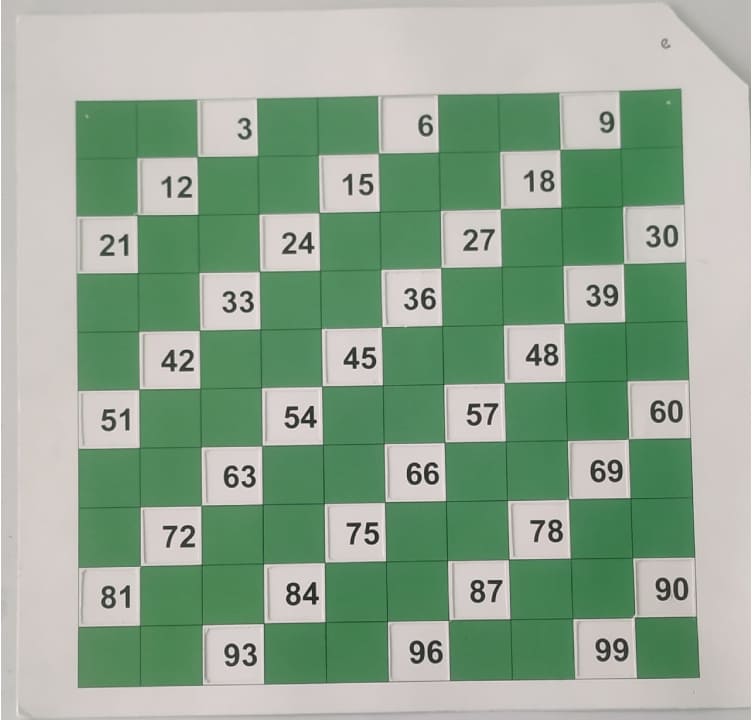
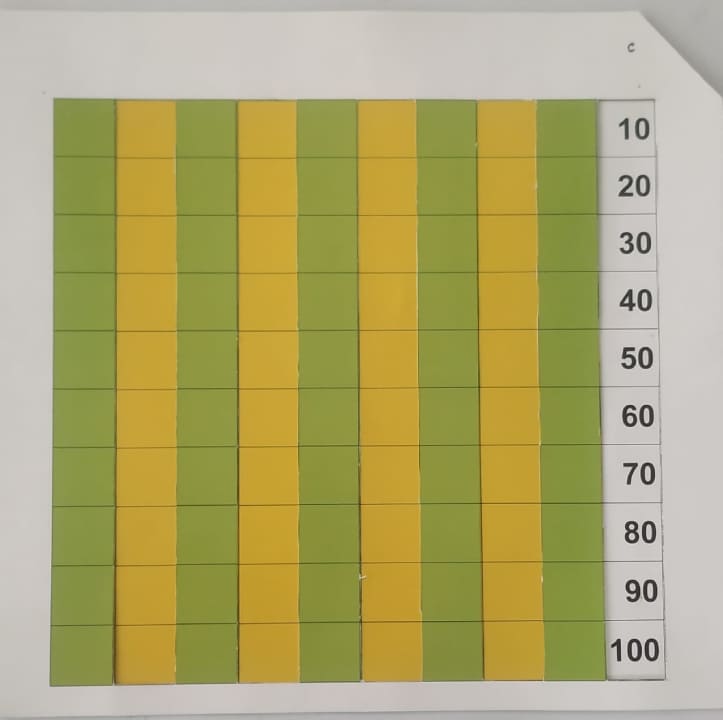
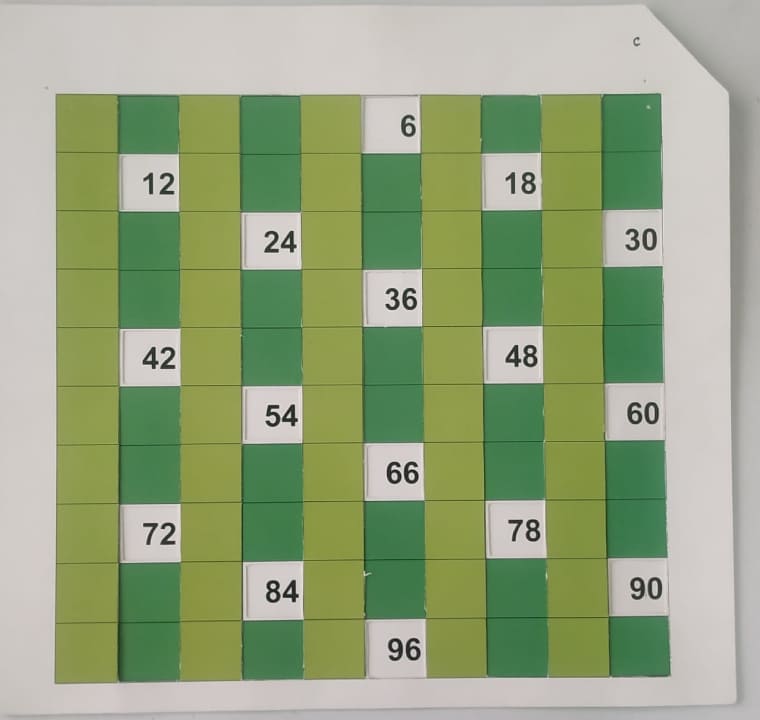
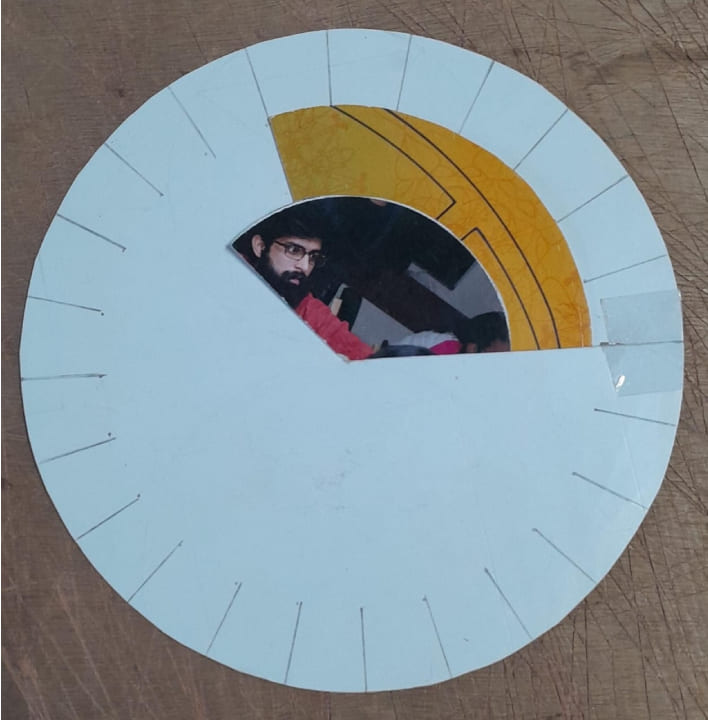
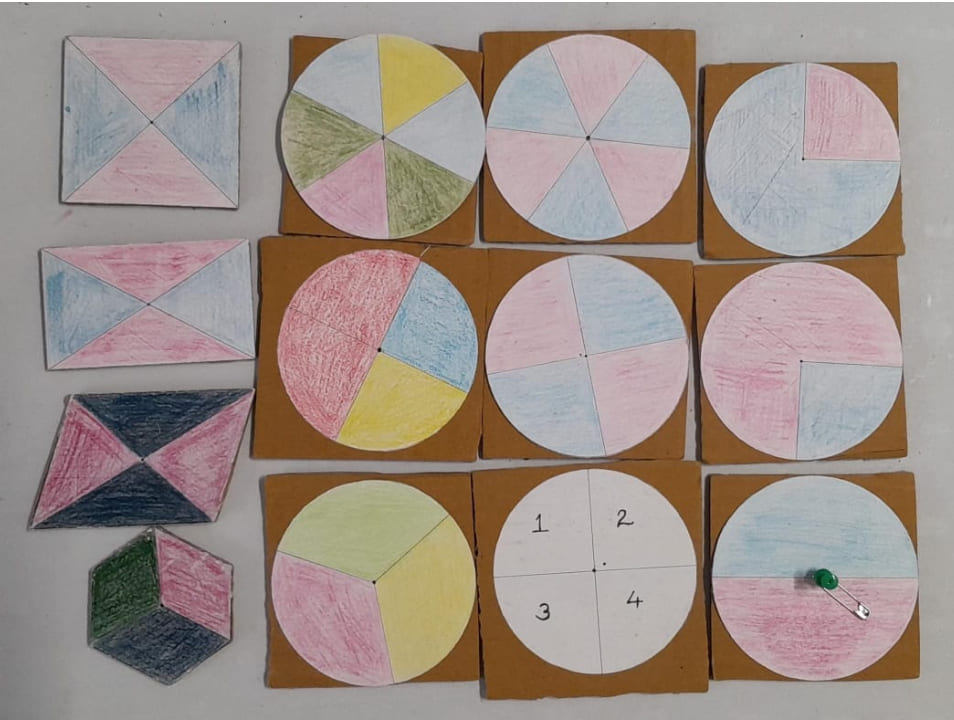
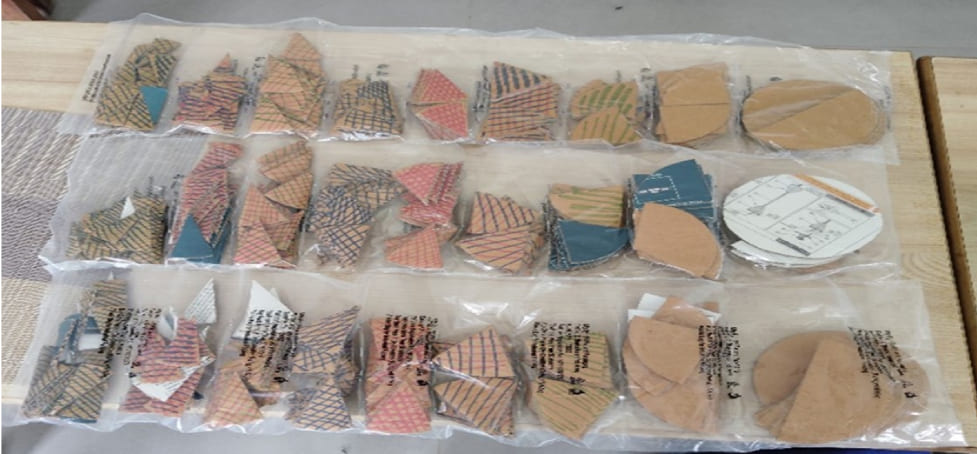
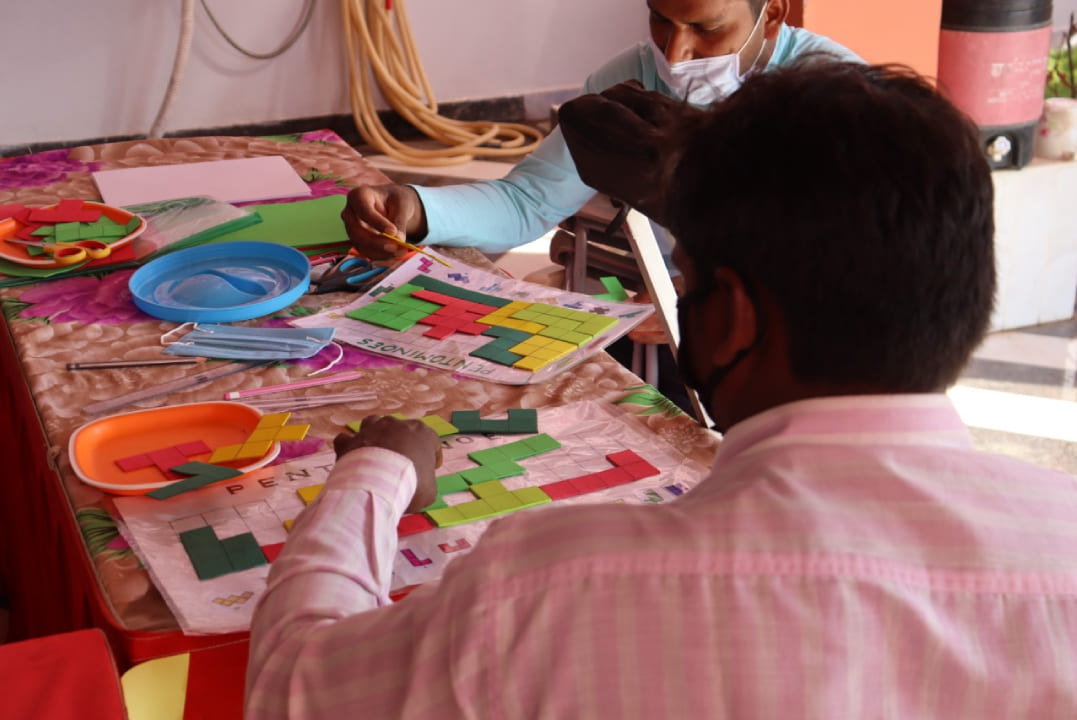

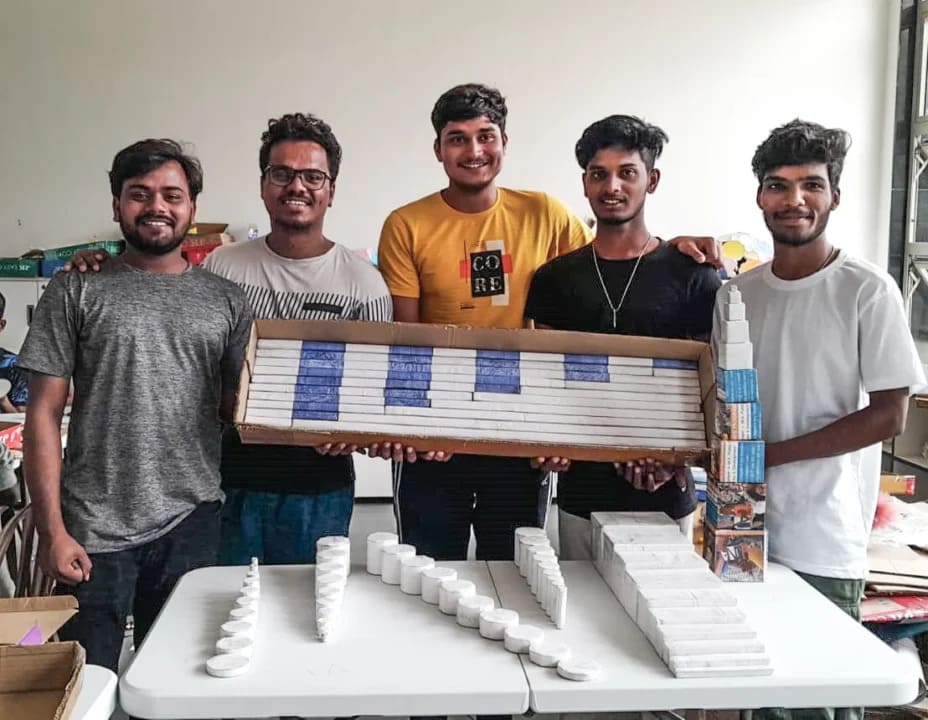
Montessori Mat(h)erials:
To know more about these, read the accompanying article in the same issue
First set of pink tower, brown stairs, long rods, number rods and cylinders with the makers
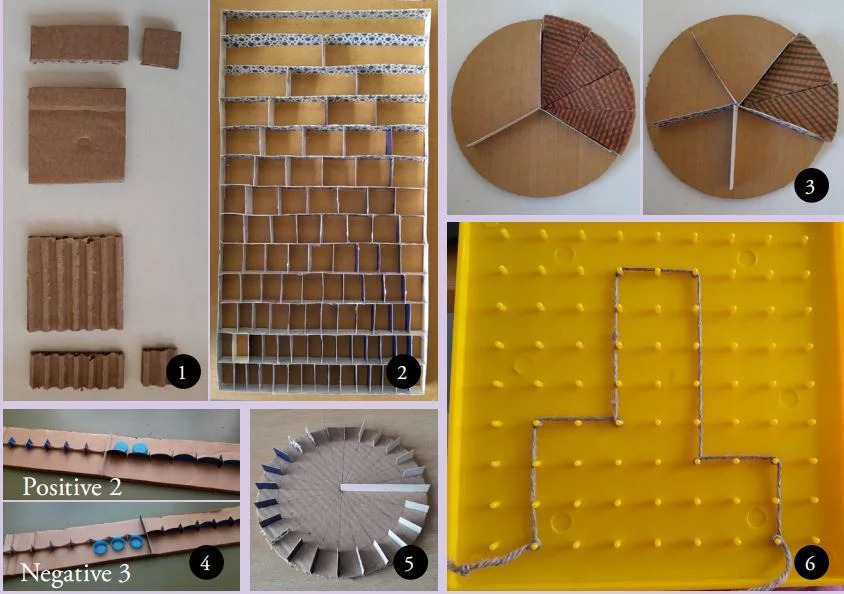
Tactile Mat(h)erials for Visually Impaired Learners
- Tactile algebra tiles
- Tactile fraction wall
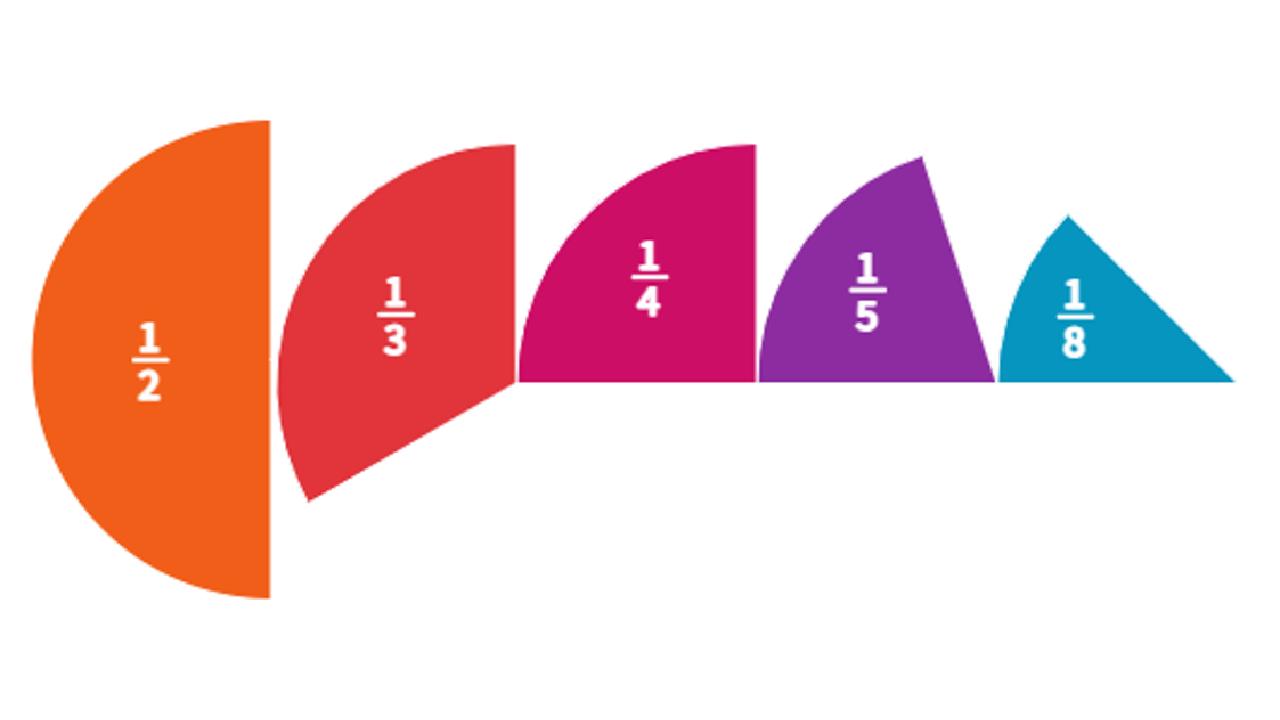
- Tactile fraction circle and sectors
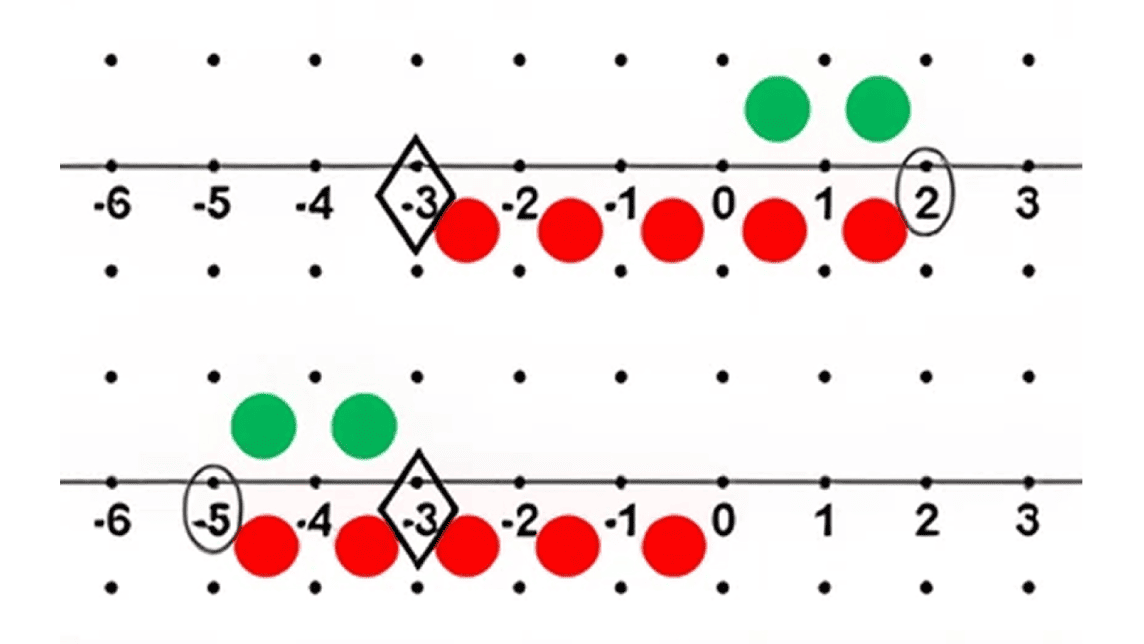
- Tactile number line with bottle caps
- Tactile protractor, every 15°
- Histogram on geoboard
Website: https://sites.google.com/apu.edu.in/mathspace/home

Math Space website has the following sections:
- Mat(h)erials – textbooks, websites, visuals, low-cost Montessori ones, various kits and more includes details of how to make (with layouts) and how to use
- Numbers and Operations – whole numbers, fractions, decimals, integers, rational numbers, exponent and roots – the thrust is meaning making and a step-by-step build up from first principles
- Geometry and Spatial Understanding – 2D and 3D shapes, symmetry, mapping 3D to 2D includes a range of resources (animated ppts, worksheets and more) especially for middle stage
- Measurement – length, weight, capacity etc. – and Mensuration – 2D: perimeter, area etc. and 3D: surface area, volume etc. including exploration of formulas involving pi (π)
- Patterns and Algebra – patterns, expressions, equations, identities as well as ratio-proportion and percentages
- Data Handling, Statistics – an in depth look at mean, median, mode – and Probability – spinners, Bayes’ theorem, independence

The work is far from complete. Many resources, especially
- exploring fractions through various models,
- using the notion of algebra tiles to solve equations and
- several visuals, are in the pipeline.
There are explanations, explorations, posters, videos, worksheets, and many animated ppts for demonstrations as well as introducing various concepts and constructions. There are a few Proofs
Without Words (PWW) – more will be included. We also hope to include a game section in future.
- Khushboo Awasthi (2017, March). Drawing A Spiral of Square Roots, At Right Angles 6(1). 39-45. https://bit.ly/3Ui2Br6
- Swati Sircar, Sneha Titus (2018, March). Newer and Newer Spirals – Open and Shut Cases, At Right Angles 7(1). 66-71. https://bit.ly/4dUW5xh