



Dear Readers,
Spring is in the air! It’s March and the cold of winter is giving way to fresher breezes, blooming buds and the prospect of the academic year ending and the summer holidays beginning. But wait- before those endless days of leisure, there is one final hurdle, that dreaded final examination, the summative assessment that is the bottom-line for the year of learning. With teachers quickly picking up the use of and need for new techniques for formative assessment, the usual pencil-and-paper mathematics tests have evolved into more fun-but-as-rigorous tasks. These serve to inform the teacher, the student and the parents about what the child has learnt, and the areas in which more reflection and effort is required on all their parts. However, that final examination seems to be a different cup of tea. Does it have to be so? In this issue, Aanchal Chomal, Shilpi Bannerjee, Anusha T and Reshma Krishnan examine the need for Summative Assessment at the Preparatory Level and ways to administer it in a way that is authentic and age-appropriate. Perhaps the planning for the next academic year can include ideas from these articles.
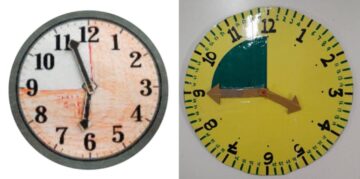
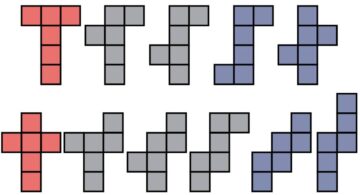
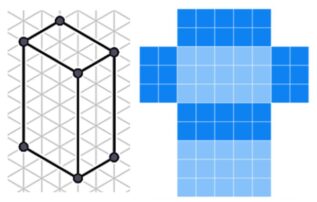
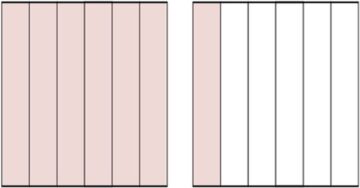
Kanchana Suryakumar shares her experience with the Tricky Truth about Visualising Fractions, and the article is backed by a worksheet designed by Kshama Chakravarthy. This should help you to design more questions which strengthen the importance of defining the whole, when teaching fractions. What’s next? Our alumni Garima Bhatt (Classroom: Time) and Asma Memon (Joy of Mathematics: Net of a Cube) have delighted us with their contributions. We also have Swati Sircar’s worksheet on Cuboids and their Nets in response to a difficulty encountered by a student teacher during her practice teaching. The Joy of Mathematics section has a lovely poster which is sure to spark thought – put it up on the bulletin board and wait for the students to exercise their observation skills, make conjectures, communicate their thoughts and argue their points- in short, behave like little mathematicians. Teacher notes are given in the accompanying page.
A Review of the nRich website will point you in the direction of rich resources and Padmapriya Shirali pitches the Pullout at the Foundational and Preparatory stage with tips on Introducing Counting.
The March 2026 issue is a special one for us- for the first time, the articles appeared first on the digital edition, followed by the print issue. Moving with the times, but keeping our eyes firmly on good mathematics pedagogy built right from the primary level. Let us know what you think.
Sneha Titus
Chief Editor, At Right Angles
AtRightAngles.editor@apu.edu.in