
What is New in the New Mathematics Textbooks?

The National Curriculum Framework 2020 recognized the importance of developing a strong foundation of learning during the early developmental phase (3 to 8 years). Keeping in mind the holistic development of children, the National Curriculum Framework – Foundational Stage, 2022 (NCF-FS, 2022) recommends curricular goals, competencies and learning outcomes associated with developmental domains such as physical, social, emotional, ethical, cognitive, language, aesthetic, cultural values and positive learning habits. Along with this, emphasis has been laid on the integration of all the domains while developing learning material including textbooks for mathematics.
“Textbooks help the teacher by providing an organized, sequential, consistent, and meaningful learning experience in order to achieve expected curricular goals, competencies, and learning outcomes. Textbooks also guide children and provide reliable reference points. Among the teaching materials used in the classroom, the textbook is one of the materials that plays an important role in planning classroom procedures, pedagogy and assessment.”
The National Curriculum Framework – Foundational Stage, 2022 has given the following suggestions regarding mathematics teaching method:
- Experience → Spoken Language → Pictures → Symbolic Language.
- Linking mathematics learning to a child’s real life and prior knowledge.
- Seeing mathematics as a means of problem solving.
- Engaging in mathematical communication using discussion and reasoning.
- Developing a positive attitude towards learning mathematics.
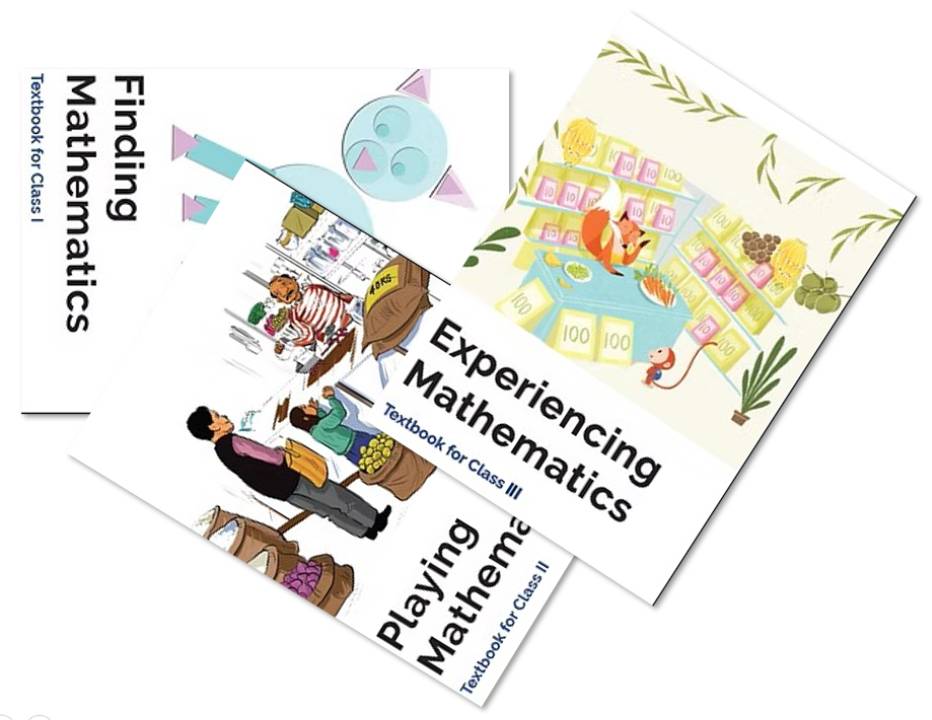
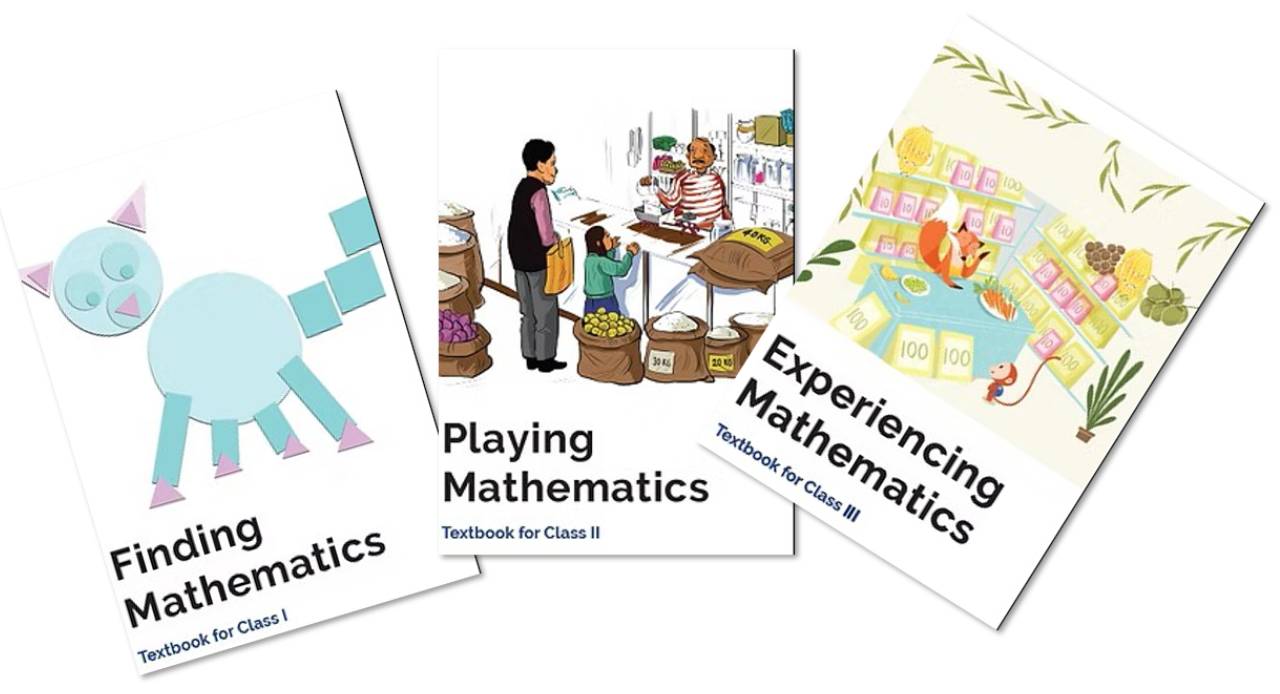
In the light of the new policies, NCERT has developed new textbooks (Joyful Mathematics) for classes 1 and 2 in the year 2023. These books contain a number of activities that encourage organized work and learning within and outside the classroom with a focus on experiential learning for the all-round development of children. An attempt has also been made to integrate language and age-appropriate physical and mental development into the book through the context around the child as mathematics education cannot be separated from these. The book functions both as text-book and work-book and provides appropriate opportunities for children to learn, draw, color and write through play.
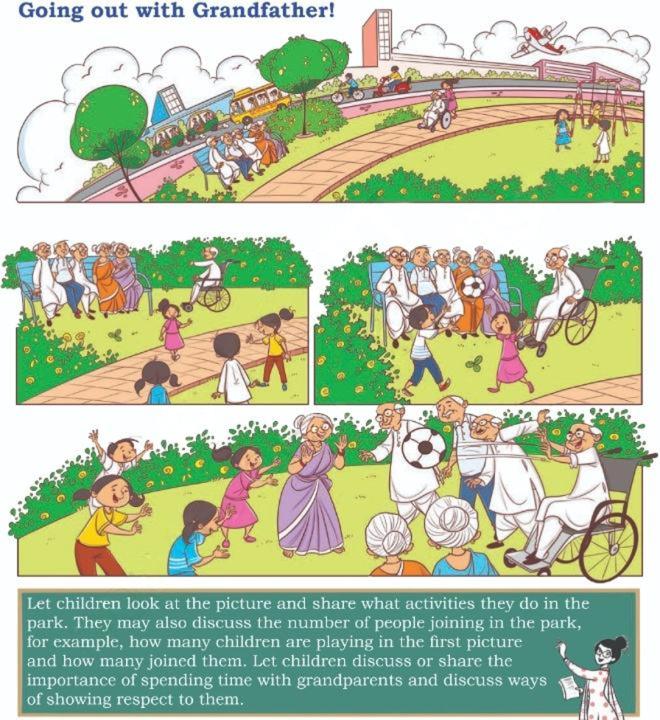
This beautiful sequence of pictures (Figure 1) subtly messages inclusion and relevance of the older generation and the importance of caring for them. At the same time, it provides counting practice for young ones.

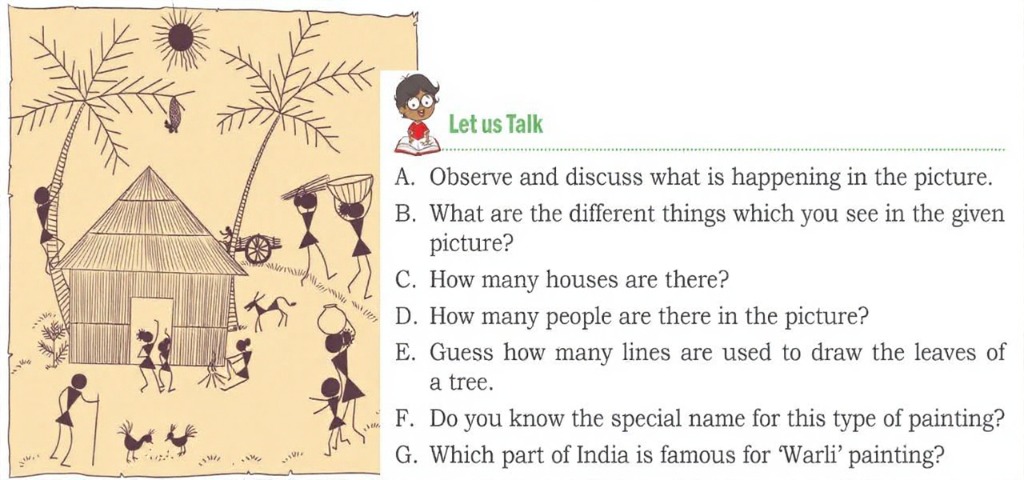
Notice how art and culture are incorporated in this simple activity (Figure 3) which develops students’ skills of observation, communication and reasoning and at the same time increases their general knowledge.
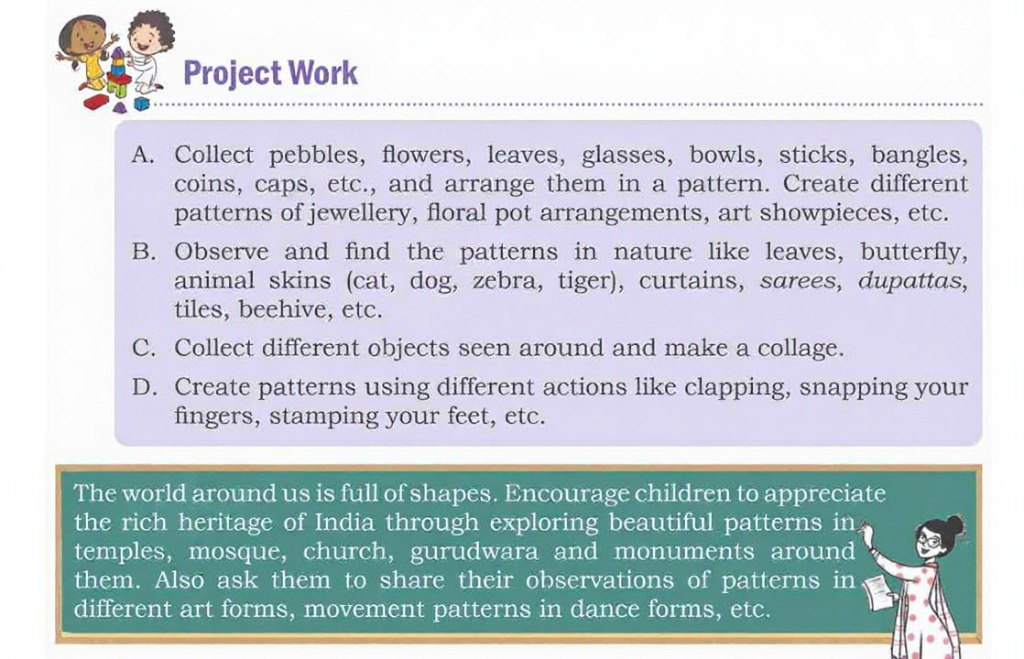
Many teachers had commented that the previous books were too wordy and that there were practical constraints in carrying out the given tasks in the classroom. Teachers have also been highlighting the lack of practice exercises in the old books. An attempt has been made to address these opinions.
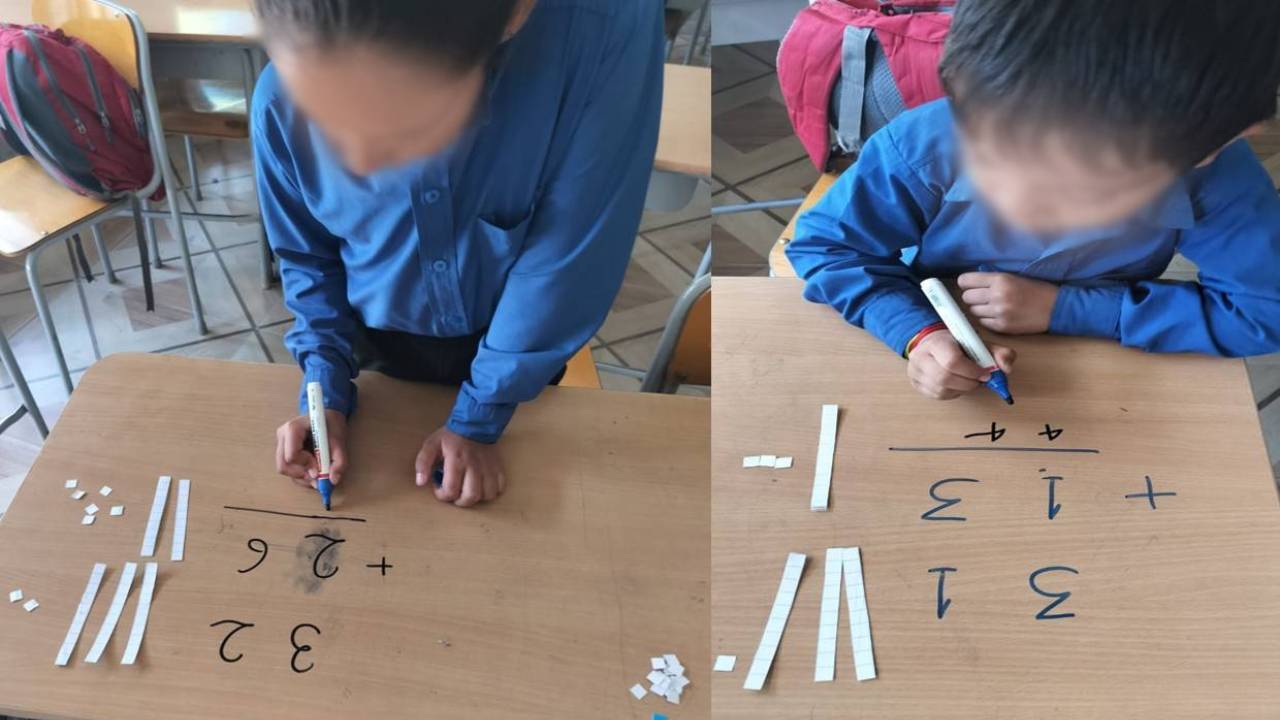
Most lessons begin with a poem, game, short story or activity related to the world around the child. For example, in the beginning of the Class 1 book, the cat hides here and there and sometimes it is seen above the window, sometimes under the bed, sometimes above the car, sometimes under the carpet. Similarly, to make sense of numerical concepts, the use of easily available materials such as pebbles, leaves, buttons, etc., have been suggested. Low-cost Teaching Learning Materials (TLMs) using locally available materials (cards, pieces of wood, fingers, buttons, …) as well as the ginladi (number chain), dotted cards and number strips are also highlighted. There is a slant towards developing the skills of logical thinking, analysis and mathematical communication through activities, open-ended questions, explorations and discussion.
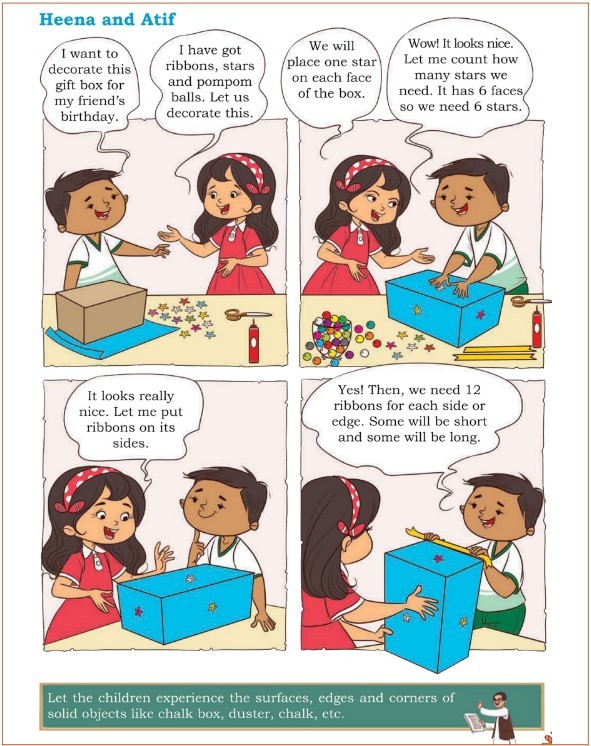

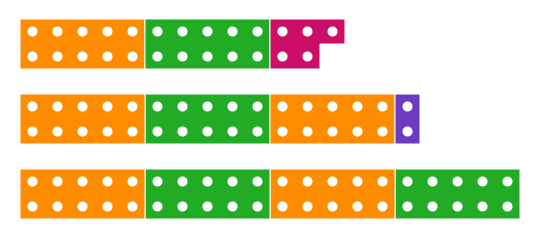
Such play-based activities (Figure 5 and Figure 6) allow students to develop a confident approach to mathematics.

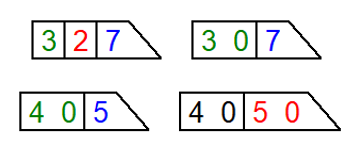
The textbook has previously provided practice in writing the numerals and in the addition of single-digit numbers. In chapter 3, students have prepared their own number cards as a project, so materials are not a constraint for this project (Figure 7). Notice that it provides the opportunity to practise addition in a fun and open-ended manner. By comparing their answers, students get an opportunity to discuss and justify their strategies.
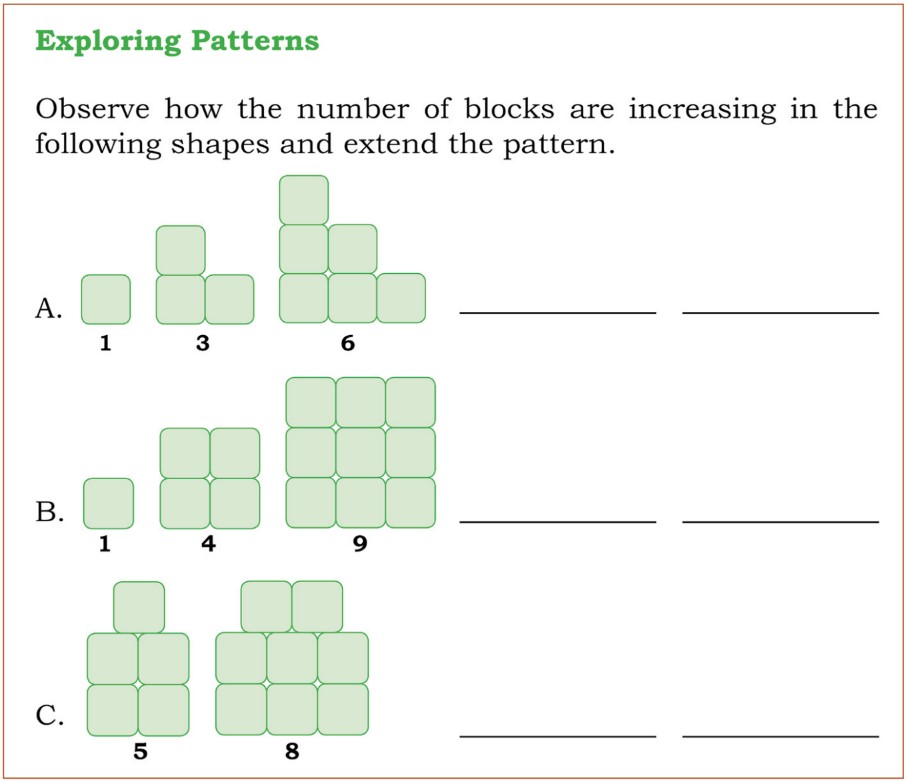
Students with different learning styles will be able to absorb number patterns better by such visualisation (Figure 8) and it is hoped that teachers will also be able to provide hands-on learning using counters and building blocks inspired by such puzzles.

Problem posing is an important indicator of conceptual understanding and the textbook showcases opportunities for this. See Figure 9 for an example.
The textbooks for both classes have puzzles at the end which give them to children the opportunity to apply their arguments and solve them. It is hoped that teachers can also make such puzzles and give them to children to solve. These textbooks prepared at the national level have tried to incorporate the diversity of the whole of India, but they also have their own limitations such as contexts which are familiar in one region may be alien to another. Therefore, instructions have also been given for teachers to include local games and toys and locally available material in classroom teaching. Naturally, it becomes necessary for the teachers to pre-plan the lessons thoroughly keeping in mind the teaching prompts given with them.
The previous set of textbooks was developed nearly sixteen years back with the same approach. However, it did not really translate these ideas into practical ideas that assisted in both pedagogy and assessment based on the concepts to be taught. While an approach similar to what is seen in the new textbooks was taken in the theme chapters, teachers did not really appreciate the point of these. Now that the goals of mathematics education have been distilled into the chapters of the textbooks for classes 1 and 2, it is hoped that teachers will be able to use this launching pad to enable children to develop mathematical understanding and abilities to recognize the world through quantities, shapes, and measures as described in the curricular goal in the NCF-FS.
Editor's Note
All images from textbooks reproduced with permission from NCERT.
- National Council for Educational Research and Training (NCERT). (2023). Joyful mathematics (Class 1 and Class 2). https://ncert.nic.in/textbook.php?aejm1=11-13