
And I am a Mat(h)erial Girl!
The term Mat(h)erials refers to a playful contraction for Teaching Learning Materials (TLM) for mathematics. Since there will be readers who are not familiar with all or some of the mat(h)erials mentioned in this article, a picture guide is given in Tables 1-4.
Based on working with many people – teachers and teacher educators – and organizations working with school level mathematics for almost two decades, it seems to me that we may have passed the point in history when we were debating why mat(h)erials are needed to teach mathematics which is by nature abstract. I have observed that there is a growing consensus that these are needed for primary (i.e., till Class 5) but the jury seems to be out on their use in the middle school stage (i.e., for Classes 6-8).
Interestingly, the new set of NCERT textbooks embed a lot of mat(h)erials within chapters and include illustrative sample sheets at the end of each textbook for Classes 3-8. The National Curriculum Framework for Foundational Stage (NCF-FS, 2022) and National Curriculum Framework for School Education (NCF-SE, 2023) both emphasize the use of mat(h)erials. In fact, NCF-SE specifically mentions algebra tiles (a set of tiles which are used to represent commonly used algebraic terms). Note that algebra tiles are not needed until the middle school stage!
Very encouragingly, these recommendations seem to have been taken to heart in the new NCERT textbooks where the following striking changes have been observed. Chapters involving Numbers and Operations, Fractions, and Integers show active use of a range of mat(h)erials. These mat(h)erials are used not just to introduce each kind of number but also for operations. Chapters involving geometry, spatial understanding, measurement, and mensuration utilize and suggest the use of appropriate mat(h)erials.
Mat(h)erials : What do they look like?
This is a list of mat(h)erials mentioned in this article. Links in the references provide details of how they may be made. Some of these mat(h)erials have been reviewed in past issues of At Right Angles and links to the reviews are provided in these cases.
For whole numbers and decimals:
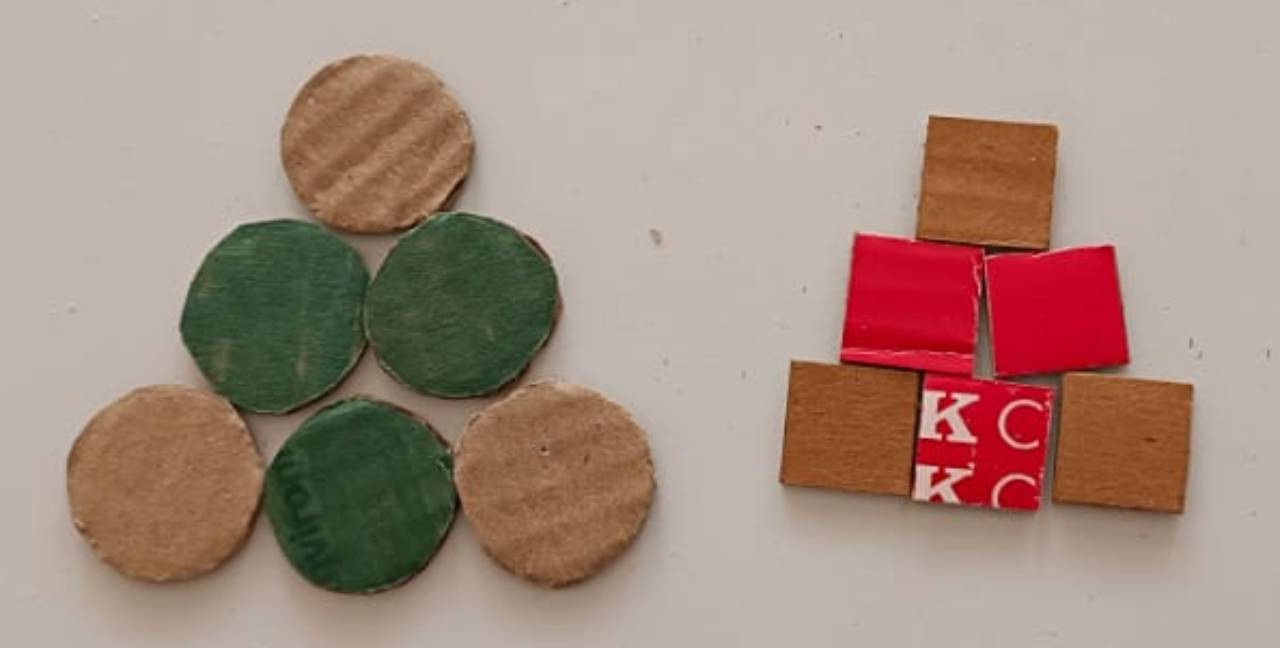
Counters:
anything that can be counted, can be buttons, seeds, pebbles, etc. –
review
|
Ten-frames:
a two-by-five frame to represent numbers – review 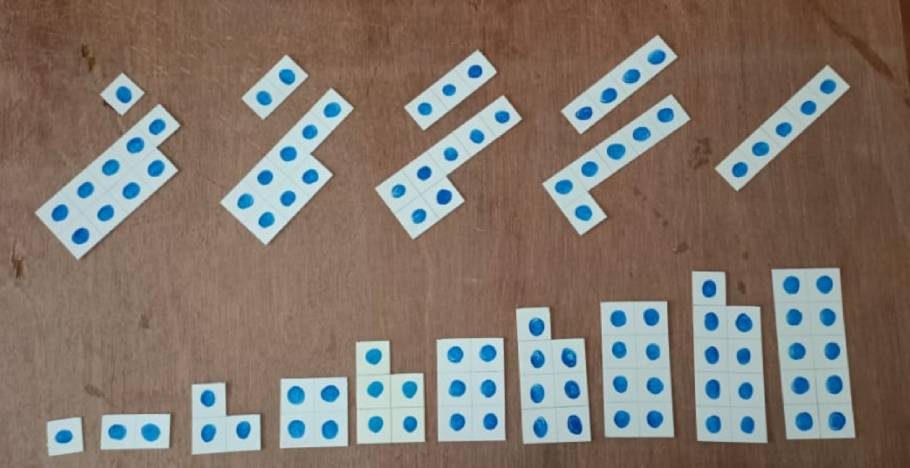
|
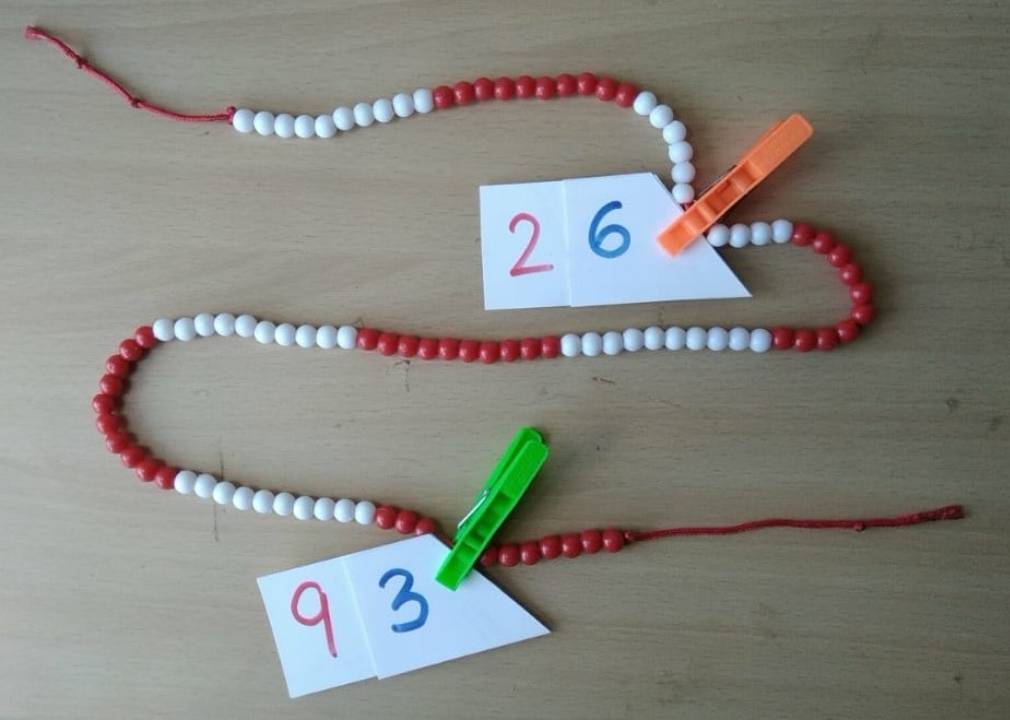
| Ganitmala: a hundred beads mala in two colours for whole numbers and operations – review |
|
| Bundle-sticks: anything that can be bundled, can be twigs, sticks from broom, ice-cream sticks, dried sketch pens | |
|
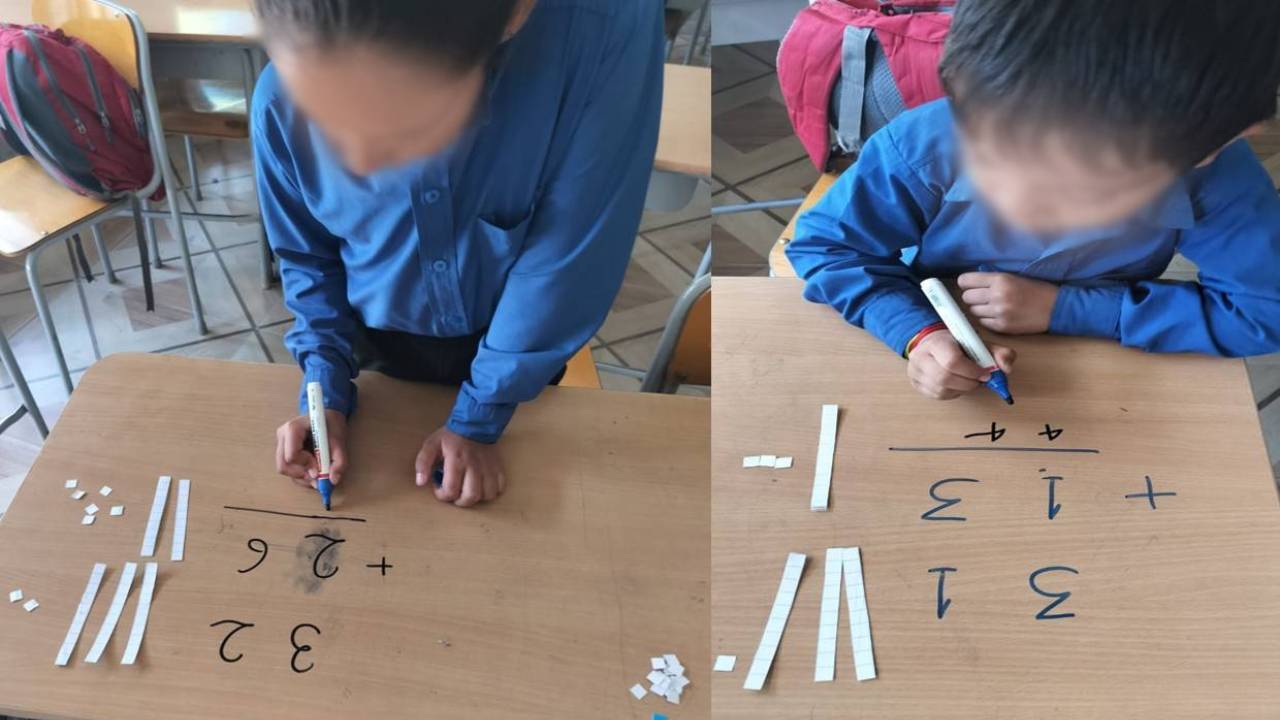
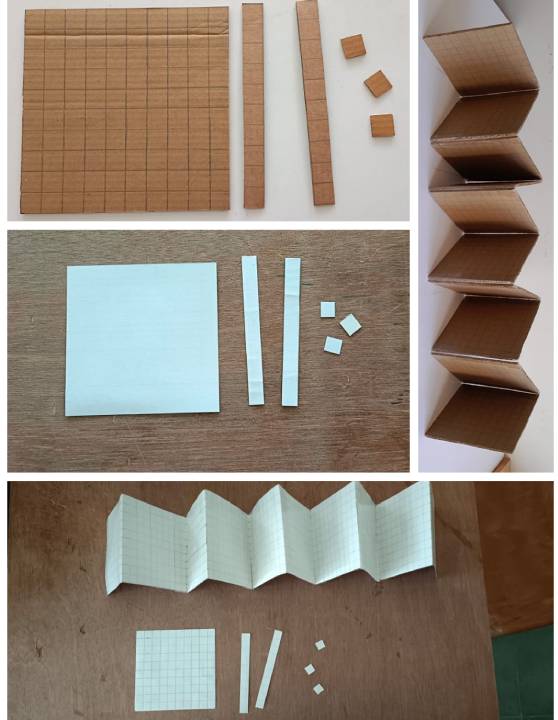
Flats-Longs-Units: 2D base-10 blocks with a unit or small square, a long (ten) which is a rectangle 10 times longer than the unit and a flat (hundred), which is a bigger square, 100 times the small one or 10 times wider than the long – ten big squares are joined to represent a thousand – review
|
|
|
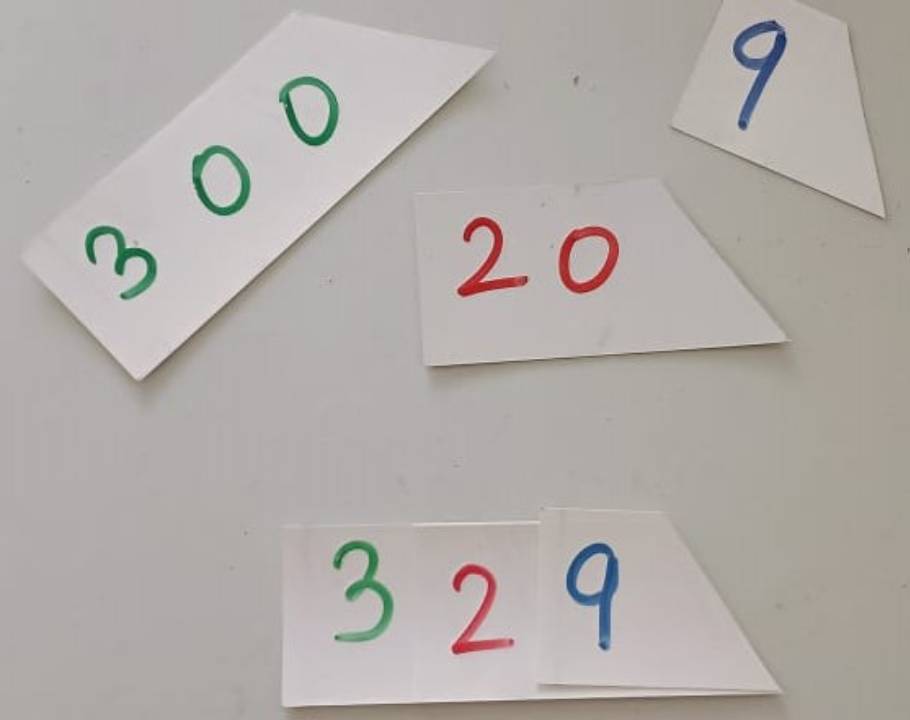
Arrow Cards: can be extended for decimals –
review
|
|

For Fractions:
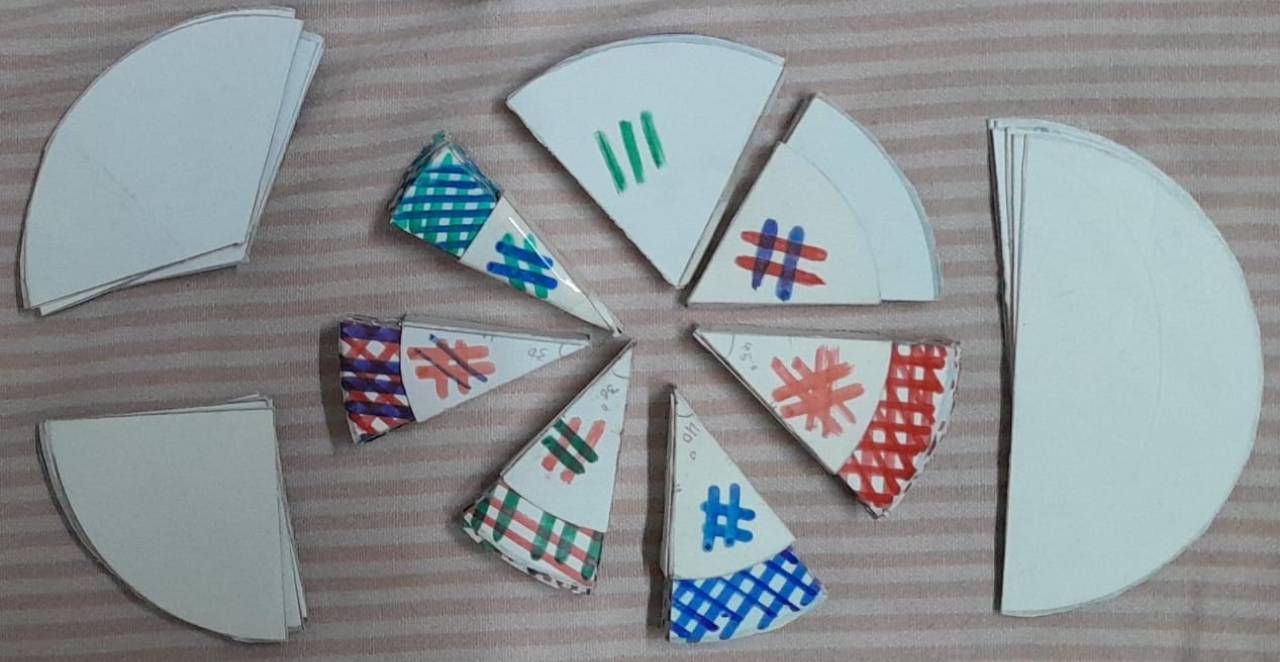
Fraction Circles and Sectors: the whole is a circle, split in equal sectors with unit fractions including ½, 1/3, ¼, 1/5, 1/6, 1/8, 1/9, 1/10, 1/12, 1/15
| |
| Fraction Strips: the whole is a 21 cm strip with unit fractions including 1/7 and 1/14 | Fraction Squares: the whole is a 21 cm long square from A4 sheet |
For Algebra:
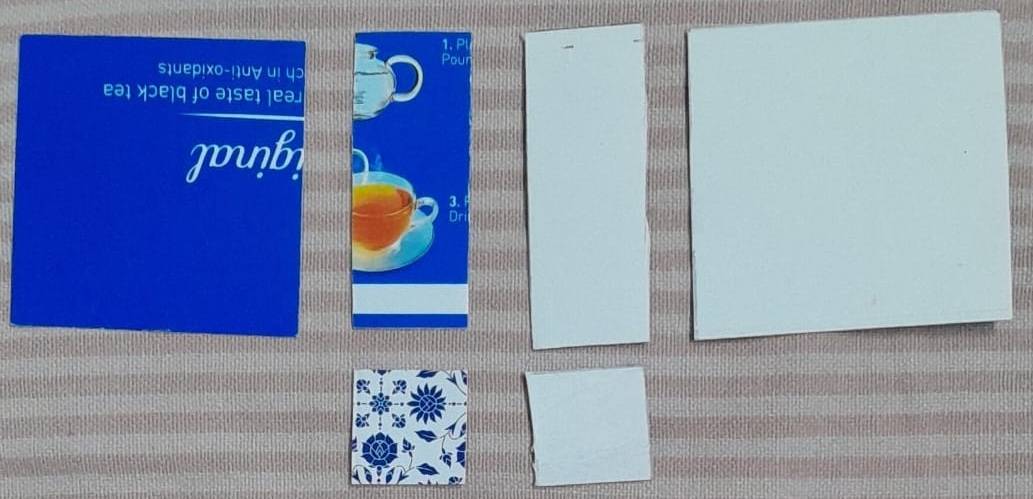
| Algebra Tiles: generalisation of FLU, big square is x2 while rectangle is x, small square is 1 with possible extension to xy, y and y2 – review |
|
| Algebraic Identities: models unpacking algebraic identities Quadratic: identities like (a ± b)2, a2 − b2 etc. – squares and rectangles 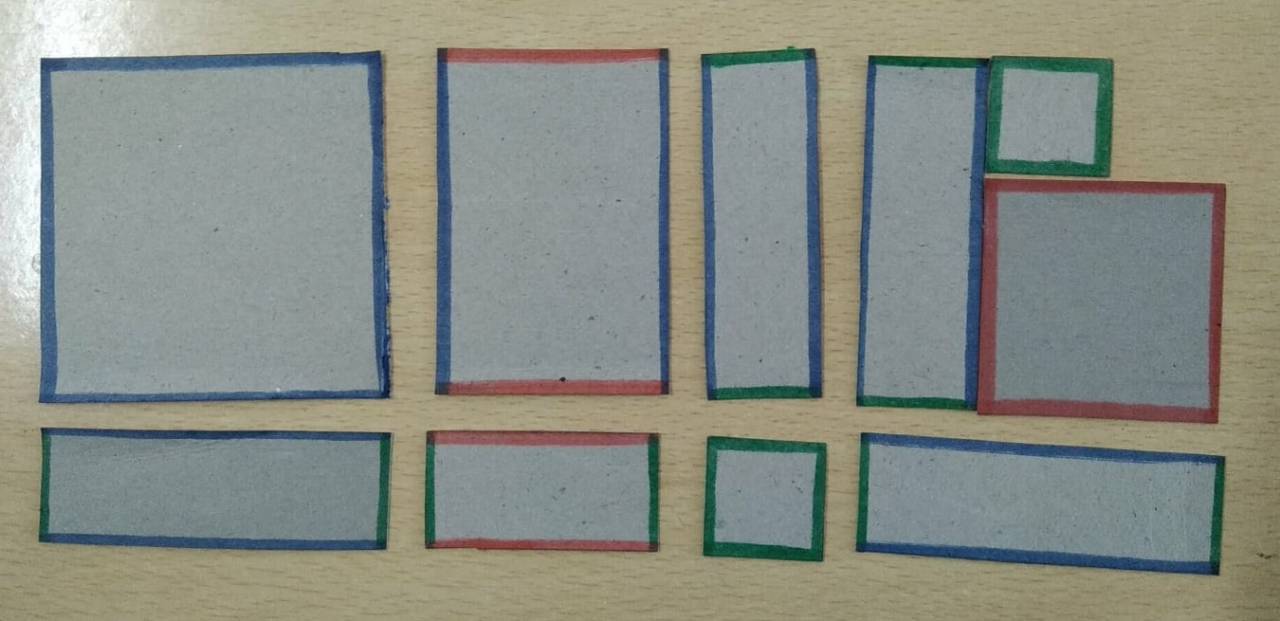 | Cubic: identities like (a ± b)3, a3 ± b3 – cuboids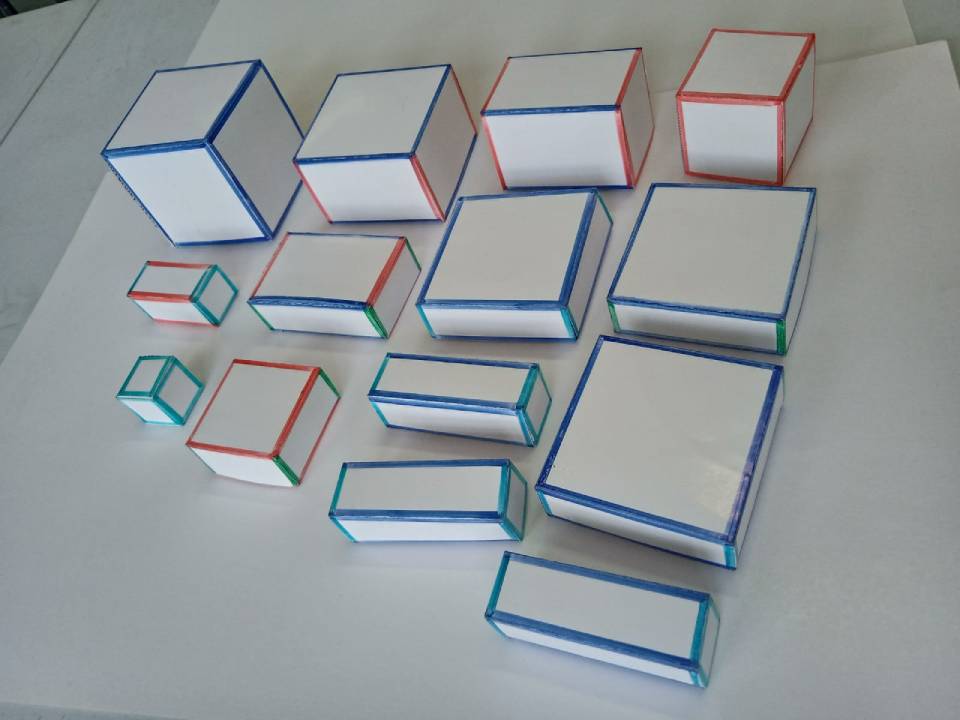 |
For Geometry and Mensuration:
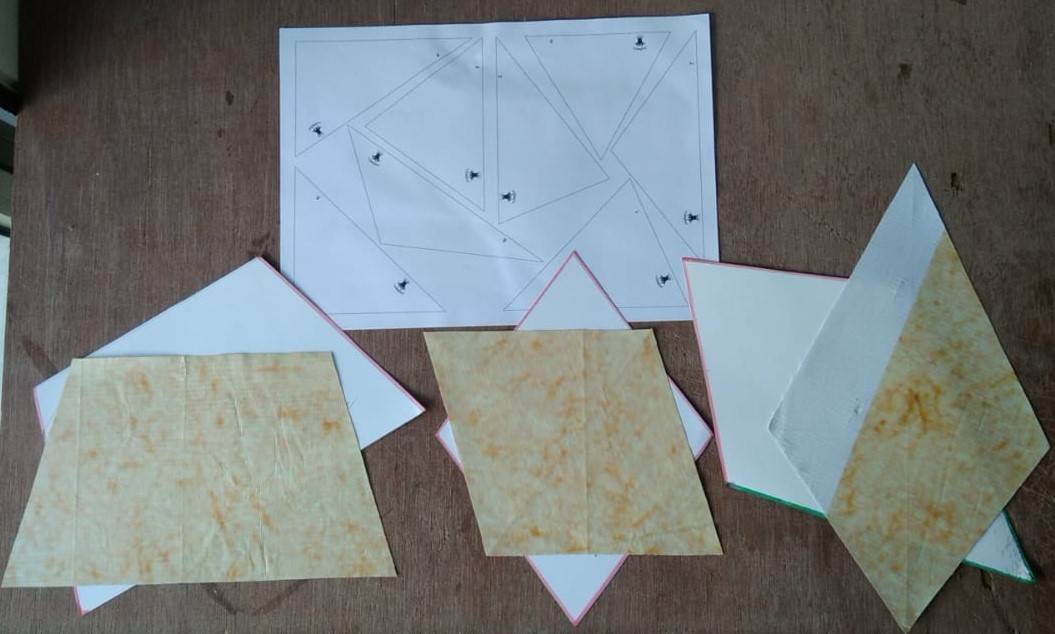
Cutouts of triangles and quadrilaterals – a polygon may be cut in several pieces and rearranged to find the area
|
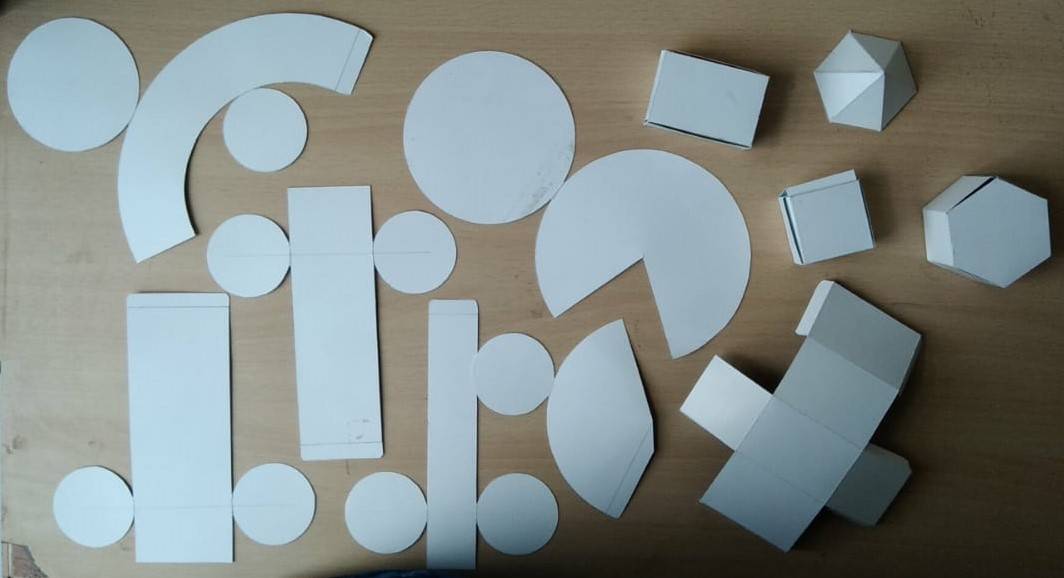
Nets of Solids to understand surface area and much more – of cuboids, prisms, pyramids, cylinders, cones, etc.
|
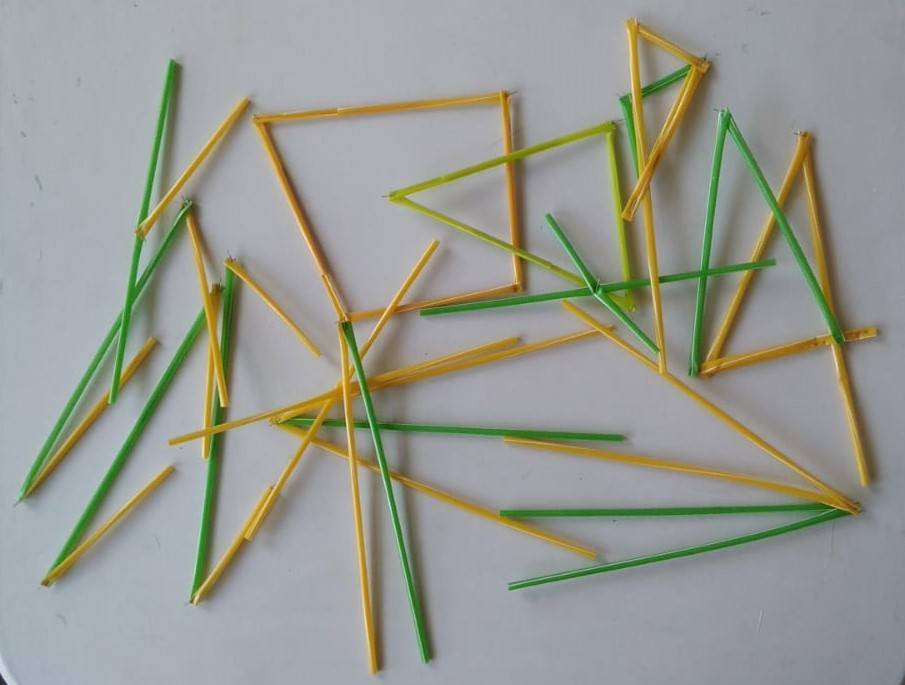
Straw Models are made of straws by stapling them – for angles and polygons
|
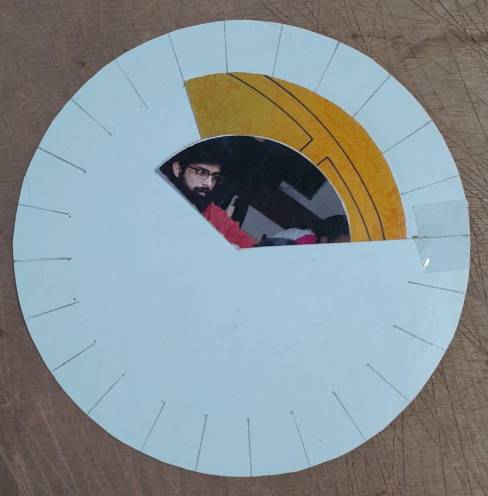
Angles with intersecting circles: two or three intersecting circles in different colours to introduce and to understand angles as ‘turn’ and ‘gap’, and to get a sense of measure of an angle
|
Details of the various mat(h)erials and learning sheets included in the NCERT math textbooks are shown in Table 5.
| Class 3 | (i) Rectangular and isometric dot sheets (ii) Number name and numeral cards (iii) Nets of various solids (iv) 2D base 10 blocks (v) Fraction sectors and strips (vi) Tangram |
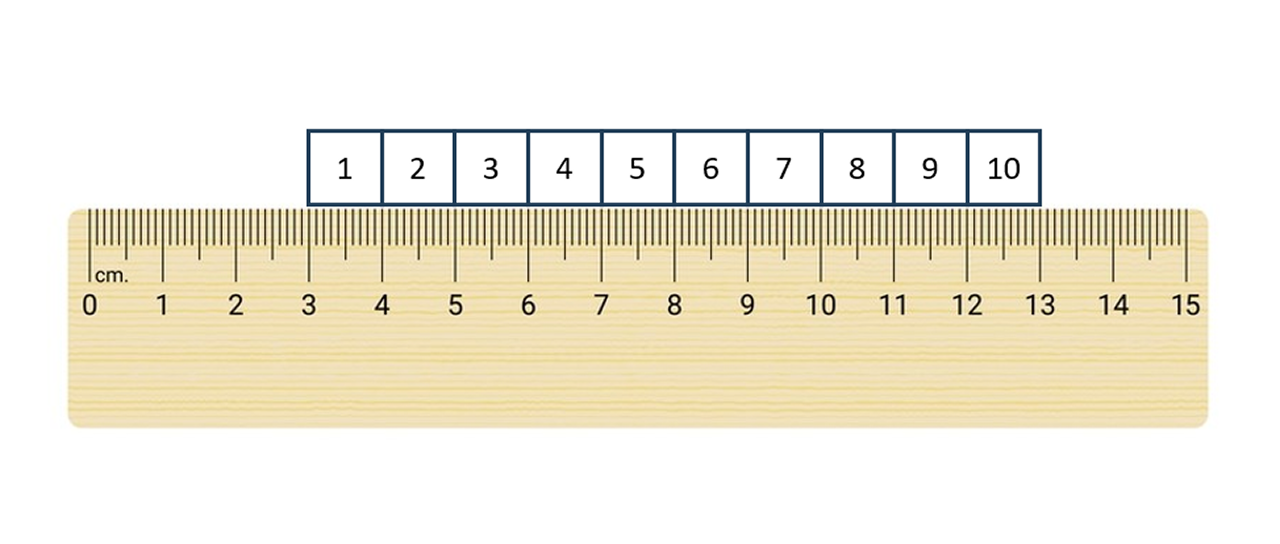
| Class 4 | (i) 2D shapes (ii) Dienes’ blocks (iii) More nets (iv) Arrow cards (v) Fraction sectors (vi) Centimetre scale (vii) Number tokens (1, 10, 100, 1000) |
| Class 5 | (i) 2 types of square grids and the isometric dot sheet (ii) Fraction sectors (iii) Tangrams (iv) Regular polygons and more (v) Number tokens (vi) Nets of 2 platonic solids |
| Class 6 | (i) Integer snake-ladder game (ii) Rectangular dot sheets and the square grid (iii) Tangram (iv) Fraction wall (v) Square tiles split along a diagonal |
| Class 7 | (i) Tangram (ii) Square dot sheet, etc. |
| Class 8 | (i) Binairo game (ii) Square dot sheets (iii) Isometric grid |
Some of these manipulatives may be unfamiliar to the reader, but the data in Table 5 clearly shows that mat(h)erials are now perceived as an integral part of the pedagogy of mathematics, right up to Class 8!
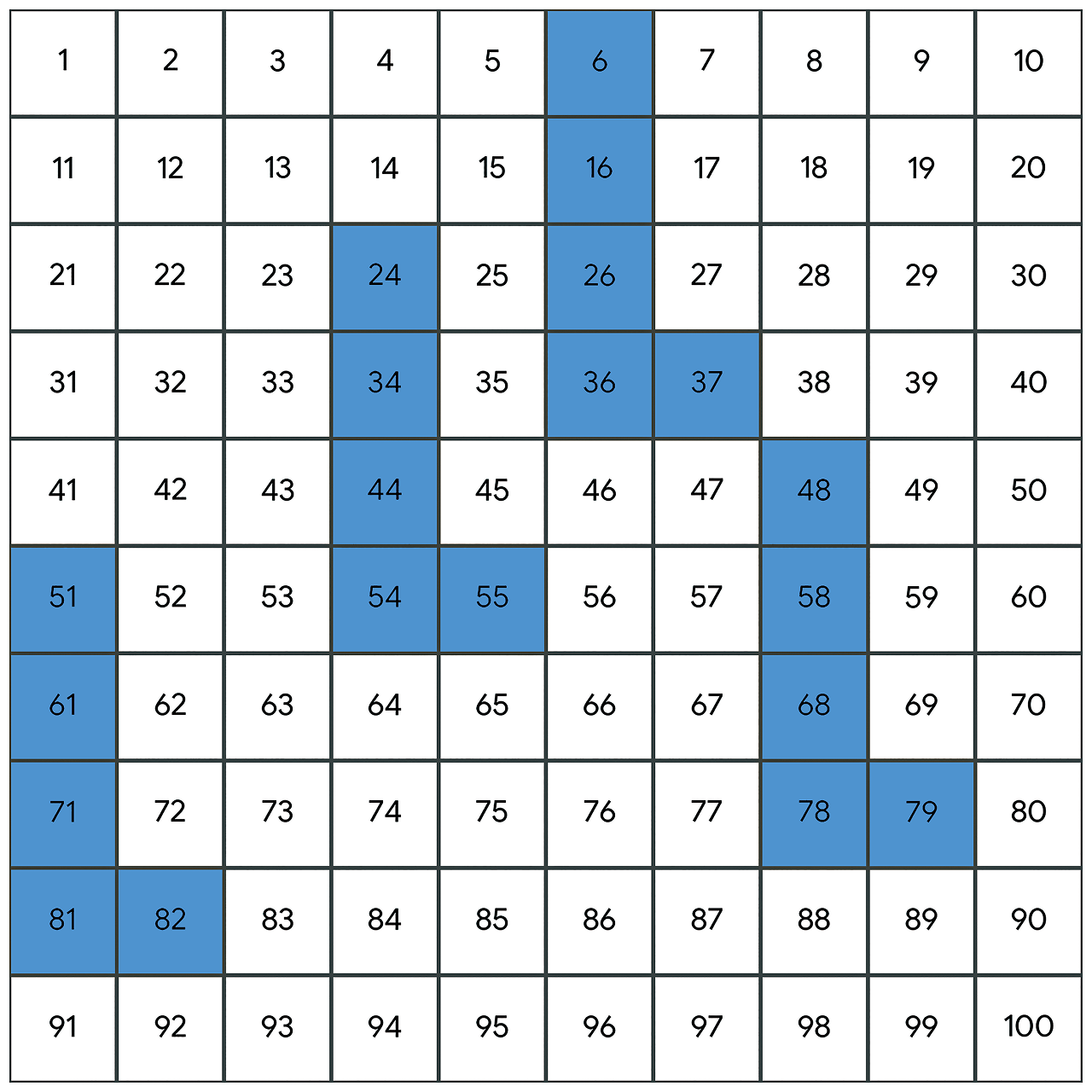
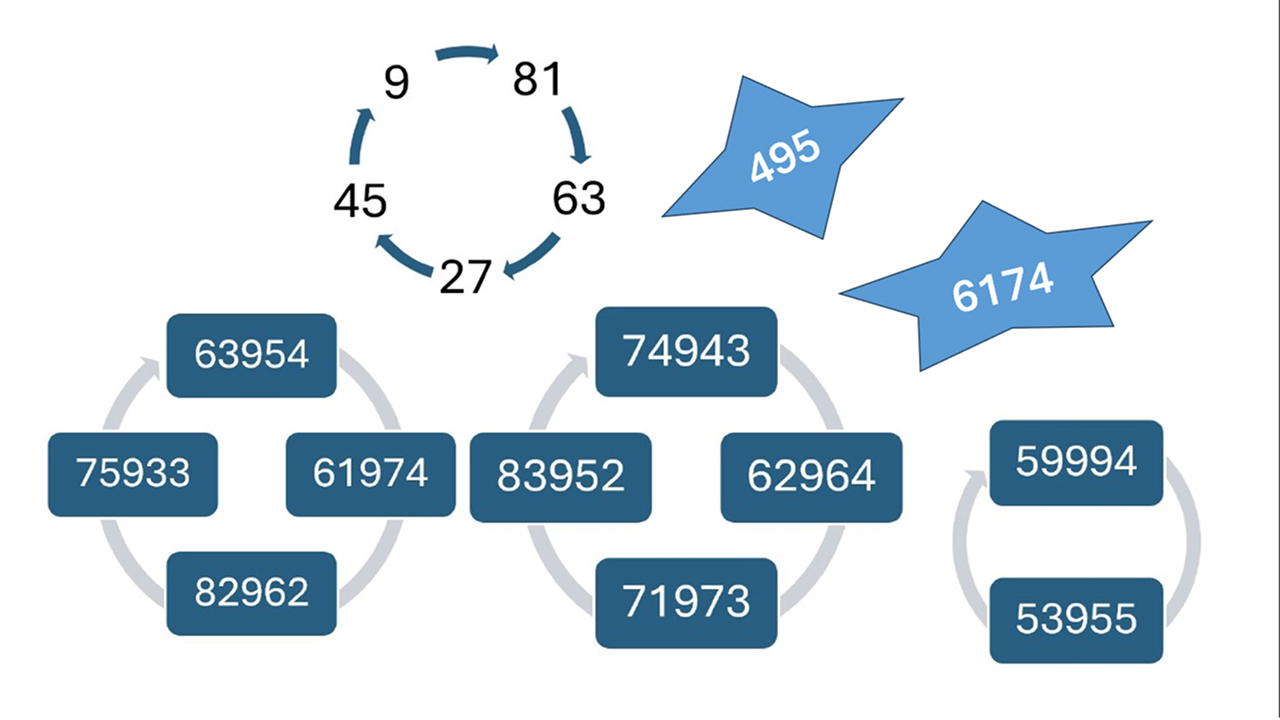
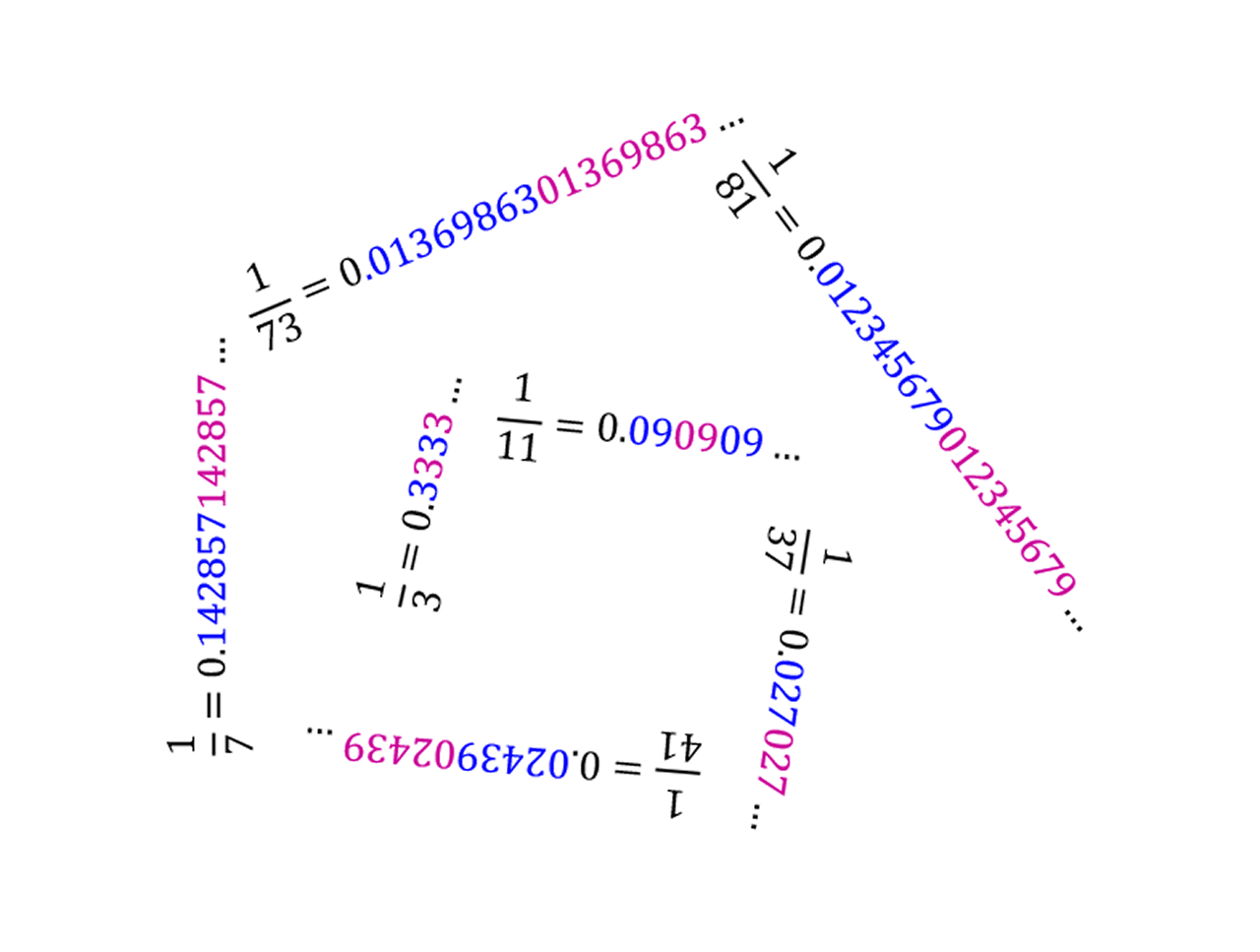
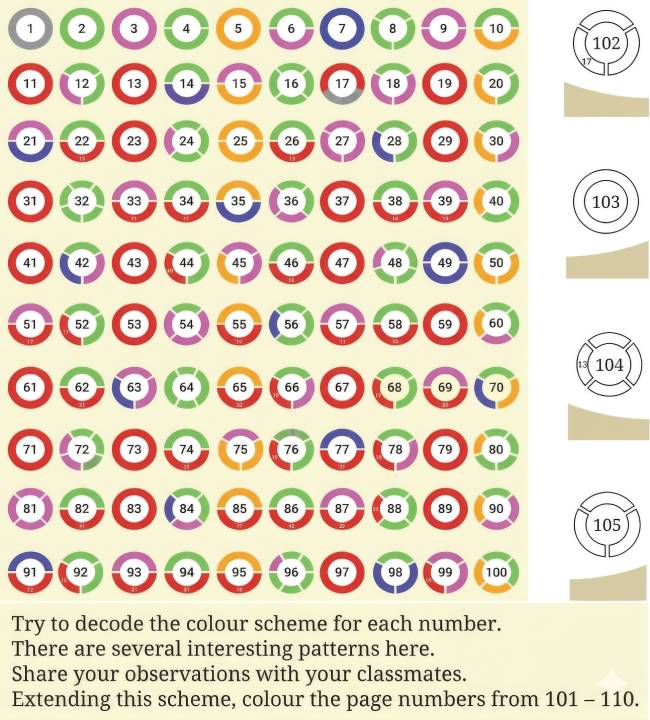
Here is a fun fact! The page numbering of the Class 7 textbook is inspired by a specific representation that is available as a virtual manipulative in Mathigon Polypad (more later)! The textbook did compile the numbers at the end of the corresponding chapter but nudged the students to decode it (Figure 1). So, these textbooks intend to let students discover rather than be told. And they want students to observe the mathematics that is all around them – including the page numbers in their textbooks!
Mat(h)erials have been given official recognition! It remains for us to discuss how they may be meaningfully and mindfully sourced and used.
This article is based on the experience of equipping eleven schools with mat(h)erials. Eight of these are Azim Premji Schools (APS). Of the remaining three, one is an NGO school in Pokhrama, Bihar catering to the students from the village, another is an alternative school in north Bengaluru catering to students from all sections of society and the last is a high-end school in east Bengaluru.
Most of these schools do not have a spare room that they can dedicate for a math lab. But the teachers of each class took charge of the appropriate mat(h)erials and have been using them regularly. They bring these to class as and when needed. Some keep them in a cupboard in the classroom itself. Students, especially those in Class 1-2, eagerly participate in tidying away and storing the mat(h)erials properly at the end of the class.
Mat(h)erials: Who gets them?
Usually, if a school has some mat(h)erial, then it’s the teacher who displays them and who is in full control demonstrating their use to the entire class. In a marginally improved situation, the teacher may allow some students to come to the front of the class and demonstrate their use. Just imagine what goes through the mind of a student in Class 3 who doesn’t get a chance to explore and demonstrate that day. How much will this child focus on learning vs feeling left out? And that too for practical constraints. Instead, what if we can provide one set of mat(h)erials for every four students? Then everyone in the class gets access and can engage directly. But wouldn’t that be too expensive? Except for one of the eleven schools, the mat(h)erials were made on site. In eight of the schools, intensive work was done for a week each for two years, along with some long-distance resource sharing and online supervision.
Mat(h)erials: Who makes them?
Most of the things can be made in a school by the teachers, with the help of students from middle to high school. When students of Class 6-8 engage in making mat(h)erials, they experience the precision that mathematics demands, as well as the optimization of raw material and effort. Many facts fall into place conceptually. It also becomes an assessment of measurement as well as various skills and attitudes that they should develop, for example, drawing a line with a given length, drawing lines which are parallel or perpendicular to given lines, drawing a given angle. There are rules in mat(h)erial making, but there are reasons behind them. I have seen that students find greater motivation and accountability when they hear that these will be used by several batches of students, junior to them (foundational and preparatory – Class 1-5) or by their peers! Art teachers can be of great help. (And they do get some things in return which can be utilized for art classes later!)
Usually, we create suitable containers for each mat(h)erial so that it becomes easy to use and then put away. These are also made using locally available material and are low-cost.
Some manipulatives require a bit of skill, an eye for detail, etc., but nothing beyond the capabilities of a Class 8-9 student in terms of construction. Step by step guidance on how to make each item – or its packet – can be provided on request [1].
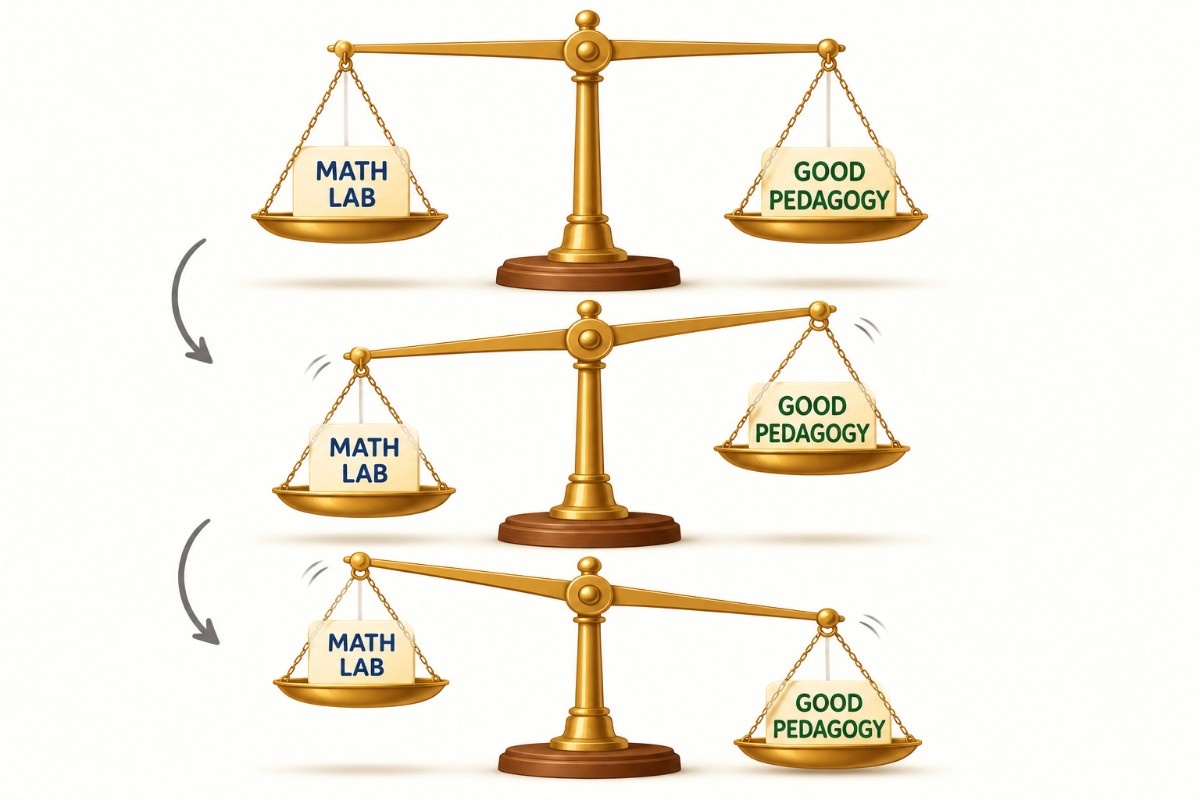
Mat(h)erials: Math lab or Corner or Cupboard?
Most mat(h)erials are not big, can be easily carried around, especially if they are segregated in user-friendly packets. Unlike a science/EVS class or a physical education class which needs a laboratory or an open space, there is absolutely no need to bring students of Class 1-5 to a separate room to work on these TLM. In fact, valuable time is lost by moving from one class to the other with no meaningful gain. In my opinion, a math lab is therefore, not needed at the foundational and preparatory stages.
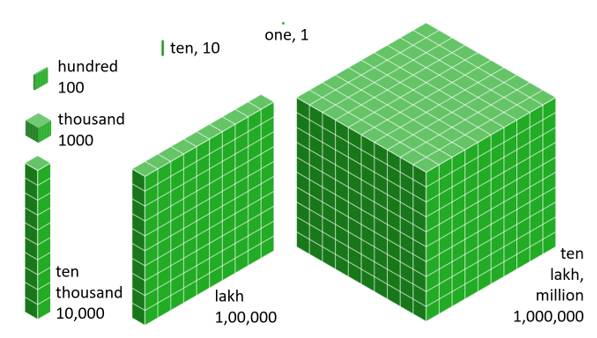
However, there are some models that may be needed only occasionally and can be too big or delicate to move around at the middle or higher stages. For example, I personally feel that it helps to have a big cube with 100 cm long sides to represent ten lakh (or a million), compared to a smaller one with 10 cm sides for a thousand and a tiny one with 1 cm sides for one or unit. By extending this to a set of cuboids, the powers of ten: one, ten, hundred… ten-lakh may also be seen. Figure 2 gives an idea of how big a lakh is, and how useful this representation can be at the beginning of Class 6. But it would not be easy to bring these to class. For such cases, it may help to have a separate room where students can come occasionally.
If such a room is possible, then it can be utilized not only to store and display mat(h)erials but also as a place where these can be repaired or made as and when the need arises. One must assume (or rather, hope!) that there will be some wear and tear when anything gets used regularly – it is a positive sign when students examine and play with such artefacts regularly! When teachers make their own mat(h)erials, they will know how to duplicate or repair these. However, the same repair or replication can also happen in an art room, teachers’ room or any other suitable place.
Mat(h)erials: What are they made of?
Most of the items are made of (i) thick chart paper (ii) corrugated cardboard (iii) boxes with card type thickness, e.g., cornflakes or detergent boxes. A few other materials such as beads, rope, flex (laminated banner or signage material), plastic straws are also used for some specific mat(h)erials.
Different sets are kept in separate packets which are usually made out of used A4 sheets or newspapers, various plastic packets and other packaging material usually available at a school or brought in from home by students – a practical strategy for recycling and leading by example.
Mat(h)erials: How do we plan and organise?
These are the must have mat(h)erials for each stage.
(Colour Code: Blue = individual sets, Pink = one set for the whole class, otherwise multiple sets)
| Mat(h)erials | Foundational Stage (pre-primary, Class 1-2) |
Preparatory Stage (Class 3-5) |
Middle Stage (Class 6-8) |
|---|---|---|---|
| Numbers and Place Value |
1. Counters – round and square 2. Ten-frames 3. Ganitmala 4. Arrow cards 5. Bundle sticks 6. Flats-Longs-Units (FLU) – big |
1, 2, 4 and 7. Flats-Longs-Units (FLU) with thousand – small |
8. Arrow cards (till crores) 9. FLU small |
|
Fractions and operations |
NA |
10. Fraction sectors 11. Fraction strips 12. Fraction squares |
|
|
Decimals and operations |
NA |
13. Decimal FLU 14. Decimal arrow cards 15. Centimetre graph paper |
|
| Measurement and Mensuration |
16. Toothpicks/match sticks/paper clips 17. Balance scales |
18. Squares of size matching toothpicks/matchsticks/paper clips 19. Measuring tapes 20. Balance scales with weights 21. Calibrated bottles/jars |
22. Straw models for perimeter 23. Cutout models for area 24. Nets of solids for surface area |
| Patterns and Algebra |
25. Counters in at least two colours 26. Toothpicks/match sticks in ideally two colours |
27. Algebra tiles 28. Algebraic identities – quadratic and cubic |
|
| Geometry and Spatial Understanding |
29. 2D shapes cutouts 30. 3D solids 31. Geoboard |
23–25 and 32. Tangrams 33. Polyominoes |
34. Nets of solids 35. Straw models 36. Angles with intersecting circles |
| Who can make |
Teachers, students in higher grades – Class 8–9 | Mostly teachers and senior students, preparatory students can help by cutting some things | Mostly by students themselves, can be done as group projects |
Mat(h)erials: Do these have digital avatars?
This article will be incomplete unless we talk about virtual or digital manipulatives, especially post pandemic. There are many websites that provide such manipulatives. These have certain advantages over physical ones, since things can be explored much faster compared to if done offline. My favourite website is Mathigon Polypad: truly a mathematical playground. There are many opportunities of learning by discovering and observing patterns. But students may need some guidance especially in documenting what they observe and then drawing conclusions based on that. Math Learning Centre, Toy Theatre and a few others also have decent collections of digital manipulatives. We may review them in a later issue.
Some schools have computer labs. For such schools, it makes sense to use online manipulatives instead of physical ones. My personal opinion is that this should be done only from the middle stage. Children at the Foundational stage, (pre-primary and Class 1-2), should use only physical manipulatives. In the Preparatory stage, (Class 3-5), they should use mostly physical manipulatives – though one can initiate students into online ones possibly around Class 4 or 5. This is mainly to avoid screen addiction. While students do benefit from exposure to such sophisticated tools, the adults must decide when, how much time and how such tools should be used. These tools are better used with adult supervision as students could get overly engrossed in using them.
Mat(h)erials: What can you do?
This article is intended to give the reader a sense of what exists and what are the possibilities – in a classroom, in a school. We hope to bring a series on how you can make mat(h)erials in your school, possibly with the students. We will share ‘how to make’, (especially multiple sets), as well as ‘how to use’. Meanwhile, here are some questions that a teacher willing to enrich his/her teaching with mat(h)erials could reflect on:
- Why do you want to make mat(h)erials?
- In your personal opinion, do these need to be housed in a math lab? Why?
- How many sets do you need of each mat(h)erial that you would consider making?
(It will help to consider the number of students in each class and whether the same sets can be shared among different classes.) - Who will help you in making these mat(h)erials?
[Consider your fellow teachers including art teacher, selected students from middle to high school (Class 6-10) who are good with their hands.] - How will your class change physically once you have these mat(h)erials? [Consider arrangement of chair-table, benches.]
- Will your pedagogy and assessment change? How?