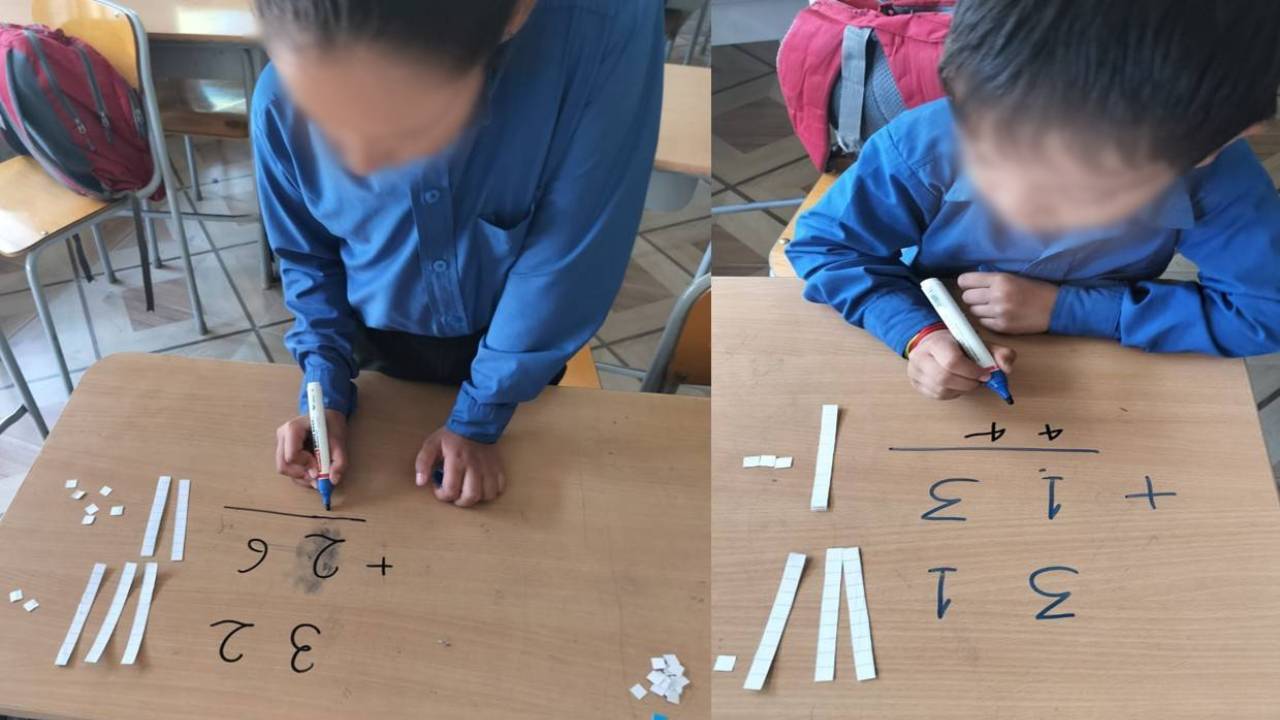
Shut the Box: Making Mathematics Visible

1. Introduction: The game of Shut the Box
I was introduced to ‘Shut the Box’ (Thurigai, n.d.), a four-player board game, by a colleague who had played the game with their ward. My immediate response was to buy one for my five-year-old son. The game, as explained by my colleague, appeared to offer a great opportunity to make addition of two single-digit numbers fun for 5–7-year-olds. Let me first describe the game, and its standard rules.
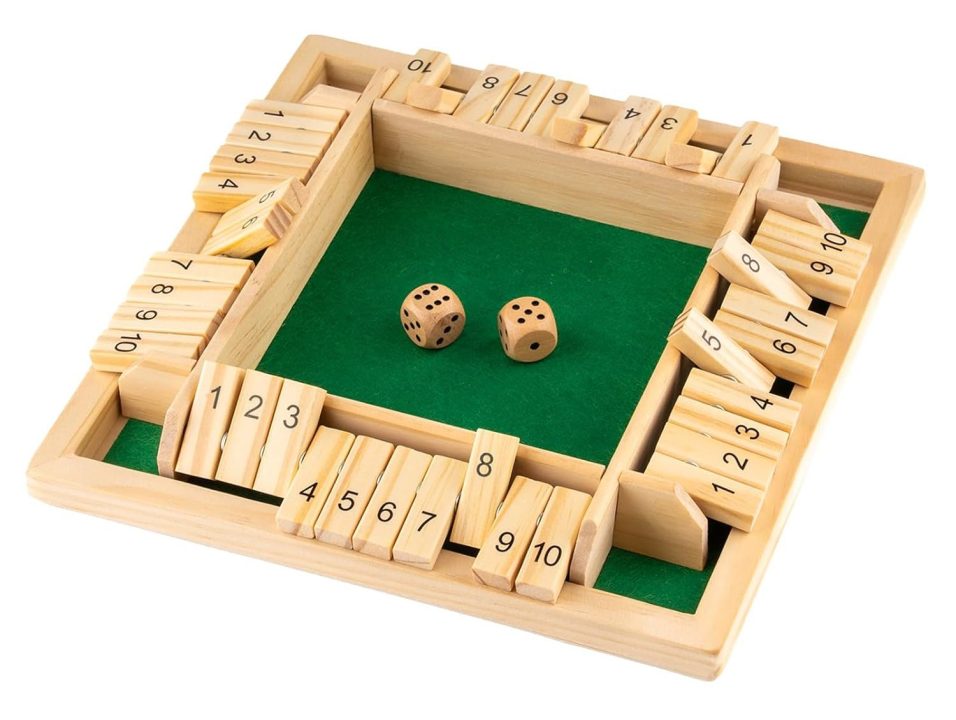
Materials. The usual four-player format has a row of ten flip-down tiles numbered 1 to 10 for each player, 2 standard dice, and a
playing surface.
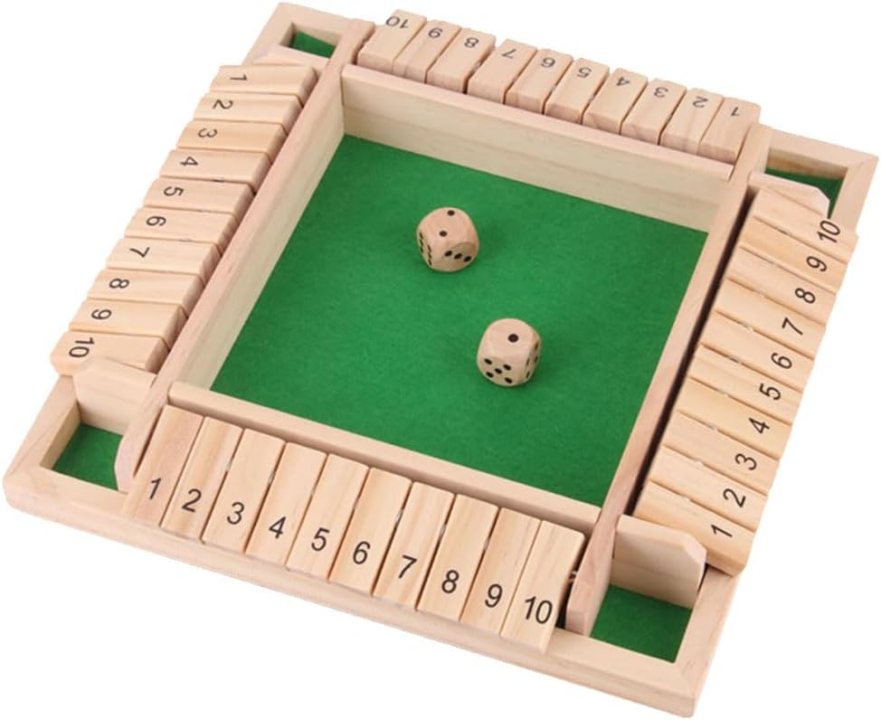
Basic instructions (standard Shut the Box play).
- Each player begins with all their numbered tiles open (down).
- On a turn, the player rolls two dice and adds the face values.
- The player closes (flips up) one or more open tiles whose values add to the dice total. For example, a total of 8 could be represented by 8, 6 + 2, or 5 + 3 (one could extend it to three tiles such as 1 + 2 + 5 too), provided those tiles remain open.
- After this move, or if no available combination matches the roll, the turn ends. The next player in the sequence takes their turn in rolling and closing tiles if a valid move is available.
- Closing every tile is called “shutting the box” and the first of the players to do so is the winner of the game.
Note: The instructions above therefore describe a common version of Shut the Box, not a verified transcription of the Thurigai package instructions. There was no leaflet supplied with the purchased game. Different versions of the material may use different tile ranges, dice rules, and scoring conventions.
2. Making the Mathematics Visible: An Experience with My Child
I bought this board game and introduced it to my five-year-old son. Before introducing the game, I used a few preliminary mini-games to gauge his readiness to play, and to identify the mathematical ideas he was already familiar with. These activities included rolling two dice and identifying the numbers represented by their dots, adding the two numbers to obtain their sum, and asking him to display particular combinations of dice faces to obtain a given sum. For instance, I would ask him to show different ways of obtaining a sum of 8 using the two dice. These preliminary activities provided an opportunity to observe his familiarity with dice patterns, single-digit addition, and number combinations. He was already familiar with adding two single-digit numbers and had experience playing dice-based games such as Snakes and Ladders and Ludo. He picked up the rules of Shut the Box quickly and won several rounds played with me and other family members.
While playing Shut the Box, I used questions such as “What is the total on the dice? How did you work it out?”, “Can you make the same total in another way?”, and “Can you show 8 = 5 + 3 using the tiles?” to draw his attention to the mathematics underlying each move. I also encouraged him to look at the tiles that remained open and consider how these constrained his choices. Rather than simply confirming whether a move was correct, I invited him to explain how he had arrived at the total and to identify alternative combinations whenever possible. I further asked him to check how the open tiles look like for me, the second player, and would ask him what I should roll to be able to shut a couple of tiles. Only after letting him observe, think, and answer this question, I would go on to roll the dice. He would then immediately identify if the roll was favourable to me or to him.
Within a couple of rounds, he was able to identify valid combinations of tiles that added up to the dice total and recognise that the same number could be expressed in different ways. The preliminary activities had already given him opportunities to explore alternative ways of obtaining a given sum; the board game extended this exploration by requiring him to work with the numbered tiles available on each turn. He also noticed the commutativity of addition: for example, the combinations 3 + 5 and 5 + 3 yield the same total, even though the order of the numbers is reversed. The game thus provided a concrete context in which he could encounter this property through the manipulation of dice and tiles, rather than only through symbolic number sentences.
Another interesting observation concerned the number pairs (called number bonds in the teachers’ handbook NCERT (2023)) represented by the numbered tiles. In exploring different ways of making 10, he could attend to the pairs
as well as the corresponding pairs in reverse order. Arranging these pairs systematically revealed a pattern: as the smaller of the pair increases by one, the larger decreases by one. When the pairs are listed in increasing order of the smaller of the pair, the two numbers move towards one another, meeting at 5 + 5; when the pairs are listed in the reverse direction, they move outwards. This offered an opportunity to notice regularity within number pairs and to explore how a fixed total can be maintained while its constituent parts change. Such observations connect the game to number composition and decomposition, extending beyond the immediate task of finding a valid move.
The repeated opportunities to connect dice patterns, number combinations, and tile arrangements made these relationships visible in a concrete context. The experience also highlighted the value of attending to the strategies children use, rather than assessing their mathematical understanding solely through the correctness of their answers. Questions about how a total was obtained can help a teacher distinguish between counting every dot, counting on, recalling a known addition fact, and decomposing a number into familiar parts. In my interaction with my son, the prompts provided opportunities to elicit and discuss such reasoning while he played. The game is most educational when the moves are accompanied by mathematical talk, not when speed or winning is the goal.
Now from a teacher’s perspective, we can think of the following relevant learning goals for use of this game in classroom context.
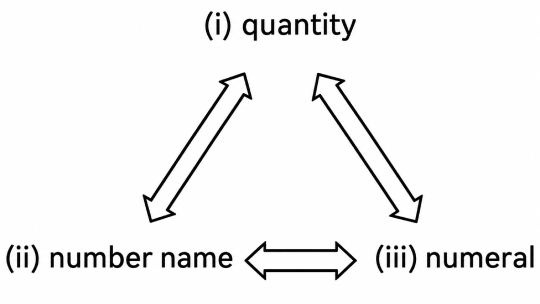
- Recognising and composing small quantities: Recognise dice patterns and connect the dots to number words and numerals. With familiar patterns, children may come to subitise-recognise some quantities instead of counting every dot.
- Understanding addition as combining quantities: Interpret the two dice as two quantities and their total as the combined quantity, e.g., 4 + 3 = 7.
- Developing number pairs and flexible decomposition: Find different partitions of the same total, e.g., 7 = 1 + 6 = 2 + 5 = 3 + 4. This is the game’s central mathematical opportunity: a child must search for a subset of available tiles that makes the dice total.
- Building mental calculation and recall: Recall or work out sums and complements for totals that occur on two dice (typically 2–12). Children may initially count dots or tiles and gradually use known facts and derived facts.
- Explaining and comparing strategies: Explain why a set of tiles matches the total, compare alternatives, and discuss why one move leaves more or fewer options for later turns.
- Reasoning under constraints: Select a valid combination from the tiles still open; notice that a mathematically correct decomposition may no longer be available after earlier moves.
- Mathematical communication and social participation: Say, show, record, and compare number sentences; take turns; follow agreed rules; and respond constructively to another player’s strategy.
Note: These observations arose from informal play with one child who already had experience with single-digit addition and dice-based games. They cannot establish the effectiveness of the game for other learners or demonstrate that the game alone caused the observed learning. Nevertheless, they illustrate how preliminary activities can help a teacher gauge readiness and how purposeful questioning during play can connect children’s existing knowledge with further exploration of addition, commutativity, number bonds, and numerical patterns.
3. Curricular relevance
The NCF-SE 2023 positions foundational numeracy as including understanding numerals, adding and subtracting with numerals, and early mathematical thinking through play. For the Preparatory Stage, it emphasises conceptual understanding of numbers and operations, alongside procedural fluency and mathematical/computational thinking in solving everyday problems (NCERT, 2023). The NCF for the Foundational Stage identifies number and number relations, basic mathematical operations, and mathematical games as important parts of early mathematics learning (NCERT, 2022).
The NCF-FS competency C-8.6 describes fluent addition and subtraction of two-digit numbers using flexible composition and decomposition strategies for numerical and word problems (NCERT, 2022). Although the present game mostly involves totals within 2–12, it offers a concrete, playful context for practising the underlying composition/decomposition idea. It should be presented as supporting selected foundations for this broader competency, not as sufficient evidence that the competency has been achieved.
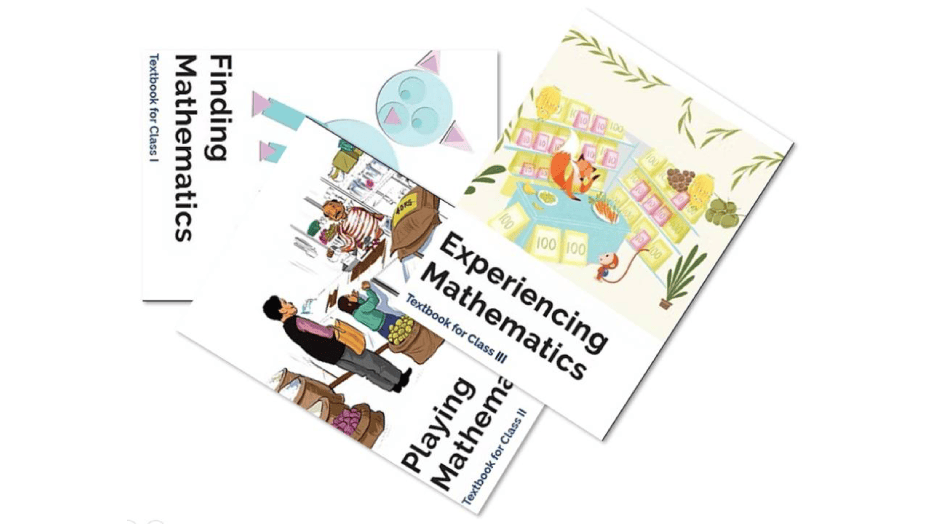
In the new NCERT Class 1 textbook Joyful Mathematics, addition and subtraction are introduced explicitly in Chapter 5, “How Many?”; the chapter subtitle identifies addition and subtraction of single-digit numbers. Chapter 6, “Vegetable Farm,” extends the work to addition and subtraction up to 20 (NCERT, 2024). The preceding Chapter 4, “Making 10,” works with numbers 10–20 and provides relevant preparation through making and decomposing quantities, including number pairs that make 5 and 10 (NCERT, 2024).
This sequence makes the game potentially useful in at least two ways:
- Before or alongside Chapter 5: Use a simplified version with tiles 1–6, one die, counters, or teacher-selected totals to explore combining quantities and different ways to make a number. Do not assume that children must already know symbolic addition.
- During or after Chapters 5–6: Use two dice and a larger tile range to practise single-digit sums, decompositions, and mental strategies. The game’s two-dice totals are usually 2–12, so it does not by itself cover all addition situations or the full range up to 20. Using three dice could take the game up to 18!
Teachers can easily create their own game materials using simple, low-cost items. One effective approach is to cut number tiles out of cardboard sheets and punch a small hole in each tile so they can be threaded onto a piece of string or wire. Preparing multiple sets of these stringed tiles allows multiple students (ideally up to 4 students) to play simultaneously using a single pair of dice. The number tiles from 1 to 10 (or up to 20 at a later stage) could be double sided and in two colours – say, black and white. Having 4 kids in a group is ideal to keep everyone engaged. Each person takes a chance to roll the dice and flips the number cards. So, if they all start with white number cards, the end goal is to have all 10 cards in black.
The exact point at which a particular class is ready to use the full game depends on children’s prior experiences and the teacher’s sequencing of topics. There can be various versions of the game too. For instance, it could be played by 2 players with two sets of tiles from 1 to 10. This allows for instance 3 + 3 as a valid move unlike the original version described in the article. Another variation could be to play with three dice and allow decomposition of a number into sum of up to three smaller numbers, etc.
4. Strengths and limitations
Potential strengths. The game gives repeated, meaningful encounters with small sums; makes decomposition physically visible; offers choice and immediate feedback; and creates opportunities for peer explanation. It can support playful practice without requiring a worksheet for every turn.
Limitations. Dice constrain the totals that arise; some combinations become unavailable as tiles close; and the game may reward strategic game-playing more than explicit addition. (Probabilistically thinking, is choosing to close a tile (or two) in the mid-range, when possible, a better strategy or the choice of extreme tiles?) A child may also learn to imitate moves without being able to explain them. So, without mathematical talk, the game may not ensure learning from a mathematical perspective. Also, the full set of rules may be too demanding for some learners at first.
In conclusion, Shut the Box can be a promising supplementary resource for subitisation, number composition, decomposition, and mental addition in the early primary years, particularly when a teacher pairs play with mathematical discussion and follow-up representations. Emphasise that the game complements, rather than replaces, carefully sequenced teaching and assessment.
Acknowledgement
The author thanks Kshama Chakravarthy of the Editorial Team, At Right Angles, for introducing him to the game. The author also thanks Anusha T, faculty member at School of Continuing Eduction – University Resource Centre, Azim Premji University, Bengaluru, for insightful discussions on the pedagogical alignment of this game with Grade 1 and 2 NCERT textbooks. Finally, the author is grateful to his son, whose patient engagement with the game provided the primary inspiration and learning experience for this work.
AI Usage Statement
Generative AI tools were employed solely for linguistic assistance, manuscript reorganisation, and reference and citation formatting. The conceptual framework, analysis, and final content were developed, reviewed, and finalised entirely by the author, who retains complete responsibility for the accuracy of the manuscript.
Thurigai. 4-Player Classic Educational Tabletop Shut the Box Board Game. Product listing, Amazon India. Accessed 21 October 2026