
Exploring Patterns: Learning with Numbers in Grade 2


Recognizing simple sequences
This activity involves students to use the patterns in the 10 × 10 number grid given in Figure 1.

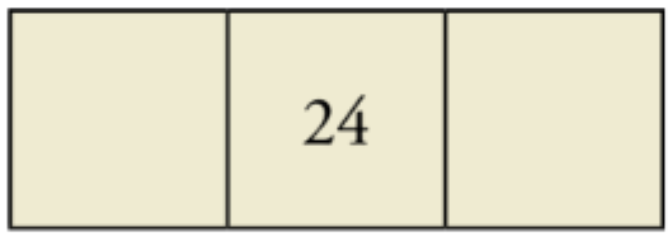
One of the easiest ways to get started with number patterns is through simple sequences, where students need to fill in the blanks. Here’s an example from the above grid:
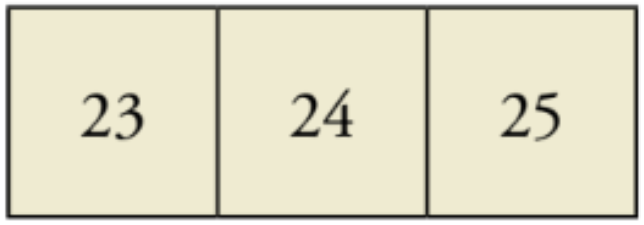
The pattern is straightforward. The numbers go in a sequence with a difference of one unit: \(23\), \(24\), \(25\). So the filled-in sequence looks like this:
Example 1
But what happens if the numbers go in a different direction? Or if we need to find numbers above or below the given ones?
Finding numbers above and below: building spatial thinking
So let’s take this idea a step further and think about the numbers above and below a specific number in a table of numbers from \(1\) to \(100\).
Example 2
Look at the number \(14\). What are the numbers directly above and below it?
Students can answer just by looking at the number chart. When I tried without showing them the number chart, they were still able to give the correct numbers \(4\) and \(24\), but the interesting part was that they were struggling to express the reason behind their answers.

Eventually, they came up with “4 is 10 less than 14” and “24 is 10 more than 14”
Once students repeat this with different numbers, they begin noticing that the table forms a grid of numbers with a predictable relationship between them. Spatial thinking is the ability to visualize and manipulate objects, numbers, or patterns in a structured space. In the context of identifying numbers above and below in a 1-to-100 grid, spatial thinking develops as students begin to mentally organize and interpret numerical relationships based on their positions in a structured arrangement. Understanding this spatial arrangement helps build a deeper comprehension of how numbers are related.
Exploring Sequences with Missing Numbers: More Complex Patterns
Example 3

Given Example \(3\), students may fill in the next number as \(21\), but it’s not as obvious as in the previous case because \(20\) is at the extreme end of the row with no numbers to the right of it.

To really understand the sequence, students need to notice that the numbers are increasing by one each time, forming a simple pattern.
This kind of sequence encourages students to think about how numbers follow each other and how sequences can be extended. This makes them independent of the number chart.
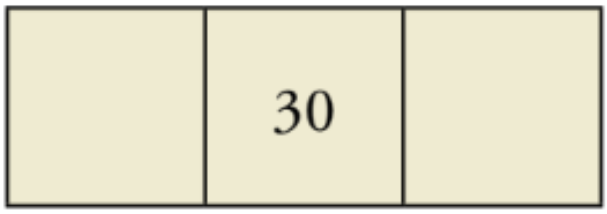
What about sequences that involve a higher level of thinking? For example, when students are given the numbers
Example 4
Example 5

They might begin to question what comes next. Often, students will try different strategies to fill in the blank, and here’s where the beauty of spatial thinking shines through.
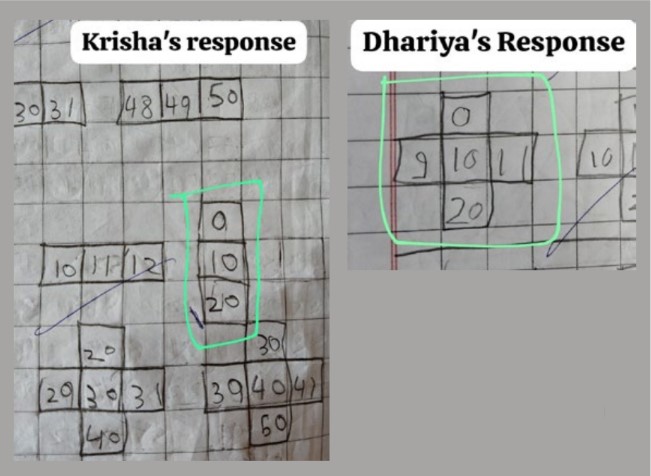
I noticed that some students kept it blank but others finally came up with

Turning the Table of Numbers from 1 to 100 into a Flexible Tool
Here are the puzzles which they worked on

Introducing so many abstract questions on the board isn’t something that happens on the first day. I had already introduced this topic earlier, starting with simpler concepts such as identifying the numbers that come before and after a given number. We then moved on to arranging these numbers in basic puzzles. Gradually, I increased the complexity of the puzzles, but we hadn’t explicitly discussed the logic of “1 less or 1 more” or “10 less or 10 more.”
I hadn’t given such complex questions before. However, an observer encouraged me to try these examples on the board. To my surprise, many students were able to answer them, coming up with their own reasoning. Of course, some students were still puzzled, and a few responded with the argument that “there is no number nearby,” which is a valid observation in its own right.
At first, the table of numbers from 1 to 100 may seem compact, and it’s easy to just look at it as a fixed grid. But as students explore patterns, they begin to “bend” this grid to fit their needs. For example, when faced with the sequence 20, 21, 22, many students might say: “Wait, why does this table only show numbers in rows of ten?”
This shift in thinking — where the number table no longer feels rigid — is a crucial skill. By the end of these exercises, students understand that patterns aren’t just confined to one way of looking at numbers. They can move and adjust them based on the context they’re working in.
Scope of this material
- This activity helps students to understand different concepts such as increasing and decreasing order, preceding and succeeding number, etc.
- As students get more confident with vertical and horizontal patterns, we could include diagonal patterns which can lead to recognising the multiplication tables at a later stage.
- A suggested Higher Order Thinking Skills activity is for the teacher to change the number of columns in this grid to say, 20 columns (or later 15 columns) and get the students to see relationships between the numbers. They should be able to (eventually) see that to the left or right the numbers still decrease or increase by 1 respectively, while numbers decrease or increase by 20 (or 15) above or below respectively. Of course, diagonal patterns will be even more complex!
Developing Critical Math and Thinking Skills
Number patterns are a foundational part of Grade 2 mathematics. As students begin to fill in blanks, find numbers above and below, and identify the next number in a sequence, they develop a stronger understanding of numbers and their relationships. These activities not only help them practice arithmetic but also foster important problem-solving skills and the ability to think spatially.
In the example of 20, 21, 22, students realize that numbers don’t just belong to a rigid grid; they can expand and shift to form new sequences. This exploration of number patterns and spatial relationships helps students become more flexible in their thinking — an essential skill in math and everyday problem-solving.
As they continue to practice and explore, they will become more confident in their ability to identify and create patterns, setting the foundation for more advanced mathematical concepts in the years to come.
Editor's Note
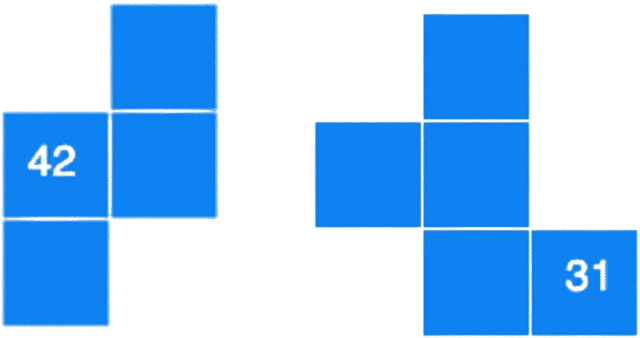
The concepts presented in this article can be expanded to include more challenging problems and activities for children. Students could be introduced to triominoes, tetrominoes, and even pentominoes, which can be incorporated into engaging worksheets. For example, a worksheet could ask students to fill in blank spaces within a given pattern (as shown below) and provide reasoning for their answers.
Secondly, the activity in this article focuses only on addition and subtraction by 1 unit and 10 units. It could be enhanced by including addition and subtraction with other units, allowing children to practice skip counting and reverse skip counting.